The Arab League has sounded an urgent alarm about escalating tensions in the Middle East, with Secretary-General Nabil Fahmy directly appealing to US President Donald Trump to intervene in Israeli policies affecting Palestinians. Speaking ahead of a scheduled Washington meeting between Trump and Israeli Prime Minister Benjamin Netanyahu, Fahmy warned that the region stands at the precipice of catastrophic conflict, with warning signs flashing across multiple fronts simultaneously.
Fahmy's stark assessment reflects the compounding crises that have destabilised the Middle East over recent months. He pointed specifically to the deadlock surrounding Palestinian statehood and self-determination, which he views as the core driver of regional instability. Beyond this foundational issue, he identified aggressive military posturing and inflammatory rhetoric from multiple actors as secondary accelerants that threaten to ignite broader hostilities. The combination of these elements has created what regional observers describe as an increasingly volatile environment where miscalculation or unilateral action could trigger wider conflict.
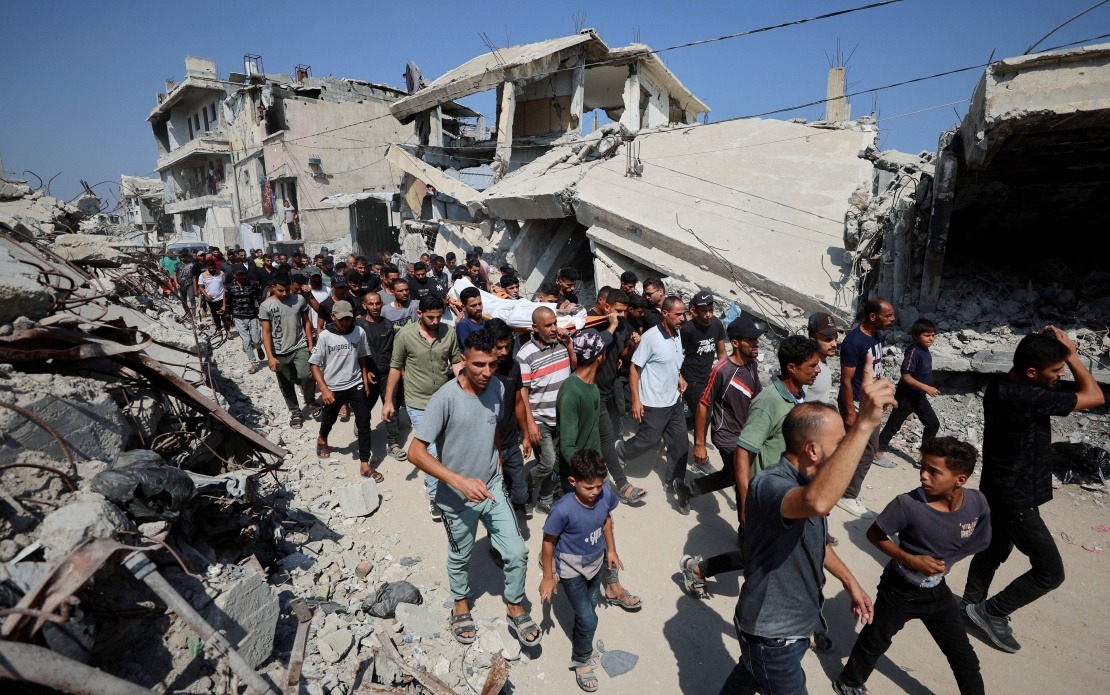
The humanitarian toll of the conflict has reached catastrophic proportions. Since October 2023, the Israeli military campaign in Gaza has resulted in over 73,000 deaths and 174,000 injuries, representing one of the deadliest conflicts in recent decades. Simultaneously, Israeli operations in the occupied West Bank have intensified, claiming approximately 1,200 Palestinian lives during the same period. These figures underscore the severity of violence that has become normalised across Palestinian territories, fuelling grievances and hardening positions on both sides.
Regional tensions extend well beyond the Israeli-Palestinian theatre. In February, coordinated Israeli and American military strikes against Iran marked a dangerous escalation that prompted Iranian retaliation against Gulf installations hosting American military assets. This tit-for-tat dynamic has injected international powers into what was already a combustible situation, creating multiple pathways through which localised conflicts could spiral into broader regional warfare. The interconnected nature of these tensions means that resolution in one area remains elusive without addressing systemic factors affecting the entire region.
Fahmy emphasised that responsibility for de-escalation falls upon all stakeholders, but he reserved particular criticism for Washington's role. He argued that the United States, as a major power with significant influence over Israeli decision-making and a direct military presence in the region, bears special obligation to promote stability. This framing reflects Arab League frustrations that American diplomatic efforts have failed to translate into meaningful constraints on Israeli military operations or settlement expansion policies.
The Arab League chief specifically urged Trump to curtail what he termed the "extremist ambitions" of the Israeli government, which he suggested are actively undermining peace efforts. He referenced the September 2025 peace framework that Trump had previously proposed for Gaza, which included provisions for a ceasefire, prisoner exchanges, phased Israeli military withdrawal, establishment of transitional Palestinian governance structures, and reconstruction investment in Gaza. Fahmy's invocation of Trump's own initiative suggests he believes the American president's stated vision provides leverage to demand Israeli compliance with principles the administration has already endorsed.
Beyond the Gaza-specific framework, Fahmy raised concerns about Israeli policies in territories where American pressure might theoretically be more effective. He called for reversal of Israeli violations in East Jerusalem and cessation of operations against Palestinians in the occupied West Bank. Notably, he also condemned the expansion of Israeli settlements in Palestinian territories and what he characterised as systematic displacement policies designed to eliminate Palestinian demographic presence. These issues, particularly settlement expansion, have long troubled international observers and represent areas where American diplomatic pressure has historically met with limited success.
The Arab League chief's critique centred on Israeli government strategy rather than merely tactical military decisions, suggesting that fundamental policy reorientation is required rather than modest operational adjustments. His accusation that Israel seeks to "completely eliminate the Palestinian presence" through settlement and displacement reflects Arab League conviction that current Israeli policies are fundamentally incompatible with Palestinian rights and regional stability. This characterisation shapes how the organisation views the possibility of negotiated settlements and influences its recommendations to international mediators.
Fahmy also expanded the diplomatic agenda to encompass Iran specifically, calling for restoration of the Joint Comprehensive Plan of Action (JCPOA) nuclear agreement between the United States and Tehran. He argued that resumption of negotiations aimed at reducing tensions with Iran is essential not merely for Iranian-American relations but for broader Middle Eastern stability. He connected Iranian issues to Gulf security and maritime freedom of navigation, emphasising that regional prosperity and stability require open waterways through the Strait of Bab el-Mandeb in the Red Sea and throughout the Persian Gulf, routes increasingly threatened by regional tensions and occasional attacks on commercial vessels.
This multifaceted appeal underscores how Middle Eastern regional actors view American policy as a potential force multiplier for either escalation or de-escalation. The Arab League's strategy of appealing directly to Trump while also invoking his own previously stated commitments suggests diplomatic sophistication born from experience with American administrations. However, the organisation's urgent tone also reflects desperation about the efficacy of such appeals, particularly given that previous diplomatic efforts have failed to produce meaningful constraints on either Israeli military operations or settlement policies that Fahmy identified as destabilising.
For Malaysia and other Southeast Asian nations monitoring regional developments, the Arab League's warning carries implications for global stability and economic security. The Middle East remains crucial for global energy supplies and maritime trade routes essential to Southeast Asian economies. Broader regional conflict could disrupt these critical flows, affecting Malaysian energy prices, shipping costs, and investment environments. Additionally, Malaysian-Arab relations and the Malaysian government's role as a respected voice in Muslim-majority nations may require careful calibration as tensions escalate and international actors demand alignment with particular positions on the conflict.

