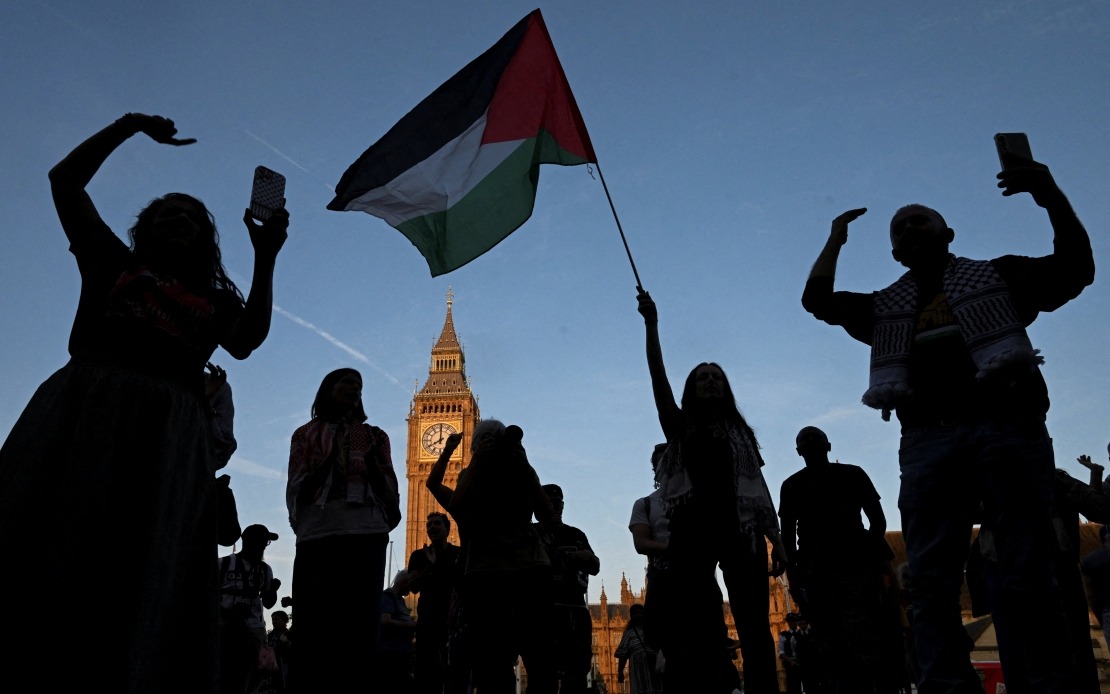
In his inaugural press conference at the Arab League's Cairo headquarters, newly appointed Secretary-General Nabil Fahmy made clear that the Palestinian question remains non-negotiable to the organization's mandate and future direction. Speaking on Monday, Fahmy positioned the cause as fundamental to the League's identity and regional influence, signalling that despite broader geopolitical shifts and competing regional crises, Arab governments have reaffirmed their commitment to Palestinian self-determination and the reversal of occupation.
Fahmy's language reflected the gravity with which Arab League leadership views the current situation in Palestinian territories. He characterized Israeli military operations in Gaza and the West Bank as constituting genocide, a designation that carries profound moral and legal implications. By invoking this terminology publicly, the Secretary-General elevated the discourse beyond humanitarian concern to the level of crimes against humanity, invoking international law frameworks that demand accountability regardless of time elapsed. This rhetorical stance signals an Arab League positioning itself as guardians of legal responsibility and universal justice principles.
The question of Jerusalem holds particular symbolic weight in Fahmy's statement, representing contested ground both literally and philosophically. The Arab League chief emphasized that the city's Arab character and status must be protected against what he termed attempts at erasure or unilateral alteration. For Malaysian readers, this reflects ongoing disputes over sovereignty and identity that resonate with Southeast Asia's own experiences of territorial and cultural contestation, where competing claims to heritage sites and regional influence shape diplomatic relations.
Beyond Gaza and the West Bank, Fahmy extended the League's concerns to Israeli actions in Lebanon, accusing Israel of systematic violations of Lebanese sovereignty through military incursions and attacks on southern Lebanon and Beirut. This framing expands the scope of Arab grievances beyond Palestinian territories, suggesting a pattern of Israeli regional behavior that the League views as systematically destabilizing. For the broader Middle East, such characterizations influence threat perceptions and alliance formation, creating shared narratives that bind Arab states despite their considerable internal differences.
The situation in the Syrian Golan Heights received separate mention in Fahmy's remarks, underscoring long-standing Arab position that Israeli occupation of this territory constitutes illegality under international law. The Secretary-General's explicit rejection of "fait accompli" decisions—where territory is claimed through military occupation—reflects fundamental Arab League principles about territorial integrity and international legitimacy. This stance carries implications for regional order, as it challenges any precedent where military occupation is normalized or accepted as permanent.
Fahmy's call for unified Arab action represents a critical challenge to Arab League effectiveness. He emphasized that solutions to regional problems must emerge from Arab consensus and collective will, suggesting frustration with fragmented national interests that often paralyze collective decision-making. For Southeast Asian observers, this mirrors persistent challenges in ASEAN coordination where national sovereignty concerns often override collective responses to regional crises. The Arab League's struggle to translate rhetorical unity into concrete coordinated action remains one of its persistent structural weaknesses.
The Secretary-General's reference to pursuing legal prosecution of those responsible for alleged crimes signals the League's interest in utilizing international legal mechanisms. This represents an evolution in Arab League strategy from purely diplomatic engagement toward engagement with international justice frameworks. The assertion that genocide possesses no statute of limitations creates theoretical openness to prosecution across decades, though the practical capacity to deliver such accountability through international courts remains limited and subject to political will among powerful nations.
Fahmy's emphasis on "critical phase" and "vigilant and proactive" action suggests urgency about the region's trajectory. This language indicates Arab League leadership's perception that the current moment demands more than rhetorical reaffirmation—it requires strategic repositioning and enhanced coordination. Whether this translates into institutional reform, enhanced funding, or new operational mechanisms remains unclear, but the tone signals dissatisfaction with the status quo and recognition that traditional approaches may prove insufficient.
For Malaysia and Southeast Asia, the Arab League's reinvigorated focus on Palestinian issues carries diplomatic significance. As a Muslim-majority region with substantial Arab diaspora communities and shared Islamic identity, Southeast Asia maintains principled positions on Palestinian statehood while navigating complex relationships with Western powers and Israel. The Arab League's strengthened commitment may influence regional Islamic organizations and create expectations among Southeast Asian Muslim constituencies regarding Malaysian governmental positions on Middle Eastern affairs.
The appointment of Fahmy himself carries implications beyond rhetoric. As Egypt's former foreign minister, he brings diplomatic experience and credibility within Arab circles. His framing of Palestinian issues as central rather than peripheral to Arab identity reflects a generational commitment to this cause regardless of other regional changes. This positioning may influence how Arab governments calibrate their own diplomatic approaches, particularly regarding normalization with Israel, which some Arab states have pursued in recent years.
The interconnected nature of Fahmy's concerns—Palestinian territories, Lebanon, Syria, and broader Arab regional interests—demonstrates how Middle Eastern crises remain deeply interwoven. Actions affecting one arena inevitably influence others, creating cascading effects on regional stability and diplomatic calculations. For Southeast Asian policymakers seeking to understand Middle Eastern dynamics and Arab positions on international issues, this integrated perspective proves essential.
Ultimately, Fahmy's statements reflect the Arab League's attempt to reassert relevance and moral authority within a rapidly changing regional landscape. As traditional Arab-Israeli conflict narratives encounter new regional realities, the League must balance principled positions with pragmatic engagement. The depth of commitment articulated in his inaugural address will be measured against institutional capacity and political will to translate declarations into sustained action on behalf of Palestinian self-determination.

