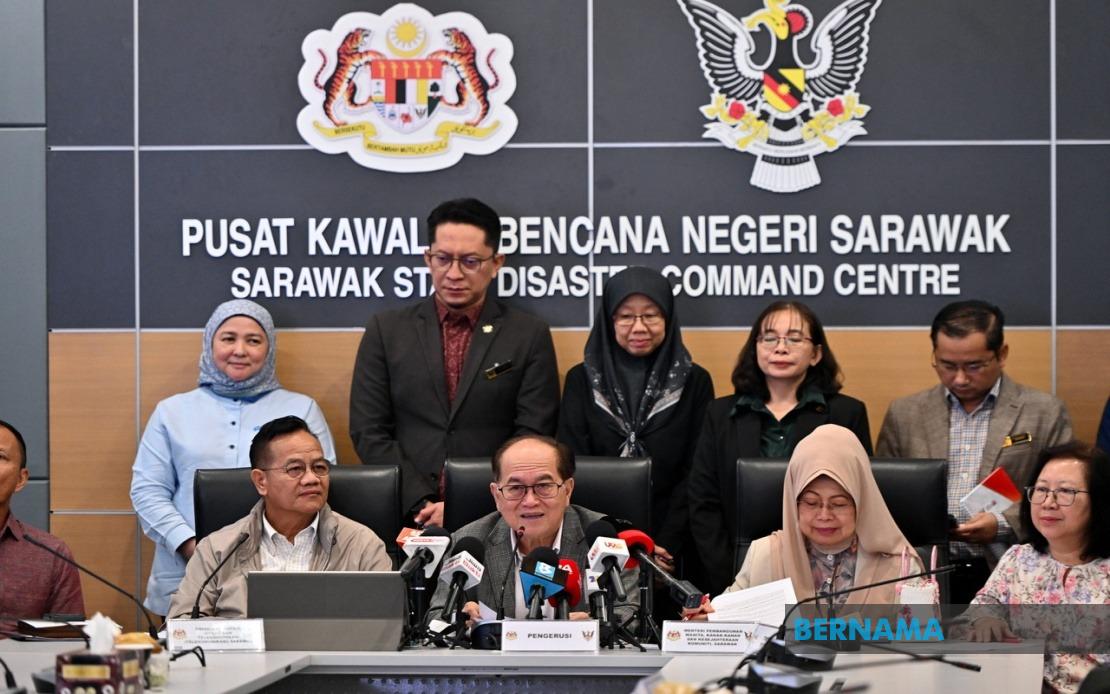
Sarawak will move into a state of emergency should the Air Pollutant Index climb to 500, according to Sarawak Deputy Premier Datuk Amar Douglas Uggah Embas, who outlined the state's contingency framework during a meeting of the Sarawak State Disaster Management Committee in Kuching on August 31. Once that threshold is breached, the matter will be escalated to the National Disaster Management Agency in Kuala Lumpur for coordination under established disaster protocols, marking a significant escalation in the state's response to transboundary pollution.
The activation of emergency status would initiate sweeping closures affecting government offices and businesses across the impacted zones, with only services deemed essential permitted to remain operational. This cascading series of restrictions underscores the gravity with which Sarawak's authorities treat the air quality crisis, recognising that an API reading of 500 represents a public health emergency rather than a mere environmental nuisance. The stringency of such measures reflects international best practices in managing hazardous air conditions that pose acute respiratory risks to vulnerable populations including children, the elderly, and those with existing respiratory conditions.
Uggah, who chairs the state disaster management committee, characterised the haze problem as fundamentally a regional concern that transcends Sarawak's borders and demands coordinated governmental engagement through formal diplomatic channels. The framing of haze as a multilateral issue rather than purely a state concern signals recognition that Indonesia, as the primary source of transboundary smoke from land-clearing fires, must be engaged through established regional frameworks. This diplomatic positioning allows Sarawak to seek federal intervention without appearing to exceed its constitutional jurisdiction in matters of foreign relations.
The committee has already moved to engage Natural Resources and Environmental Sustainability Minister Datuk Seri Arthur Joseph Kurup, who holds the deputy chairmanship position, to facilitate dialogue with Indonesia utilising existing ASEAN diplomatic channels. This institutionalised approach reflects the established regional norm of addressing transboundary environmental issues through the Association of Southeast Asian Nations rather than through bilateral accusation or public confrontation. The strategy prioritises relationship maintenance whilst advocating for concrete environmental remediation, a delicate balance necessary in regional diplomacy.
Sarawak's state disaster committee intends to maintain coordination with the federal government to ensure that concerns originating from the state reach decision-makers in Kuala Lumpur through appropriate governmental channels. Simultaneously, any proposals for providing assistance to neighbouring countries will be vetted and administered by federal authorities in consultation with relevant diplomatic bodies, preventing unilateral state action that could complicate national foreign policy. This hierarchical approach respects constitutional demarcation whilst ensuring that ground-level environmental realities inform national-level diplomatic strategy.
Cloud seeding operations, previously scheduled to commence on September 3 and continue through September 5, represent Sarawak's proactive attempt to artificially induce rainfall in affected areas. Beyond the immediate objective of mitigating visible haze through moisture precipitation, these operations serve a dual purpose by replenishing depleted water resources following an extended dry period. This pragmatic coupling of haze mitigation with drought relief demonstrates systems thinking in environmental management, recognising that consecutive climate stressors require holistic responses rather than siloed interventions.
Four critical water catchment zones—Simunjan, Lingga, Spaoh, and Lijok—are currently experiencing significant depletion that threatens water security for downstream populations and agricultural operations. The interconnection between the current dry spell and water scarcity adds urgency to the cloud seeding initiative, as artificial rainfall would simultaneously address two pressing environmental challenges confronting the state. Successful precipitation could relieve immediate pressure on water supply infrastructure whilst settling particulate matter suspended in the atmosphere, providing dual environmental relief.
The timing and execution of cloud seeding operations remain contingent upon prevailing meteorological conditions during the designated window, introducing an element of uncertainty into planning efforts. Weather systems must align sufficiently to enable effective cloud formation and precipitation, meaning that even scheduled operations cannot guarantee outcomes. This atmospheric dependency reflects the inherent limitations of technological interventions in addressing environmental phenomena ultimately driven by larger climatic and geographical factors beyond immediate human control.
Sarawak's multifaceted approach to the haze crisis—combining emergency preparedness frameworks, diplomatic engagement, technological intervention, and resource management—represents a comprehensive state-level response to a problem with roots extending deep into regional environmental politics. The establishment of clear API thresholds for escalating emergency protocols provides clarity for public institutions and private enterprises regarding when heightened protective measures should activate. Simultaneously, the diplomatic positioning through ASEAN channels acknowledges that sustainable resolution requires addressing the underlying causes of transboundary smoke generation in neighbouring territories, necessitating cooperation that transcends immediate blame allocation or crisis response and ventures into longer-term regional environmental governance.

