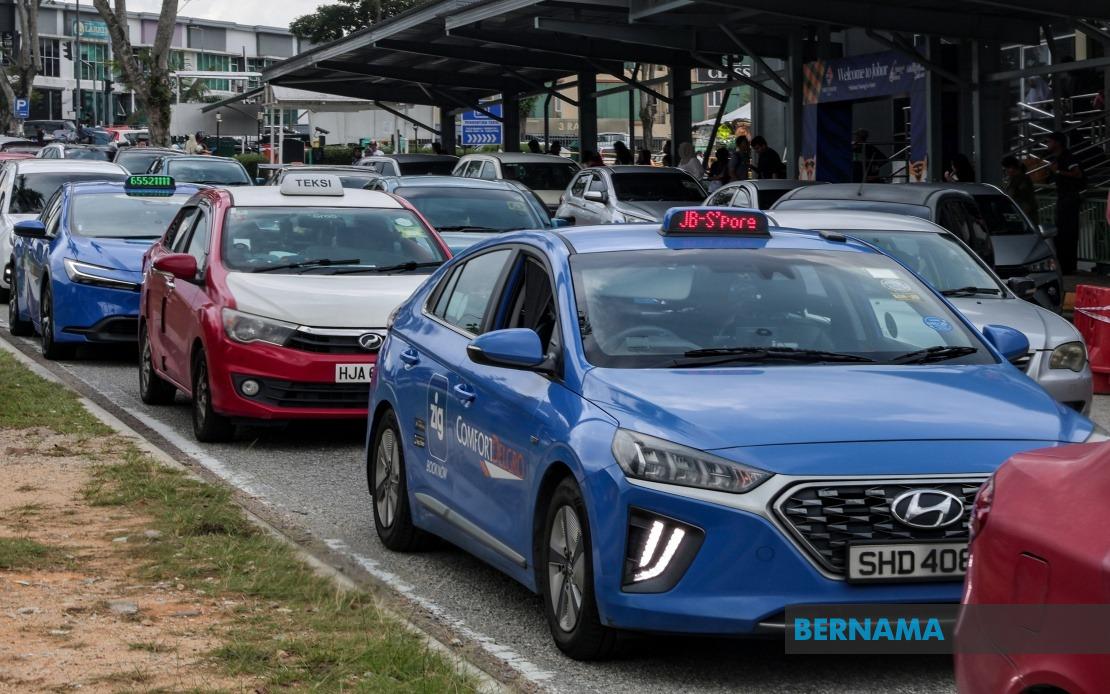
The Land Public Transport Agency (APAD) has announced that taxi drivers participating in the National MADANI Taxi Renewal Programme (Teksi MADANI) are not restricted to purchasing the Proton S70, despite the model being the government's flagship offering under the scheme. This flexibility represents a pragmatic adjustment to accommodate drivers facing practical constraints in their transition process.
While the Transport Ministry's policy outlined on April 23 originally envisioned the Proton S70 as the primary vehicle option for new applicants and replacements under Teksi MADANI, APAD has clarified that drivers may license or replace their vehicles with alternative models. The agency's statement issued today acknowledged that this provision aims to support applicants who already possess existing vehicles or have encountered rejection in securing hire-purchase financing under the programme's standard framework.
The rationale behind APAD's decision reflects recognition of real-world constraints facing the taxi industry. Not every driver has access to financing pathways that align with the Proton S70 specifications, and some operators maintain vehicles that remain operational despite exceeding traditional replacement schedules. By permitting alternatives, the programme acknowledges diverse financial situations across Malaysia's taxi sector while maintaining momentum toward modernisation and industry reform.
Teksi MADANI itself represents a transformative shift in Malaysia's taxi industry structure. Since its launch by Prime Minister Datuk Seri Anwar Ibrahim on July 3, the programme has fundamentally altered the relationship between drivers and vehicle ownership. Historically, taxi drivers operated under leasing arrangements where fleet operators retained ownership; Teksi MADANI enables drivers to become legitimate legal owners of their vehicles, marking a significant departure from decades-old practice.
The Proton S70 sedan, selected as the official taxi model under the programme, embodies the modernisation vision. The vehicle features contemporary styling without the traditional rooftop identification signs that have characterised Malaysian taxis for generations. A distinctive registration series beginning with the letters "GET" allows these vehicles to be easily identified on roads, creating a cohesive visual identity for the renewed fleet while maintaining public recognition of licensed taxis.
The government's financial commitment to Teksi MADANI underscores policy priority. Budget 2026 allocated RM10 million specifically for the Old Vehicle Replacement Matching Grant Programme benefiting taxi drivers. Prime Minister Anwar subsequently announced an additional RM10 million allocation in response to positive industry uptake, doubling the initial commitment and signalling confidence that the programme addresses genuine sector needs.
For Malaysian taxi drivers facing the transition period, APAD's allowance for non-Proton S70 vehicles provides essential breathing room. Drivers whose existing taxis remain roadworthy but fall outside the Proton S70 acquisition pathway can continue operating until specified vehicle age limits expire. This transitional tolerance prevents the disruption that might result from rigid enforcement requiring immediate replacement across the entire fleet.
The flexibility also recognises the reality that hire-purchase financing approval varies significantly across the driver population. Factors including credit history, income documentation, and lender risk assessment mean some drivers cannot access the financing structures underlying the Proton S70 package. Rather than exclude these drivers entirely from Teksi MADANI's benefits, APAD's approach permits alternative pathways to vehicle licensing and replacement, though participation in the core Proton S70 programme may offer enhanced incentives.
From a Southeast Asian perspective, Malaysia's approach to taxi industry transformation differs notably from regional counterparts. While ride-hailing platforms have disrupted traditional taxi operations across the region, Malaysia's Teksi MADANI represents a deliberate government intervention to strengthen the conventional taxi sector through ownership restructuring and fleet modernisation. The programme's flexible application demonstrates policymakers' willingness to adapt implementation when initial frameworks prove overly restrictive.
The programme's success hinges partly on maintaining driver confidence and participation rates. By removing absolute restrictions on vehicle selection, APAD likely anticipates higher uptake among drivers who feared being locked into expensive Proton S70 purchases. This pragmatic adjustment could accelerate the fleet renewal process while building goodwill across the taxi industry, which has historically viewed government intervention with scepticism.
Looking forward, the distinction between Proton S70 participants and drivers choosing alternative vehicles may create two-tiered outcomes within Teksi MADANI. S70 drivers likely enjoy superior financing terms, incentive packages, and potential branding advantages, while drivers opting for alternatives retain the fundamental benefit of vehicle ownership without the programme's premium features. This stratification could influence long-term adoption patterns as industry experience with Teksi MADANI accumulates.
The flexibility announcement also reflects implementation learning occurring in real time. As APAD processes applications and encounters obstacles, policy adjustments emerge to address bottlenecks. This responsive approach contrasts with programmes that enforce rigid specifications regardless of practical outcomes, suggesting Malaysian policymakers recognise that perfect implementation theory must yield to operational reality when drivers' livelihoods and business viability are at stake.

