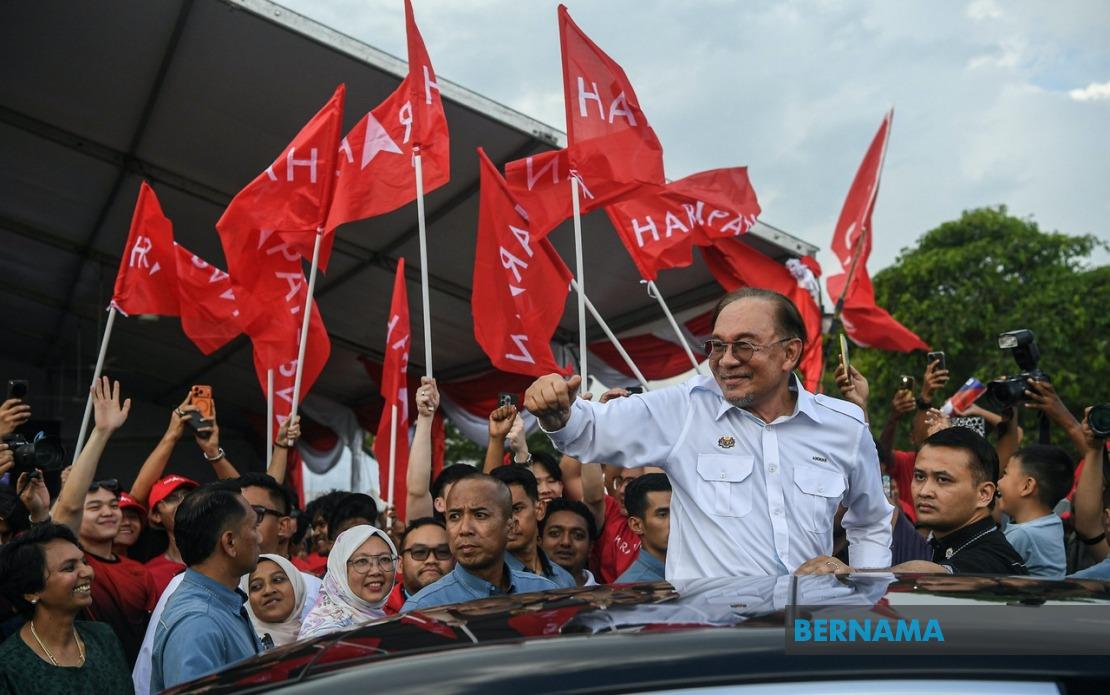
Prime Minister Datuk Seri Anwar Ibrahim's intensive campaign blitz across Johor is delivering tangible dividends for Pakatan Harapan as the coalition enters the final stretch before Saturday's state election. The personal engagement of the PH chairman on the ground has translated into palpable enthusiasm among voters, according to senior coalition figures who have accompanied him through multiple constituencies in recent days.
Communications Minister Datuk Fahmi Fadzil, who witnessed firsthand the reception accorded to the Prime Minister during campaign stops in the Batu Pahat district, described the community response as both spontaneous and overwhelmingly positive. The minister cited a particularly poignant example from Senggarang, where an elderly resident mobilized his own transport—a trishaw—to ensure he and his wife could meet Anwar Ibrahim personally, underscoring the level of grassroots engagement the PH chairman has managed to catalyze.
The strategic decision to deploy Anwar extensively across Johor reflects Pakatan Harapan's recognition of the Prime Minister's continued appeal among voters, particularly in semi-rural and traditional constituencies where personal contact and demonstration of government responsiveness remain influential factors. Over two consecutive days last weekend, Anwar addressed a total of 15 campaign events distributed across the state, a demanding schedule designed to maximize geographical coverage and reinforce the coalition's presence in diverse electoral districts.
Fahmi, speaking in his dual capacity as both Communications Minister and PH Communications director, framed the positive reception as validation of the coalition's campaign messaging throughout the Johor state election period. He suggested that the visible interest and enthusiasm demonstrated by communities hosting the Prime Minister would likely translate into either direct electoral support or heightened engagement with the coalition's policy agenda and performance record at the state level.
The broader strategic context involves Pakatan Harapan's decision to contest all 56 State Legislative Assembly seats in the 16th Johor State Election, positioning the coalition as a comprehensive alternative across the entire political landscape rather than conceding any ground to competing parties. This comprehensive candidacy demonstrates confidence in the coalition's organizational capacity and electoral prospects, even as it acknowledges the intensity of competition across different demographic and geographical constituencies within the state.
The intensity of campaign activity in the final week before polling day reflects conventional political wisdom that suggests momentum and visibility in the immediate pre-election period can significantly influence voter decision-making, particularly among undecided voters or those with lower levels of political engagement. Anwar's personal appearances serve multiple functions simultaneously: they energize PH party machinery and candidates at all levels, they provide visual and narrative content for media coverage and social media amplification, and they communicate directly to voters that the national leadership considers the Johor election sufficiently consequential to warrant executive-level attention.
The election itself represents a significant political moment for Malaysia, as it will determine which coalition controls one of the country's most economically significant states. Johor's governance has substantial implications for federal-level political dynamics and coalition configurations, making the campaign efforts directed toward this state election worthy of sustained national attention and resources from competing political organizations.
With 172 candidates contesting the 56 available seats across various parties, the electoral competition remains genuinely competitive, and vote distribution patterns may not necessarily produce decisive majorities for any single coalition. Early voting took place on the day Fahmi made these observations, with the official polling day scheduled for Saturday, July 11, providing a clear deadline by which campaign momentum must be consolidated into actual electoral outcomes.
The spontaneity that Fahmi emphasized—residents independently arranging transport to meet the Prime Minister rather than being mobilized through formal campaign logistics—carries particular significance because it suggests genuine popular interest rather than orchestrated political theater. Such demonstrations of voluntary engagement often correlate with higher propensity to actually cast votes on polling day, as they reflect deeper levels of political interest and investment in electoral outcomes.
Packatan Harapan's comprehensive candidacy across all 56 seats, combined with the Prime Minister's visible and active campaign engagement, positions the coalition for what party strategists evidently perceive as an achievable retention or strengthening of their position in Johor's state assembly. The political risks of such comprehensive contestation are equally obvious—spreading resources too thinly could result in disappointing performances in marginal constituencies—yet the coalition appears to have calculated that the benefits of comprehensive presence outweigh such risks in the contemporary Johor political environment.

