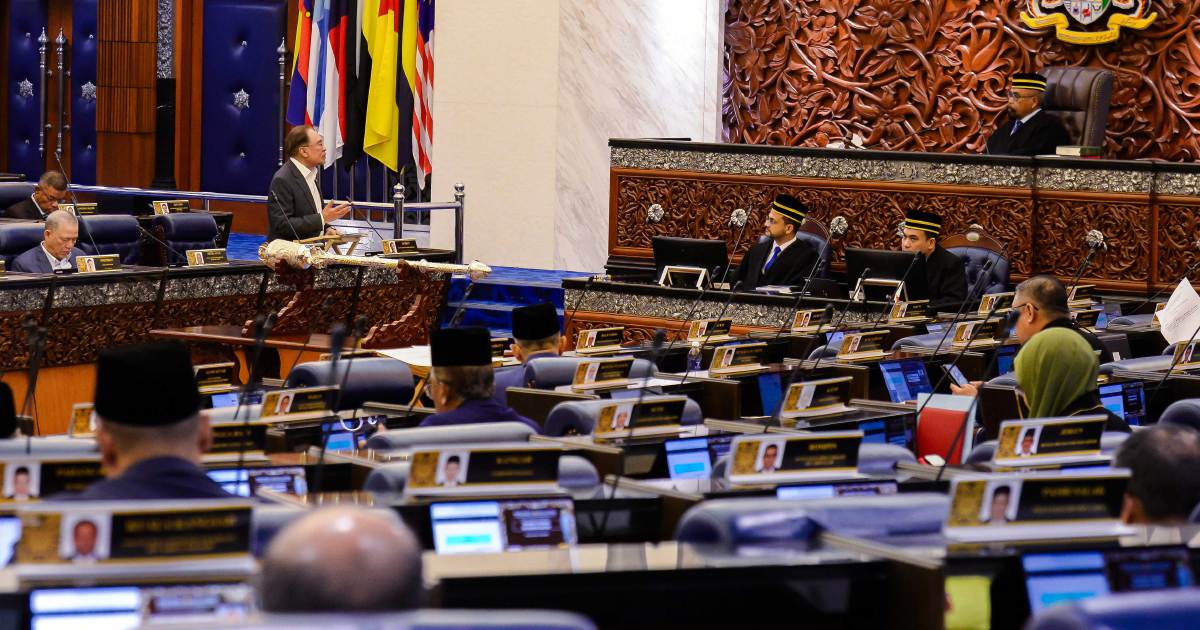
The second week of the Dewan Rakyat's ongoing session proved consequential for state governments and fiscal policy watchers, with Prime Minister Datuk Seri Anwar Ibrahim's pronouncements on federal allocations commanding parliamentary attention and setting the tone for broader discussions on revenue distribution across Malaysia's 13 states and three federal territories.
Anwar's intervention on the allocation question reflected mounting pressure from state representatives seeking clarity on how federal funds would flow to their constituencies in the current fiscal year. The matter had gained urgency as various state administrations faced budgeting deadlines and needed concrete figures to plan development projects and operational expenditures. By addressing the issue directly from the government benches, the Prime Minister signalled the administration's commitment to transparency in intergovernmental financial relations, a recurring concern in Malaysian federal politics where states frequently complain of inadequate resource distribution.
The timing of this clarification carried particular significance in Malaysia's political context. With several state governments controlled by opposition parties, any ambiguity surrounding allocation mechanisms can fuel accusations of partisan distribution of federal resources. Anwar's willingness to articulate the framework publicly in parliament provided all stakeholders with consistent information simultaneously, reducing room for competing interpretations of government intent. This approach also demonstrated parliamentary accountability mechanisms at work, as opposition lawmakers would have had opportunity to probe deeper into the methodology and fairness of the allocation system.
Federal funding mechanisms represent one of the most technically complex yet politically sensitive aspects of Malaysian governance. The Constitution provides the framework, but implementation involves multiple layers of calculation based on population, development needs, administrative costs, and other variables. States must coordinate with federal agencies to access different funding streams—some automatically disbursed, others requiring application and approval processes. Confusion or delays in the federal allocation pipeline can cascade through state budgets, affecting everything from school operations to rural infrastructure projects.
For readers across Southeast Asia, Malaysia's federal allocation debates offer instructive lessons in how devolved governance systems manage resource distribution in multi-ethnic, multi-layered political structures. Countries like Indonesia, the Philippines, and Thailand grapple with analogous challenges of fair federal disbursement. Malaysia's relative institutional maturity in this arena, despite occasional tensions, reflects decades of accumulated practice in balancing federal authority with state autonomy within a Westminster-style parliamentary system.
The second week's parliamentary activity extended beyond Anwar's intervention, though that pronouncement dominated media coverage and political commentary. Dewan Rakyat proceedings during this period typically encompass question time sessions where backbenchers raise constituent concerns, debates on specific policy matters, and committee reports. The prominence given to the federal allocations topic suggests it resonated across the political spectrum—a rare area of genuine bipartisan concern, since all state governments, regardless of political affiliation, benefit from clear and adequate federal funding.
Statewide responses to Anwar's clarification would likely depend on whether the allocation figures met expectations and whether the methodology was perceived as equitable. Economically developed states like Selangor and Penang, which generate substantial own-source revenue, are often more concerned with recognition of their fiscal autonomy, while less developed states depend more heavily on federal transfers. The allocation framework must therefore navigate inherent tensions between need-based distribution and reward for fiscal responsibility and economic productivity.
Looking forward, Anwar's parliamentary clarification probably presages detailed policy announcements through official channels. Parliament's role includes vetting government positions before formal implementation, and the Prime Minister's initial exposition in the Dewan Rakyat serves as an important political marker. Should implementation subsequently diverge from these parliamentary statements, the government would face credibility challenges and potential accusations of legislative overreach.
The broader context includes Malaysia's post-pandemic fiscal constraints. Like many nations, Malaysia faces competing demands on limited revenue—debt servicing, healthcare infrastructure, education, defense, and social safety nets all require substantial allocation. Against this backdrop, how federal resources are distributed to states takes on heightened significance. States expecting increased allocations may face disappointment, necessitating difficult conversations about fiscal realities. Conversely, overgenerous allocation frameworks could strain federal finances and crowd out other spending priorities.
Parliamentary sessions provide essential transparency mechanisms for such fiscal discussions. By conducting these debates publicly, with records preserved in Hansard, the Dewan Rakyat creates accountability structures that constrain executive arbitrariness. Malaysian journalists, civic organizations, and researchers can subsequently scrutinize whether allocations matched promises, whether promised projects materialized, and whether any favoritism towards particular states violated publicly articulated principles.
The federal allocations issue also intersects with Malaysia's ongoing administrative reform agenda. Streamlining the allocation process, clarifying eligibility criteria, and accelerating disbursement timelines have periodically appeared on government reform agendas. Anwar's parliamentary intervention may have incorporated announcements of procedural improvements alongside the substantive allocation figures themselves.
Final significance attaches to the symbolic importance of the Prime Minister personally addressing this matter in parliament rather than delegating it to a minister. This approach underscores how federal-state financial relations rank among governmental priorities. It also reflects Anwar's parliamentary leadership style, which emphasizes direct engagement with lawmakers on consequential matters rather than purely executive management.

