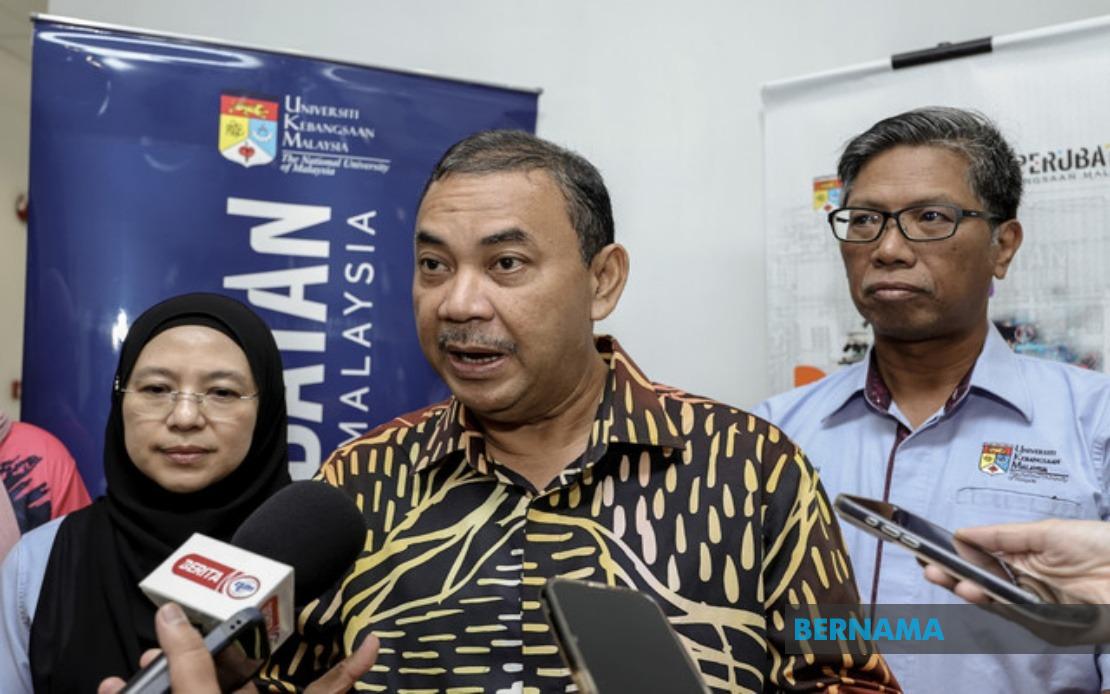
Prime Minister Datuk Seri Anwar Ibrahim's administration has drawn praise from diverse quarters for its economic management and fiscal performance, according to Datuk Azman Abidin, the Prime Minister's political secretary. Speaking in Kuala Lumpur on August 19, Azman outlined the MADANI Government's accomplishments across investment attraction, macroeconomic indicators and currency valuation, positioning these results as evidence of strong leadership and a compelling case for continued public confidence in the next electoral cycle.
The political secretary's remarks come as analysts have increasingly noted the government's demonstrable progress on reform initiatives and structural improvements to the economy. Azman contended that the metrics speak for themselves—foreign and domestic investment flows, economic expansion rates, and the ringgit's performance against major currencies all point to effective policy execution and institutional credibility. His comments reflect a broader messaging strategy aimed at building momentum for the administration's governance record ahead of anticipated electoral contests.
Azman's endorsement of the government's trajectory carries particular weight given his proximity to the Prime Minister and role in shaping political communications. The assertion that achievements have been "acknowledged and recognised by all quarters" suggests an effort to transcend traditional political divisions and appeal to pragmatic assessments of governmental competence. For Malaysian voters, this framing shifts focus from partisan rhetoric toward measurable outcomes—a pitch that may resonate with middle-class and business constituencies concerned with stability and growth.
The political secretary signalled that the administration intends to capitalise on these gains through a series of high-profile announcements. Coordinated with National Day and Malaysia Day observances, and the presentation of Budget 2027, these initiatives are designed to maintain public visibility of government achievements while reinforcing the narrative of active, forward-thinking leadership. The timing reflects a calculated approach to sustaining political momentum across key symbolic occasions and major fiscal announcements.
Azman's confidence in public discernment suggests the government believes its record will withstand electoral scrutiny. The implicit argument—that voters will rationally evaluate performance and reward effective administration—reflects faith in economic indicators and public sentiment as decisive factors in electoral outcomes. However, such reasoning assumes that bread-and-butter issues will dominate voter calculus, an assumption that may underestimate other considerations including polarisation, local grievances, and leadership personality factors.
Beyond electoral positioning, Azman's remarks underscore the government's commitment to ensuring that economic gains reach all social strata. He emphasised ongoing efforts to distribute benefits across different community segments, acknowledging that growth concentrated among elites would undermine political legitimacy. This focus on inclusive distribution speaks to longstanding debates within Malaysian politics about equitable development and the balance between aggregate growth and household purchasing power.
Azman made these comments while officiating the STEM Exploration 2.0 programme at Universiti Kebangsaan Malaysia, highlighting the government's investment in youth development and scientific education. The event brought together 200 Form Three students from Kuala Lumpur, Selangor and Negeri Sembilan for hands-on exposure to tissue engineering, medical research, microbiology and emerging technologies including three-dimensional printing. This educational platform exemplifies the government's strategy of showcasing human capital investment alongside economic metrics.
The political secretary argued that science and technology education should transition from optional enrichment to foundational national priority. His framing reflects regional and global trends in which artificial intelligence, biotechnology and digital innovation are reshaping labour markets and competitive advantage. By positioning STEM education as essential to Malaysia's technological resilience, Azman connects youth development to national competitiveness and long-term economic security—a rhetorical move that elevates education policy beyond classroom concerns to strategic national importance.
The expansion of the STEM Exploration programme from its current three-state footprint to a nationwide initiative represents both an educational commitment and a political investment. Bringing university-level science exposure to secondary students nationwide signals inclusive ambitions and builds goodwill among younger voters and their families. However, such programmes depend on sustained funding and teacher training capacity, challenges that often constrain implementation in Malaysia's diverse and geographically dispersed education system.
For Malaysian readers and regional observers, Azman's remarks encapsulate a broader political strategy: defending an incumbent administration on economic fundamentals while simultaneously investing in human capital and long-term competitiveness. The government's evident confidence in its record suggests internal polling or other indicators that public satisfaction with economic management remains relatively robust. Whether this translates into electoral advantage will depend on whether voters weigh macroeconomic indicators more heavily than other concerns including employment quality, social cohesion and institutional trust.
The emphasis on diverse institutional recognition—from international investors to domestic analysts—attempts to build a consensus around governmental competence that transcends partisan boundaries. This approach appeals particularly to business communities, professional classes and younger urbanites for whom stable, growth-oriented governance may outweigh other considerations. The challenge for the administration lies in ensuring that such recognition filters into household financial security and tangible improvements in daily life.

