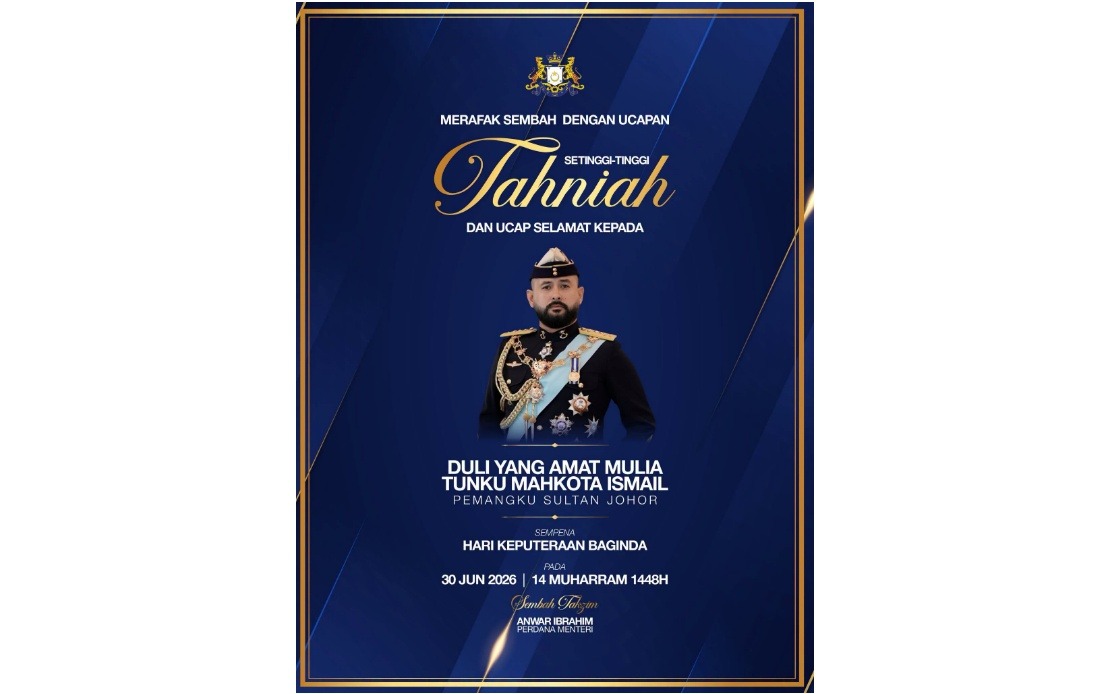
Prime Minister Datuk Seri Anwar Ibrahim marked the birthday of Tunku Mahkota Ismail, the Regent of Johor, by offering his congratulations and well-wishes through social media on June 30. The Prime Minister's message, shared on Facebook, included prayers for the royal's enduring good health, personal prosperity, and continued divine blessings as he carries out his important role in the state.
Tunku Mahkota Ismail holds one of the most significant positions within Johor's constitutional framework, serving as regent during the absence or incapacity of the Sultan. This role carries considerable ceremonial and administrative responsibilities within the state, and birthday acknowledgements from senior national leaders underscore the importance of maintaining strong bonds between the federal government and the state's leadership. The exchange of greetings reflects established protocols of respect between different levels of Malaysia's political hierarchy.
Deputy Prime Minister Datuk Seri Dr Ahmad Zahid Hamidi similarly marked the occasion through a Facebook post, extending formal wishes for the Regent's wellbeing. In his message, Zahid articulated specific hopes for the royal, praying that Allah SWT would grant Tunku Mahkota Ismail continued robust health, divine mercy, and personal protection. Beyond these general well-wishes, Zahid's statement included a deeper acknowledgement of the regent's governing role and responsibilities.
Zahid's remarks included a prayer requesting divine wisdom for Tunku Mahkota Ismail as he undertakes the significant task of leading and overseeing Johor Darul Ta'zim and the Johor people. This phrasing suggests recognition of the complex governance challenges facing the state, which is Malaysia's second-largest by population and a major economic centre. The deputy leader's emphasis on wisdom reflects awareness that effective state leadership requires careful judgment in navigating economic development, social cohesion, and administrative matters.
Johor holds particular strategic importance within the Malaysian federation. As a major economic hub with significant manufacturing, agricultural, and port industries, the state's stability and strong governance directly impact national economic performance. The Johor Strait also connects Malaysia to Singapore, making the state pivotal in regional trade and geopolitical relationships. Senior federal leaders' recognition of the Regent therefore carries implications beyond mere ceremonial courtesy.
The birthday acknowledgements from both Anwar and Zahid also serve a broader political function within Malaysia's system. In a federal structure where state rulers exercise constitutional authority, maintaining visible respect and cordial relations between federal executive leadership and state royal institutions is essential for political stability. Public birthday greetings represent a tangible demonstration of this respect and help reinforce the principle of harmonious centre-state relations.
Tunku Mahkota Ismail has become an increasingly prominent figure in Johor politics and governance in recent years. His role extends beyond ceremonial functions, and he has been actively involved in state-level decision-making and representation. The federal leaders' recognition of his birthday suggests their acknowledgement of his growing importance to Johor's administrative and developmental trajectory. This is particularly significant given that the state has navigated various political and economic challenges in recent years.
The practice of senior political figures offering public birthday wishes to members of the royal institution reflects Malaysia's constitutional monarchy system, where such gestures hold symbolic weight. Unlike purely ceremonial republics, Malaysia's system places the sultans and regents as constitutional heads with defined roles in governance, making relationships between them and elected leaders a matter of institutional significance. The visible exchange of courtesies helps ensure the stability that comes from respect between different constitutional branches.
For Malaysian readers, these birthday greetings illustrate the continuing interplay between federal and state leadership in the country's political landscape. Johor's significance as an economic driver and its geographic proximity to Singapore give its governance particular weight in national affairs. The public nature of these wishes from Anwar and Zahid signals that both the Prime Minister and his deputy maintain attentive relationships with key state leaders, an important consideration for understanding Malaysia's political stability.
The timing and tone of such messages also carry subtle diplomatic implications. By offering prayers for Tunku Mahkota Ismail's wisdom in leading the people of Johor, federal leaders implicitly acknowledge the state's distinct identity and the loyalty its citizens hold toward their ruler. This recognition is important in a country where state identities remain significant, and where the relationship between federal authorities and state institutions requires careful management to maintain constitutional harmony.

