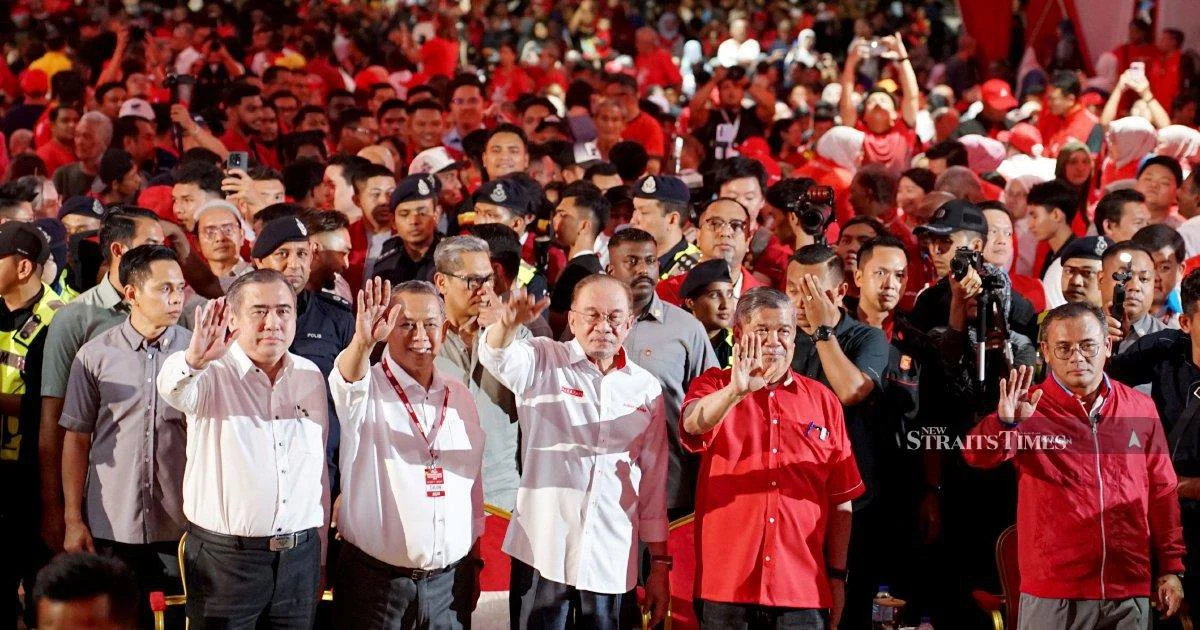
Prime Minister Datuk Seri Anwar Ibrahim has issued a forthright reminder to all political stakeholders, particularly party leaders, to refrain from instrumentalising the royal institution for gain during the Negri Sembilan state election campaign. Speaking in Kuala Pilah, Anwar emphasised the importance of maintaining the sanctity of the monarchy separate from electoral competition, drawing a clear line between constitutionalised institutions and the rough-and-tumble of political rivalry.
The warning reflects growing concerns across Malaysia's political landscape about the inappropriate invocation of traditional institutions in partisan contests. The monarchy, as a constitutional pillar, occupies a unique and revered position within the country's democratic framework. Its status above politics is considered fundamental to the institutional stability that has allowed Malaysia to navigate multiple electoral cycles and transitions of power without the kind of institutional collapse witnessed in other democracies.
Anwar's intervention signals the federal government's determination to preserve these boundaries, even as state-level elections generate intense partisan competition. Negri Sembilan, like other Malaysian states, has its own royal lineage and traditional governance structures that command deep respect among residents. The risk, as the Prime Minister appears to recognise, is that election fever can tempt politicians to court favour by invoking royal symbols, narratives, or perceived support—thereby blurring crucial institutional lines.
This is not merely an abstract constitutional concern. Malaysia's experience, including episodes from recent decades, demonstrates that when politicians begin using the monarchy as political ammunition, it can erode public confidence in the institution itself. The monarchy's strength lies partly in its perceived neutrality and distance from partisan struggle. Once drawn into campaign rhetoric, whether explicitly or through insinuation, that protective distance contracts, and the institution's authority can be diminished in the eyes of those who begin to view it through a partisan lens.
For Negri Sembilan specifically, the state election presents a concentrated moment when party activists, candidates, and their supporters are most energised and most tempted to reach for every available advantage. In such an environment, casual references to the monarchy, claims about which party enjoys royal favour, or suggestions that certain policies align with royal wishes can spread rapidly through social media and grassroots networks. Anwar's warning serves as an early brake on such tendencies.
The Prime Minister's statement also carries implications for the broader Southeast Asian region, where Malaysian constitutional arrangements are often studied as a model for managing the intersection of monarchy and democracy. Nations with their own royal institutions, from Thailand to Cambodia, face perpetual tension between electoral politics and institutional reverence. Malaysia's ability to maintain these boundaries—imperfectly, but substantially—has been remarked upon internationally as a factor in the country's relative political stability.
Within Malaysia itself, this message is particularly relevant to parties seeking to mobilise support in Negri Sembilan. The state has historically been sensitive to questions of royal prerogative and legitimacy, and voters are attuned to the relationship between state government and the institution of the Negri Sembilan monarchy. Parties that are perceived as respecting these boundaries are likely to be rewarded; those that appear to instrumentalise royal symbolism risk triggering a backlash, not merely from rivals but from voters themselves who value institutional propriety.
Anwar's intervention also reflects the complexities of governing in a federalised system where state governments operate with considerable autonomy while remaining answerable to federal constitutional principles. The Prime Minister, as head of the federal executive, has legitimate grounds to caution against practices that could undermine constitutional institutions. By speaking out now, ahead of the full swing of campaigning, he establishes a normative expectation that cuts across party lines.
The practical challenge lies in enforcement and awareness. Political campaigns generate enormous momentum, and party workers at ground level may not always receive or internalise such reminders from the federal leadership. Social media amplifies every utterance, sometimes distorting context. Misstatements or overzealous rhetoric by local candidates can quickly become campaign talking points. Anwar's warning, therefore, must be supplemented by consistent messaging from within each party and, ideally, by vigilance among election observers and the media to flag instances where lines appear to be crossed.
Further, the statement underscores the responsibility that falls on all democratic participants—not just politicians. Media outlets, social media users, and civil society organisations all play roles in either respecting or violating institutional boundaries. If the tone is set from the top, as Anwar has attempted, then supportive institutions can help amplify and reinforce that tone throughout the campaign period.
Looking ahead, the Negri Sembilan election will serve as a test case for whether such warnings can effectively shape campaign conduct. The state's voters and observers will be watching to see which parties and candidates respect the Prime Minister's admonition and which, if any, choose to flout it. Beyond the immediate electoral outcome, the manner in which this campaign unfolds will signal something important about Malaysia's continuing commitment to preserving the constitutional separation between the monarchy and the political arena.

