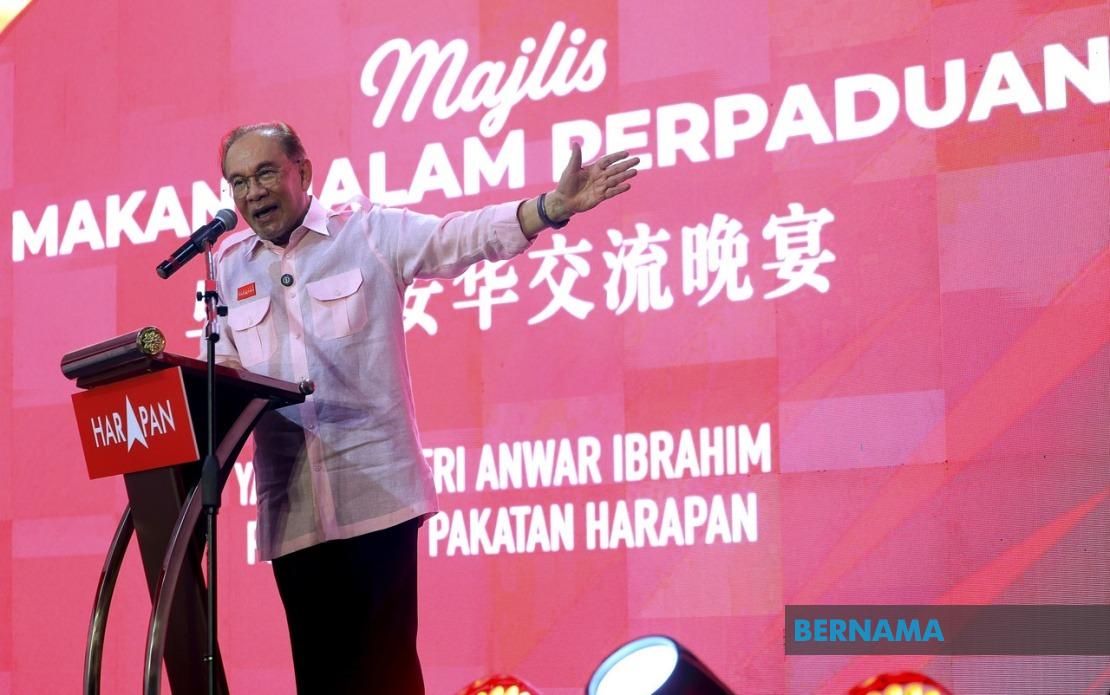
Prime Minister Datuk Seri Anwar Ibrahim has expressed concern over what he characterises as unseemly jostling among opposition parties for the menteri besar's position in Negeri Sembilan, using the squabble as a rallying point for Pakatan Harapan candidates ahead of the state election on August 1. Speaking at a campaign dinner in Seremban on July 22, the PH chairman highlighted the contrast between his coalition's emphasis on administrative competence and what he described as his rivals' preoccupation with factional positioning, suggesting that voters should be wary of supporting parties consumed by internal power struggles.
Anwar's framing of the election contest reflects a broader strategic effort to position PH as the stable, cohesive alternative to a fragmented opposition camp. Rather than dwelling on policy specifics, his message centred on the dangers of entrusting governance to parties that appear more focused on securing top positions than on the machinery of administering a state effectively. This approach resonates with Malaysian voters who have grown tired of the revolving-door politics and coalition breakdowns that characterised earlier administrations, particularly during the tumultuous 2018-2023 period when leadership instability hampered decision-making across multiple states.
The prime minister made a pointed case for retaining incumbent Negeri Sembilan Menteri Besar Datuk Seri Aminuddin Harun, emphasising his tenure as evidence of principled stewardship. Aminuddin's administration, Anwar suggested, has demonstrated both integrity and freedom from the corruption and abuse of power that have plagued other state governments. This endorsement carries weight given PH's broader narrative of reform and clean governance, themes that helped propel the coalition to federal power in 2018 and remain central to its political identity even after the transition to the current Unity Government framework.
Beyond the immediate focus on menteri besar selection, Anwar used the campaign platform to address what he sees as a broader problem with contemporary electoral discourse in Malaysia: the deployment of racially charged narratives designed to mobilise support. He accused unnamed quarters of weaponising identity politics during the campaign, a criticism that implicitly targets both the opposition and elements within the government coalition that resort to such tactics. In contrast, Anwar reiterated that the Unity Government intends to govern in a manner that transcends racial and communal divisions, delivering benefits to all Malaysians regardless of ethnicity.
This inclusive governance agenda, as articulated by the prime minister, encompasses tangible measures including expanded socio-economic assistance, housing initiatives, and salary adjustments for civil servants. The specificity of these commitments suggests a recognition that voters increasingly evaluate parties not merely on rhetorical promises but on concrete improvements to their material circumstances. For Negeri Sembilan residents, these allocations represent potential relief in a state where housing affordability and civil service remuneration have been consistent sources of discontent.
PH's candidate slate for the August 1 polls reflects its confidence in contesting all 36 state seats, a full deployment that demonstrates the coalition's intention to compete vigorously rather than cede ground. The distribution of nominations across the three main PH components—PKR with 16 candidates, DAP with 11, and Amanah with nine—suggests a careful balance designed to maintain inter-party cohesion. This internal equilibrium stands in stark contrast to the fragmentation within the opposition, bolstering Anwar's implicit argument that PH possesses the structural stability necessary for effective governance.
The staging of the campaign dinner in Taman Sri Penaga, attended by candidates for three key constituencies (Linggi, Sikamat, and Ampangan), reflects the granular nature of contemporary Malaysian electoral strategy. Rather than rally-style mass events, PH is conducting a series of targeted engagements designed to mobilise ground support and reinforce messaging among community leaders and activist networks. This approach allows the coalition to control its narrative more tightly while building personal connections with voters in constituencies that may determine the election outcome.
Negeri Sembilan's political significance within the broader Malaysian context should not be underestimated. The state has traditionally served as a bellwether, with its results often foreshadowing shifts in national sentiment. A strong PH performance here would strengthen Anwar's hand within the broader Unity Government framework and provide momentum heading into future federal contests. Conversely, a weakened showing would invite questions about PH's durability and the sustainability of its electoral coalition, potentially emboldening rivals who question whether the current federal arrangement can survive intact.
The campaign's temporal proximity to early voting on July 28 underscores the urgency with which PH is marshalling its resources and messaging. Early voting provisions, which are increasingly utilised by civil servants and those with work commitments that prevent attendance on polling day, represent a crucial battleground where organisational discipline becomes paramount. PH's ability to mobilise early voters could prove decisive in a state where margins are likely to be narrow in competitive constituencies.
Anwar's intervention in the campaign, while ostensibly focused on local dynamics, carries implications for the wider political ecosystem. His emphasis on competent administration and inclusive governance speaks to concerns that resonate beyond Negeri Sembilan's borders. States across Malaysia face similar challenges regarding housing, civil service morale, and economic opportunity, making the prime minister's policy commitments relevant to voters nationwide. Should PH succeed in translating these messages into electoral gains in Negeri Sembilan, it may provide a template for future campaigns in other states where PH seeks to consolidate or expand its influence.
The contrast Anwar draws between PH's focus on collective advancement and the opposition's apparent preoccupation with zero-sum competition over ministerial positions taps into a deep frustration among Malaysian voters with transactional politics. The post-2018 experience, during which various coalitions dissolved or fractured amid disputes over power distribution, has left many citizens skeptical of traditional party politics. Anwar's message, whether or not it reflects the complex realities of PH's own internal negotiations, appeals to this sentiment by positioning his party as somehow transcendent of such petty struggles. Whether this framing proves persuasive to Negeri Sembilan voters will become clear when polling closes on August 1.

