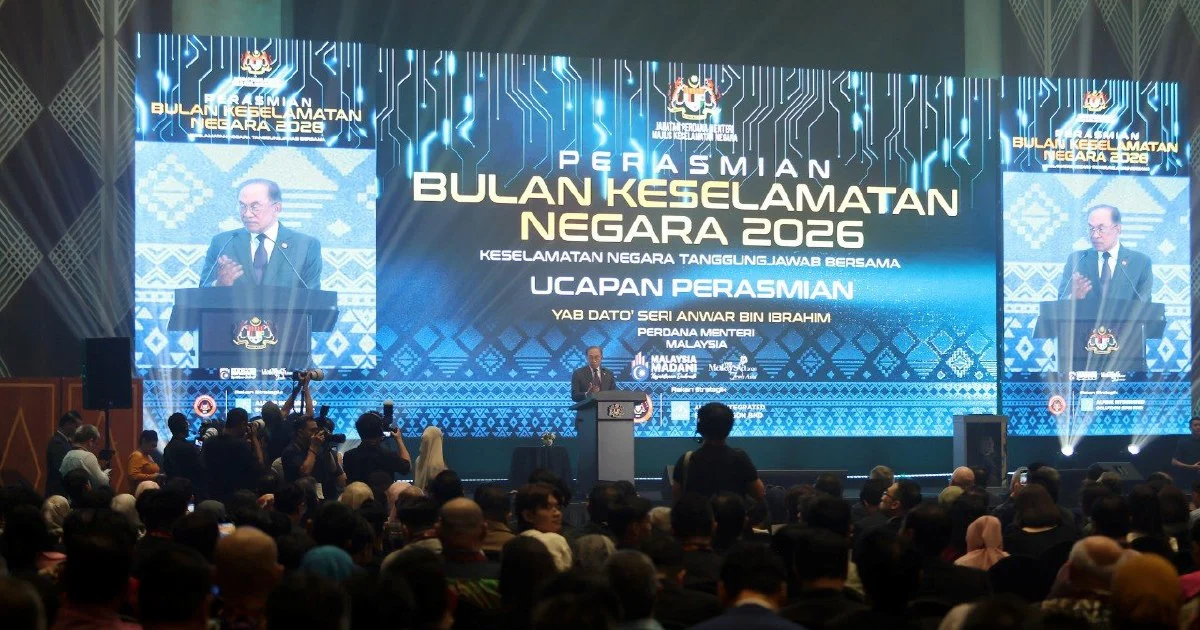
Prime Minister Datuk Seri Anwar Ibrahim has sounded an alarm about the resurgence of racial and regional divisions in Malaysian political discourse, particularly as Johor approaches a crucial state election. Speaking from Putrajaya, the premier expressed deep concern that the country risks becoming ensnared once again in outdated narratives centred on ethnic sensitivities, arguing that such divisive messaging runs counter to the nation's progress and stability.
Anwar's warning reflects a broader anxiety within the federal government about the tenor of upcoming electoral contests, where political competition has historically triggered the deployment of sensitive communal issues. The Johor polls represent a significant electoral battleground, given the state's substantial population and its status as a traditional stronghold for certain political coalitions. The Prime Minister's intervention suggests that Putrajaya is concerned certain political actors may be preparing to weaponise racial discourse to mobilise voters, a pattern that has marked Malaysian electoral campaigns for decades.
The timing of Anwar's remarks is significant. Johor, as Malaysia's southernmost state and a crucial economic hub, has long been viewed through the lens of intercommunal relations and regional political competition. Any election campaign that centres on race-based narratives risks undermining the stability that has allowed the state to develop economically and maintain relative harmony among its diverse population. The Prime Minister appears to be attempting to establish a political norm that such rhetoric will not be tolerated without pushback from the federal leadership.
Anwar's critique also carries implications for his own political standing. By positioning himself as a guardian against divisive politics, the Prime Minister is attempting to establish moral authority on the question of national unity. This move may be designed to counter opponents who have previously portrayed his Pakatan Harapan coalition as being insufficiently committed to Malay-Muslim interests, a narrative that has damaged his political credibility in the past. His preemptive warning suggests awareness that Johor's election campaign may feature such attacks.
The underlying tension reflects a persistent challenge within Malaysian politics: the competing imperatives of electoral competition and national cohesion. While politicians naturally seek to mobilise their respective constituencies, relying on communal appeals has historically inflamed tensions and hindered productive dialogue across ethnic lines. The federal government's concern appears rooted in the belief that Johor's election campaign could set a troubling precedent for future contests, normalising the deployment of racial messaging in ways that prove difficult to reverse.
From a governance perspective, Anwar's statement signals an attempt to recalibrate political expectations. By publicly cautioning against old narratives, the Prime Minister is essentially asking political parties to elevate their campaign discourse above ethnic grievance politics and toward substantive policy debates on development, infrastructure, and economic opportunities. However, the effectiveness of such appeals depends largely on whether other political leaders choose to embrace the same approach, which remains uncertain given the competitive nature of Malaysian elections.
The concern articulated by Anwar also reflects anxieties within Southeast Asia more broadly. Malaysia has long been viewed as a model for managing ethnic diversity within a democratic framework, though that model has always been precarious. The resurgence of racialised political rhetoric in neighbouring democracies, including in parts of Southeast Asia, has raised concerns that Malaysia could slide backward in its ability to manage communal relations constructively. A Johor campaign dominated by racial narratives could reinforce such worrying regional trends.
For Malaysian voters and businesses, the implications are practical. Elections fought on substantive grounds—economic development, service delivery, education quality, healthcare access—tend to produce more stable outcomes and clearer mandates for governance. Conversely, campaigns organised around racial and regional anxieties typically generate higher polarisation and make post-election consensus-building more difficult. Business communities and civil society groups have long recognised that stability rooted in shared prosperity and inclusive development frameworks yields better economic outcomes than that built on communal accommodation alone.
Anwar's warning also underscores the responsibilities borne by major political parties during electoral contests. The Prime Minister's implicit message is that voters deserve to judge parties on their actual performance and vision, not on their capacity to inflame sensitivities. This framing attempts to elevate Malaysian democratic discourse and sets a standard against which political parties can subsequently be held accountable. Whether his words will influence actual campaign behaviour remains a critical question, one that will likely be answered only as the Johor election campaign intensifies and particular political actors decide how to structure their appeals to voters.

