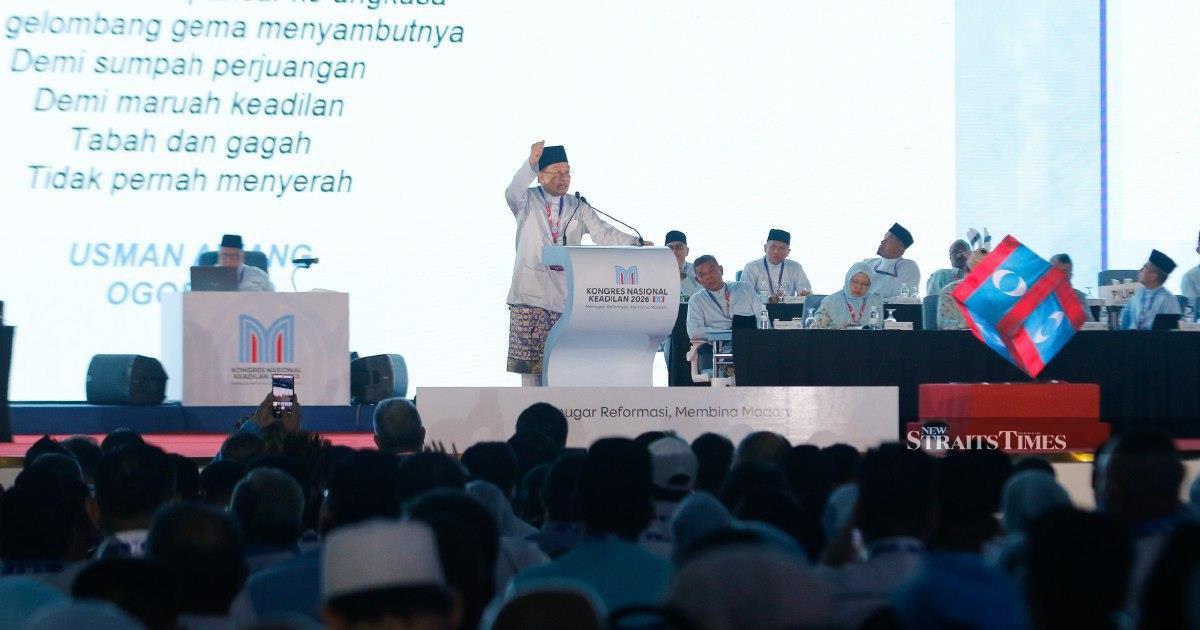
Malaysia's government will intensify its reform agenda, according to PKR president Datuk Seri Anwar Ibrahim, who signalled a shift towards more aggressive implementation of planned initiatives during remarks at Ayer Keroh. The pronouncement reflects mounting pressure within the coalition to demonstrate tangible progress on commitments made to voters and to address persistent calls for institutional change across the civil service, judiciary, and economic structures.
The timing of Anwar's statement carries significance against the backdrop of evolving political dynamics in the country. Reform has consistently featured as a cornerstone of the current administration's platform, yet critics have questioned the pace of execution since assuming office. By emphasizing acceleration, the government seeks to recalibrate public expectations and demonstrate that substantive change remains central to its governing philosophy, particularly as it navigates competing priorities ranging from economic recovery to inflation management.
For Malaysian observers and regional analysts, the commitment to heightened reform activity underscores the administration's recognition that economic competitiveness and institutional credibility depend upon tangible modernization efforts. Southeast Asia increasingly watches Malaysia's trajectory, with the nation's progress on anti-corruption measures, financial transparency, and regulatory modernization influencing investor confidence across the region. Countries seeking structural improvements often face the challenge of balancing urgent needs with capacity constraints, and Malaysia's declared intention to accelerate suggests leadership confidence in current institutional capacity despite acknowledged gaps.
The pledge encompasses a broad spectrum of potential initiatives. Historically, Malaysian reform discussions reference improvements in public sector efficiency, anti-corruption frameworks, and the streamlining of bureaucratic processes that have long hindered business operations. Additionally, reforms touch upon the judiciary's independence, civil service competency standards, and mechanisms for public accountability. Each domain presents distinct implementation challenges, requiring coordination among multiple ministries and stakeholder engagement.
Anwar's announcement carries implications for PKR's political positioning within the coalition framework. As the largest party within the government arrangement, PKR's assertion of reform leadership helps consolidate party identity and appeal to the electorate demographic most concerned with institutional change. This strategic dimension reflects broader coalition management, wherein each party must articulate its distinctive contribution to governance while maintaining sufficient unity to sustain parliamentary majorities.
The Malaysian private sector and civil society have repeatedly emphasized that reform implementation directly affects their operations and policy engagement. Business chambers have called for faster regulatory modernization and improved government-to-business communication channels. Civil society organizations have focused on transparency mechanisms and anti-corruption accountability. An accelerated reform agenda addresses these constituencies while simultaneously managing expectations about realistic timelines for deep institutional change, which typically requires years rather than months for meaningful implementation.
Regional context matters considerably here. Neighboring countries including Singapore, Thailand, and Indonesia have undertaken varied reform trajectories, creating comparative benchmarks that shape both domestic expectations and international perceptions of Malaysia's governance trajectory. The ASEAN Economic Community and various bilateral trade arrangements increasingly incorporate standards regarding anti-corruption compliance, regulatory transparency, and institutional independence. Malaysia's reform agenda thus serves both domestic governance objectives and international competitiveness positioning within Southeast Asia's institutional architecture.
The economic dimension cannot be overlooked. Malaysia's aspirations toward higher-value manufacturing, digital economy leadership, and sustainable development all depend upon investor confidence that governance structures support contract enforcement, transparent decision-making, and predictable regulatory environments. Multinational corporations and foreign direct investment flows respond to signals about institutional quality. An accelerated reform agenda communicates to international investors that Malaysia takes seriously the structural improvements required for sustained economic advancement.
Implementation mechanics present genuine challenges despite leadership commitment. Reforming entrenched systems requires coordination across bureaucratic layers often resistant to change, careful sequencing to avoid service disruptions, and resource allocation within constrained budgets. Furthermore, different reform initiatives may create competing demands on government attention and technical capacity. The government must balance multiple reform streams while maintaining daily administrative functions and responding to crisis situations that inevitably demand leadership time and resources.
Public communication about reforms carries its own importance. Citizen understanding of specific reform initiatives, their expected impacts, and realistic timelines affects both public support and political sustainability. Vague commitments to acceleration without concrete detail risk disappointing expectations, whereas overly specific promises create accountability benchmarks that missed targets damage government credibility. The challenge lies in communicating sufficient clarity and ambition without overcommitting.
For ordinary Malaysians, reform acceleration potentially means improved public services, reduced corruption in everyday transactions, and greater institutional responsiveness to citizen concerns. However, the connection between high-level policy announcements and ground-level change often requires patient engagement over extended periods. Sustained political will, bureaucratic cooperation, and adequate resourcing all prove essential for translating presidential pronouncements into lived improvements in governance quality and service delivery.
Moving forward, observers will measure the administration's commitment to accelerated reform through concrete policy announcements, legislative submissions, and demonstrable changes in government operations. The coming months and quarters will reveal whether Anwar's declaration represents genuine intensity shift or political positioning. Malaysia's regional standing and economic prospects increasingly depend upon whether governmental institutions can genuinely modernize at accelerated pace, making this commitment consequential beyond routine political rhetoric.

