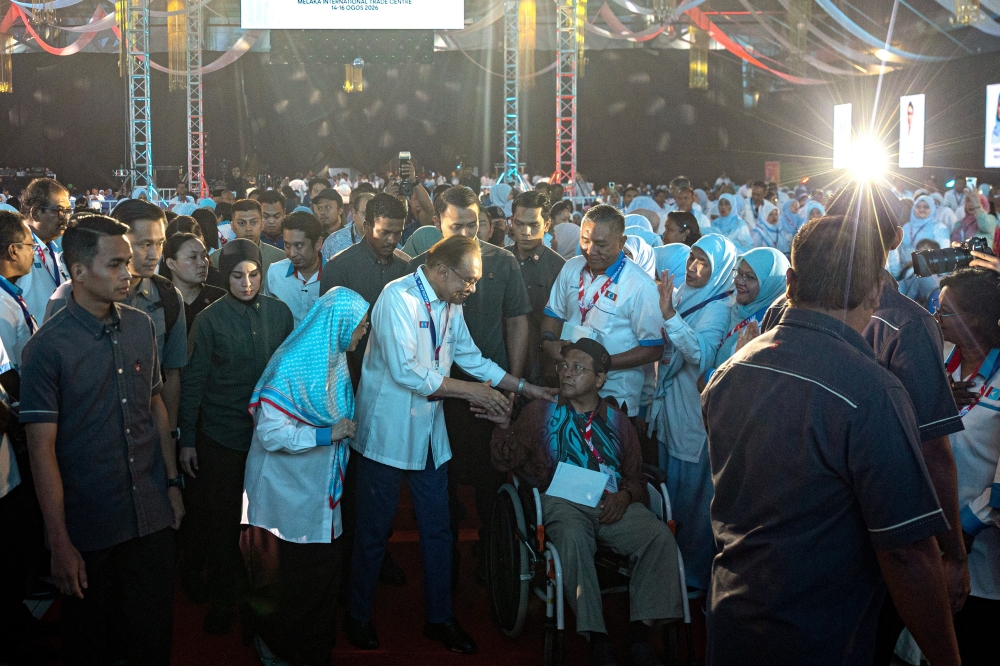
Prime Minister and PKR president Datuk Seri Anwar Ibrahim addressed party delegates in Melaka on Friday, emphasising that any future decision concerning Umno must be grounded in a commitment to improving the lives of ordinary Malaysians rather than emotional or vindictive impulses. The statement underscores the delicate balancing act the government continues to perform as it manages relationships with political rivals while attempting to maintain coalition stability and focus on economic recovery.
Anwar's remarks come at a time when Malaysia's political landscape remains fractured following the general election results that produced a hung parliament and necessitated the formation of a coalition government. The PKR leader's insistence that rational consideration of public interest should override personal grievances or factional resentments reflects an acknowledgement that governance requires setting aside deeply entrenched animosities that have characterised Malaysian politics for decades.
The emphasis on people's welfare serves as a counterweight to the historical tensions between PKR and Umno, tensions that have produced some of the sharpest political divisions in modern Malaysian history. By articulating this principle explicitly to party members, Anwar appears to be establishing a framework within which pragmatic political decisions can be made without appearing to compromise ideological positions or party principles. This is particularly significant for PKR members who may harbour reservations about any alignment or cooperation with their traditional rival.
The context of coalition politics in Malaysia requires parties to make difficult compromises that would have been unthinkable in earlier eras. The arithmetic of parliamentary representation has forced even parties with fundamentally opposed worldviews to find mechanisms for working together. Anwar's statement suggests he recognises that sustaining such arrangements depends on maintaining focus on tangible outcomes for voters rather than allowing historical resentments to drive political decisions.
Within PKR's own structures, such statements serve an important function in managing internal expectations and preventing grassroots members from viewing any cooperation with Umno as a betrayal of party values or a capitulation to rivals. By framing cooperation decisions through the lens of public welfare, Anwar provides a legitimising principle that party members can understand and accept, even if they retain misgivings about working with Umno.
The broader implications for Malaysian politics are significant. If maintained consistently, this approach could signal a maturation of the nation's political discourse, one where calculations about policy outcomes and citizen welfare gradually displace calculations about political revenge or factional dominance. However, such transitions are fragile and depend heavily on all parties involved demonstrating genuine commitment to the principle.
For the coalition government specifically, Anwar's remarks suggest he is attempting to establish parameters that allow difficult decisions to be made with greater legitimacy and less risk of internal party rebellion. Any future arrangement involving Umno will likely be presented to PKR members through arguments about specific policy benefits or legislative achievements rather than as a necessary tactical alliance against other opponents. This rhetorical framework becomes crucial when asking party members to accept decisions they might instinctively resist.
The timing of the statement is also noteworthy, suggesting that coalition dynamics may be shifting or that particular decisions regarding Umno cooperation may be under consideration. By preemptively establishing that welfare considerations must drive such decisions, Anwar may be seeking to shape how party members and the broader public interpret whatever moves the government makes in the coming months.
Southeast Asian and international observers of Malaysian politics will likely interpret Anwar's statement as indicating a gradual normalisation of political relations that had been highly personalised and adversarial. The region has seen various transitions toward more institutionalised and issue-based politics, and Malaysia's trajectory in this direction would represent a significant development given the intensity of its political rivalries.
The challenge for the government will be demonstrating that decisions made under this welfare-focused framework actually deliver measurable benefits to voters. Public perception of whether cooperation produces genuine improvements in living standards, economic opportunity, or service delivery will ultimately determine whether this approach gains legitimacy or whether it appears to be merely a rhetorical justification for politically expedient arrangements.
Moving forward, Anwar's statement establishes a benchmark against which party members and the general public can evaluate government decisions regarding Umno and other political actors. Whether this principle becomes embedded in Malaysia's political culture or remains merely aspirational will depend on consistent demonstration of commitment to it across multiple difficult decisions.

