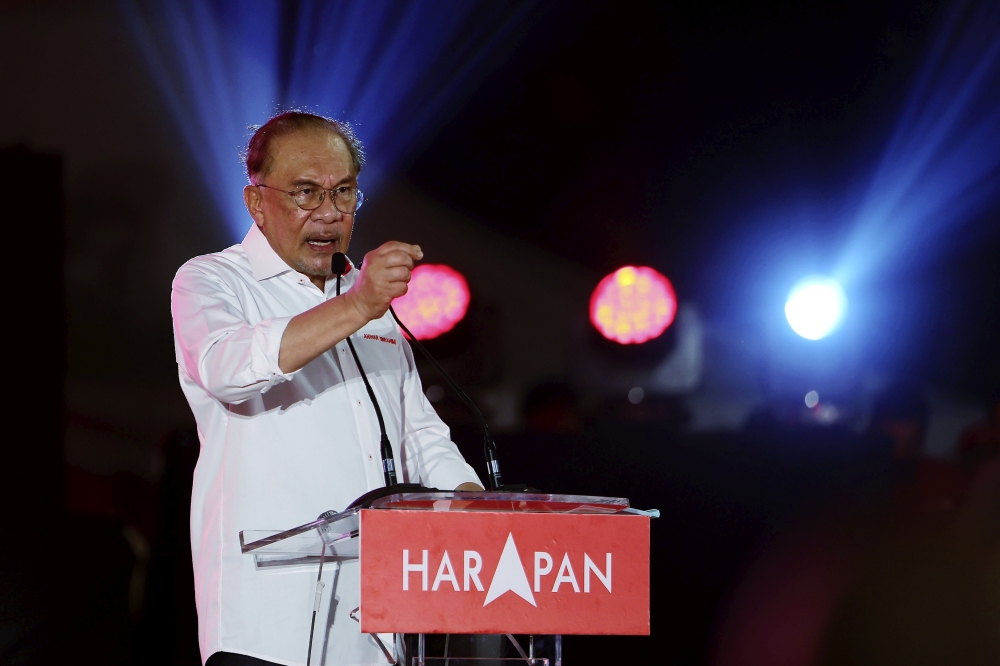
Prime Minister Datuk Seri Anwar Ibrahim has made a direct appeal to Negeri Sembilan voters, urging them to preserve Pakatan Harapan's mandate in upcoming electoral contests to safeguard the continuation of development initiatives across the state. Speaking in Seremban on July 16, Anwar framed electoral stability as a prerequisite for ensuring that long-term infrastructure and economic programmes can be completed without the disruptions that typically accompany political transitions.
The Prime Minister's message reflects a broader strategy within the coalition to emphasize tangible governance outcomes and project completion as justification for sustained voter backing. In the context of Malaysian politics, where state-level elections often precede or follow federal polls, maintaining consistency across electoral cycles has become a key campaign theme. Anwar's intervention in Negeri Sembilan signals the coalition's determination to consolidate control in a state where Pakatan has made significant inroads in recent years, particularly following the 2022 general election.
Negeri Sembilan occupies a strategically important position within Malaysia's political landscape. As a state with moderate population density and a mixed economic base spanning manufacturing, agriculture, and services, it represents the type of swing territory where electoral outcomes can hinge on perceptions of effective governance. The state's proximity to Selangor and its integration into the broader Klang Valley economic region means that decisions made in Negeri Sembilan's state government directly influence commuter communities and broader regional development patterns.
Anwar's emphasis on development continuity addresses a pragmatic concern among voters: the disruption caused by frequent changes in political administration. When governments alternate, new administrations often reprioritize spending, reallocate resources, and redirect focus away from projects initiated by predecessors. This pattern can leave partially completed infrastructure abandoned, create inefficiencies in procurement processes, and undermine investor confidence. By framing the election as a choice between continuity and disruption, Anwar appeals to voters who value predictability and completion of announced projects.
The coalition's coalition positioning in Negeri Sembilan has evolved considerably since 2018. The Pakatan government that took office following that year's election faced significant challenges in establishing credibility after decades of opposition status. However, the subsequent period saw the coalition implement various state-level initiatives, from infrastructure modernization to social welfare programmes. These achievements provide tangible talking points that the coalition can reference when asking voters to maintain their support, moving beyond purely ideological arguments about governance philosophy.
Malaysian voters have historically demonstrated sensitivity to arguments about project completion and economic stability, particularly in states with significant middle-class populations. Negeri Sembilan, with its concentration of skilled workers and small-to-medium enterprises, fits this profile. For these constituencies, the risk that a change of government might derail ongoing economic development projects carries weight in voting decisions. Anwar's appeal directly targets this concern by positioning continued Pakatan governance as the mechanism ensuring that announced projects reach completion.
The timing of Anwar's statement carries significance within the broader political calendar. Malaysian politics operates within a framework where federal and state electoral cycles do not always align, creating periods of uncertainty about whether state governments will remain aligned with federal authority. When state governments belong to different coalitions than the federal government, coordination on development priorities becomes more difficult, potentially limiting the flow of federal resources to state-level projects. Anwar's message implicitly highlights the administrative advantages of having aligned federal and state governance, a consideration that extends beyond mere partisan loyalty.
From a Southeast Asian perspective, Anwar's campaign approach reflects patterns visible across the region. In Indonesia, Thailand, and the Philippines, political leaders similarly emphasize infrastructure completion and economic continuity when seeking electoral mandates. The focus on tangible development outcomes represents a shift from purely personality-driven or ideology-based politics towards governance performance as an electoral criterion. This evolution suggests that regional voters increasingly evaluate leaders based on deliverables rather than rhetoric alone.
For Negeri Sembilan specifically, the coalition's record on state-level priorities will likely determine electoral outcomes more decisively than national-level arguments. Voters will assess whether promised industrial park developments materialized, whether public transportation improvements were completed, whether healthcare and education investments reached targeted communities, and whether the state government managed fiscal resources responsibly. These granular evaluations often matter more than broader national narratives, particularly in state elections where the contest is fundamentally about local governance capacity.
The coalition's need to secure continued support in Negeri Sembilan also reflects the broader political mathematics of Malaysian governance. With federal politics remaining highly competitive, maintaining control of additional state governments provides coalition leadership with crucial resources for coalition-building, negotiation leverage, and revenue sources for party machinery. Losing Negeri Sembilan to opposition forces would represent both a symbolic defeat and a practical diminishment of coalition political power, making Anwar's appeal to voters understandable from both governance and partisan perspectives.
Moving forward, the effectiveness of Anwar's continuity message will depend on whether Pakatan can deliver convincingly on specific, measurable projects before voters next visit the polls. Vague promises carry limited weight; tangible infrastructure, functional services, and demonstrable economic growth provide the foundation upon which claims of development success rest. In Negeri Sembilan and across Malaysia, voters ultimately judge political leaders by whether announced projects materialize and whether governance quality improves, making project completion not merely a talking point but the fundamental basis for electoral legitimacy.

