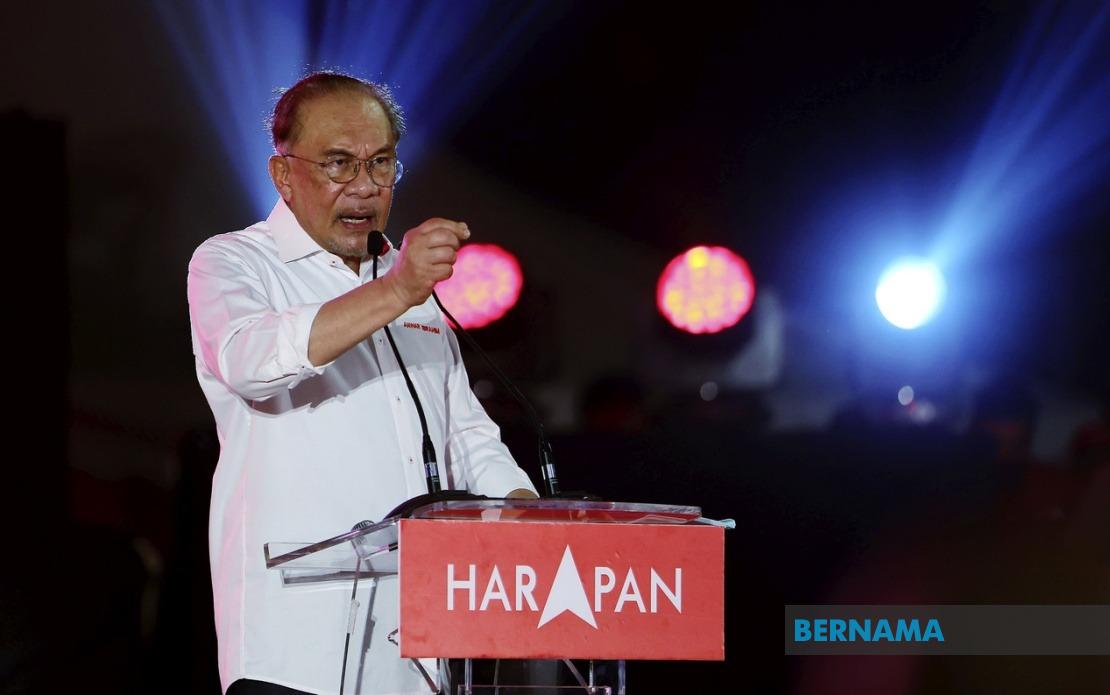
Prime Minister Anwar Ibrahim has drawn a clear line for political conduct ahead of the 16th Negeri Sembilan State Election, instructing all contending parties to shield the monarchy and the Federal Constitution from campaign hostilities. Speaking at a Pakatan Harapan candidate announcement ceremony in Kuala Pilah on July 14, Anwar underscored that while electoral competition remains a legitimate expression of democratic practice, it must operate within boundaries that preserve institutional integrity and social cohesion.
The caution reflects broader concerns about how state and federal contests can inflame sensitivities around Malaysia's constitutional pillars. Royal institutions occupy a uniquely protected space in the Malaysian political ecosystem, enshrined in the constitution and deeply woven into national identity. Anwar's intervention signals that the federal government takes seriously any attempt to convert such matters into partisan ammunition, a risk that intensifies during competitive polls when parties seek electoral advantage through rhetoric that resonates emotionally with voters.
Anwar articulated the tension inherent in democratic engagement: political opponents can dispute policy and performance, yet must refrain from channelling those disagreements toward core institutions that transcend partisan contestation. The distinction he drew—between legitimate political criticism and slander or divisive actions—establishes a framework meant to preserve democratic competition without destabilizing the constitutional order. This approach reflects lessons from previous election cycles in Malaysia where incautious rhetoric has occasionally strained community relations and invited constitutional scrutiny.
The presence of senior Pakatan Harapan figures at the event, including DAP secretary-general Anthony Loke, Amanah president Datuk Seri Mohamad Sabu, and communications director Datuk Seri Fahmi Fadzil, underscored the coalition's unified messaging. Their attendance validated the prime ministerial guidance, essentially communicating that PH component parties would adhere to ethical campaign standards. This coordination matters for setting precedent, as state elections often test whether national directives translate into disciplined ground-level operations.
Anwar simultaneously leveraged the occasion to advance Pakatan Harapan's electoral narrative, emphasizing that Negeri Sembilan required clean, integrity-driven leadership capable of advancing development. The framing positioned the coalition as the custodian of principled governance, implicitly contrasting its approach with potential competitors. By anchoring the appeal to clean administration and generational prosperity, Anwar shifted focus from institutional protections to governance performance—the terrain where ruling coalitions typically maintain electoral advantage.
The Prime Minister expressed confidence in incumbent Menteri Besar Datuk Seri Aminuddin Harun, characterizing him as a cooperative leader aligned with federal development priorities. This endorsement served multiple functions: it reinforced continuity between state and national governance, signalled that the federal government stood behind the incumbent administration, and potentially discouraged internal dissent within Negeri Sembilan's political structure. For voters, such backing carries weight, as it suggests federal infrastructure and resources would flow toward a re-elected PH state government.
Packatan Harapan fielded 36 candidates blending fresh entrants and seasoned figures from constituent parties PKR, DAP, and Amanah. The candidate mix reflected strategic calculations about generational renewal and experienced representation. Notably, both Aminuddin and Anthony Loke featured on the slate, positioning both as integral to PH's electoral push. This inclusivity among senior figures underscored party unity during a competitive contest.
For Negeri Sembilan specifically, the election carried implications beyond state-level governance. As a relatively swing-capable state in Malaysian politics, its outcome carries symbolic weight for federal coalition dynamics. A strong PH performance would vindicate Anwar's government's administration and consolidate its national position. Conversely, significant opposition gains would signal erosion of ruling coalition support and embolden alternative political forces.
Anwar's warnings about institutional politicisation also merit consideration within Malaysia's broader constitutional context. The country's Federal Constitution grants extensive protections and privileges to the monarchy and Islam, reflecting the constitutional settlement negotiated at independence. Attempts to leverage these sensitive domains during elections risk triggering constitutional controversies and judicial intervention. By preemptively discouraging such tactics, Anwar signalled awareness that electoral campaigns could quickly escalate into constitutional crises if institutional boundaries collapsed.
The emphasis on voter welfare and development steering also reflected pragmatic electoral calculation. Malaysian voters across demographic segments consistently prioritize tangible governance outcomes—infrastructure, economic opportunities, service delivery—over abstract institutional debates. By refocusing the campaign conversation toward development and leadership competence, Pakatan Harapan positioned itself on terrain where incumbency advantages typically prove decisive. Anwar's appeal to Negeri Sembilan not being left behind implicitly referenced federal-state coordination mechanisms and funding flows that a re-elected PH state administration would access more readily than opposition-led alternatives.
The event ultimately represented a calibrated exercise in democratic competition. Anwar drew boundaries around permissible campaign conduct while simultaneously activating organizational machinery and reinforcing incumbent advantages. For Malaysia's electoral ecosystem, the intervention suggested a maturing approach to state-level contests—one that acknowledges competition's necessity while recognizing that certain institutional domains warrant protection regardless of political contestation. As Negeri Sembilan voters prepared for the upcoming polls, the prime ministerial guidance established expectations that would shape campaign tone and content.

