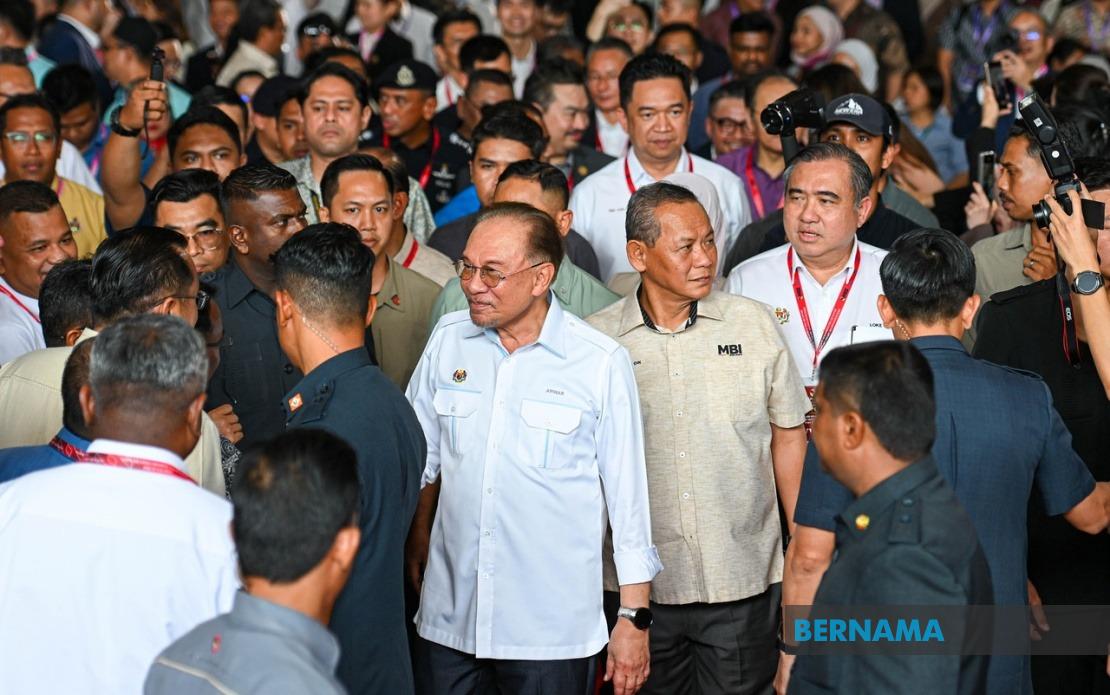
Prime Minister Datuk Seri Anwar Ibrahim has made a direct appeal to Melaka DAP to reconsider its decision to withdraw from the state government immediately, arguing that the move could undermine ongoing development efforts and public welfare initiatives. Speaking at the inauguration of the AI-powered Midport Smart Container Terminal in Port Dickson on July 14, Anwar stressed that postponing the withdrawal would allow the state administration to function without disruption and maintain the coalition's collective focus on governance until the next general election.
As chairman of Pakatan Harapan, Anwar emphasized that intra-coalition disagreements, while inevitable in any governing alliance, should not become obstacles to the broader economic and social agenda. He acknowledged that component parties within the ruling bloc hold differing views on multiple issues, but contended that areas of fundamental agreement on economic growth and public welfare should take precedence over points of contention. His intervention reflects the delicate balance required to maintain the multiparty coalition that forms the federal government.
The Prime Minister revealed that he had already engaged directly with DAP secretary-general Anthony Loke and Melaka Chief Minister Datuk Seri Ab Rauf Yusoh to facilitate negotiations aimed at resolving the impasse. Anwar's expectation that ongoing discussions could yield a mutually acceptable outcome suggests room for compromise, though the specific grievances driving Melaka DAP's stance remain unresolved. The involvement of senior federal leadership in a state-level political matter underscores the interconnected nature of coalition politics in Malaysia's federal system.
Melaka DAP's decision to withdraw came in response to constitutional amendments passed by the Melaka State Legislative Assembly that would permit the appointment of nominated assemblymen. Party chairman Khoo Poay Tiong characterized the move as fundamentally at odds with democratic principles and electoral integrity, framing the withdrawal as a principled stance rather than a tactical maneuver. The constitutional changes expand the state government's capacity to appoint legislators without going through elections, a mechanism that DAP views as undermining the democratic foundation of representative government.
The timing of this political crisis in Melaka carries broader implications for coalition stability at the federal level. While Melaka represents just one state government, the dynamics of inter-party relationships within the coalition have direct bearing on the viability of Pakatan Harapan's federal administration. Any significant fracturing of component parties could weaken the coalition's legislative strength and governing effectiveness. Anwar's personal intervention suggests that federal leadership takes the Melaka situation seriously as a potential indicator of larger coalition cohesion challenges.
The constitutional amendment mechanism itself represents a significant governance question within Malaysian politics. The expansion of nominated seats reduces the direct electoral influence of voters and concentrates power in the hands of appointing authorities. DAP's opposition reflects a consistent ideological stance favoring electoral democracy over appointive mechanisms, a position that resonates with its base and broader anti-establishment supporters. The party's willingness to exit government rather than silently accept the amendment demonstrates the strength of its conviction on this particular issue.
For Melaka's citizens, the political standoff presents practical concerns about administrative continuity and policy implementation. State governments require functioning coalitions to deliver public services, implement development projects, and maintain fiscal stability. A withdrawal by a coalition component during the middle of a political term creates operational uncertainty and can slow progress on local initiatives. Anwar's emphasis on development and public welfare reflects the practical consequences of coalition breakdown at the state level.
The PM's appeal also reveals the hierarchical nature of Malaysian coalition politics, where federal leadership can and does attempt to mediate state-level disputes. However, the effectiveness of such intervention depends on willingness among state parties to accede to federal pressure. DAP's principled objection to the constitutional amendment suggests that the party may not easily abandon its position simply because federal leadership requests delay. The outcome will depend on whether negotiations can address the underlying democratic concerns or whether a compromise formula can be fashioned.
Historically, Malaysian ruling coalitions have managed internal disagreements through a combination of pressure from senior leadership, package deals involving resource allocation, and strategic compromises on contentious issues. The Anwar administration's approach in this instance follows that established pattern of seeking negotiated settlement rather than forcing compliance. Whether such negotiations succeed in the Melaka situation will provide important signals about the robustness of the federal coalition and its capacity to manage future internal tensions.
The broader context involves Malaysia's ongoing political evolution following the 2022 election results that produced a fractured parliament and necessitated coalition-building. Pakatan Harapan's ability to maintain internal discipline while accommodating different ideological emphases among component parties remains essential to the government's survival and effectiveness. The Melaka DAP situation, while appearing localized, reflects the inherent tensions in multi-party coalitions where partners must balance party ideology with collective governing responsibilities.
Looking forward, the resolution of the Melaka impasse could establish precedent for how such intra-coalition disputes are handled within the current federal administration. If negotiations successfully produce a compromise acceptable to DAP while preserving the amendment's intent, it would demonstrate coalition flexibility and problem-solving capacity. Conversely, if DAP's withdrawal proceeds, it would signal the limits of coalition cohesion and the primacy of individual party principles over collective stability.
For Malaysian political observers and regional analysts, the Melaka situation illuminates the complexities of governing in a multiparty system where maintaining coalition discipline requires continuous negotiation and accommodation. Anwar's intervention demonstrates commitment to preserving the coalition, yet also acknowledges that component parties retain autonomy in pursuing their principles. The coming weeks will reveal whether dialogue can bridge the gap between DAP's democratic concerns and other coalition members' positions on the constitutional amendments.

