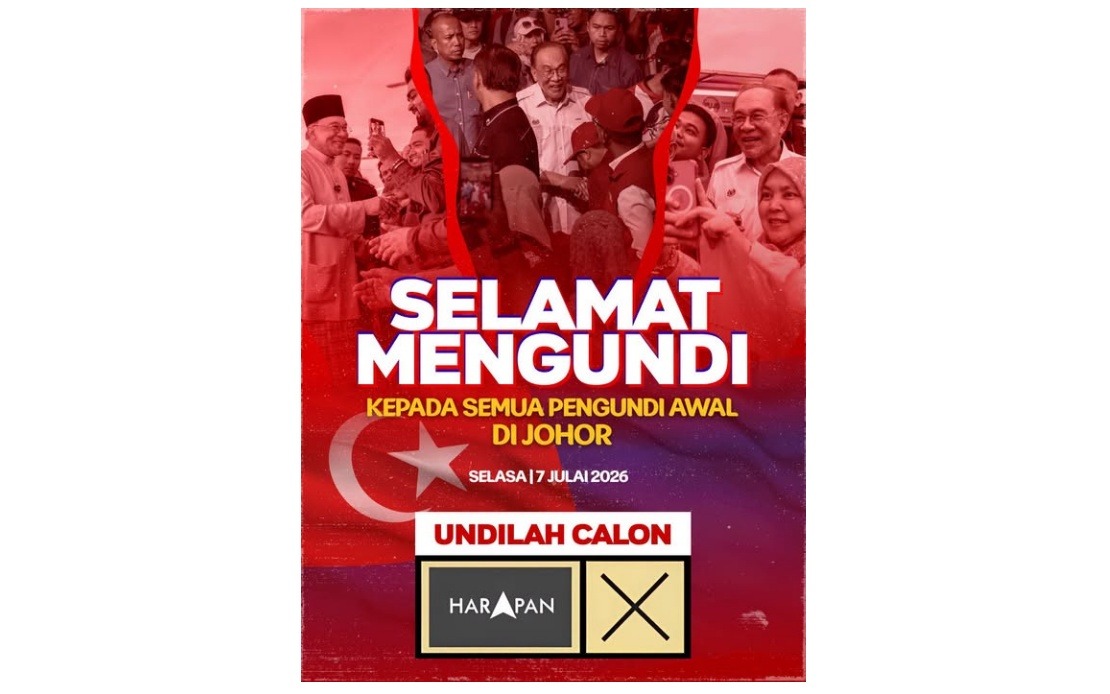
Prime Minister Datuk Seri Anwar Ibrahim has made a direct appeal to voters in Johor to support Pakatan Harapan candidates ahead of the 16th state election, capitalising on the early voting phase that saw security force personnel head to the polls on July 7. Speaking through a Facebook post, the Pakatan Harapan chairman encouraged all eligible early voters to exercise their democratic right while emphasising the coalition's broader vision for the state's future.
The early voting phase represents a significant logistical undertaking across Johor, with 24,751 registered voters participating through 64 designated polling centres. This cohort comprises personnel from Malaysia's security apparatus, a bloc traditionally important in state and general elections. The composition reflects standard electoral procedures that allow military and police officers to vote before general polling day, accommodating their operational schedules and deployment patterns across the country.
Among the early voters, 12,041 individuals came from the Malaysian Armed Forces and their immediate family members, whilst 12,710 were drawn from the Royal Malaysia Police and General Operations Force personnel alongside their spouses. The distribution of polling facilities underscores the concentration of security installations across the state, with 53 centres dedicated to police and allied forces and an additional 11 serving military voters. Opening times were coordinated to commence at 8 am, though closing hours were staggered between noon and 6 pm depending on each centre's voter registration volume and local circumstances.
Pakatan Harapan's electoral strategy for Johor involves presenting candidates across all 56 state constituencies, reflecting a comprehensive attempt to contest every available seat. The coalition's internal allocation demonstrates a balance between its three component parties: PKR fielding 20 candidates, Amanah contributing 19, and DAP positioning 17 contenders. This distribution reflects the coalition's power-sharing arrangements and the relative organisational strength of each party within the state's political landscape.
The broader election context involves 172 candidates vying for the 56 available positions, indicating competitive multi-cornered contests in numerous constituencies. Approximately 2.7 million voters registered across Johor are expected to participate in the general polling phase scheduled for Saturday, representing one of Malaysia's more substantial state electorates. The size of the voter roll underscores Johor's significance within Malaysia's political calculations, as the state's outcome could influence perceptions of coalition strength heading into future national contests.
Anwar's intervention through social media channels demonstrates the personalised approach increasingly common in Malaysian electoral politics, where senior leaders directly address voters rather than relying solely on organisational machinery. His message specifically directed voters toward Pakatan Harapan candidates while linking support for the coalition to aspirations for Johor's development. This framing attempts to position voting decisions within a broader narrative of state improvement and progress, a theme likely to resonate across socioeconomic divisions within the electorate.
The timing of Anwar's appeal coincides with a critical phase in the electoral calendar, as early voting typically involves more politically engaged and institutionally connected voters. Security force personnel, whilst traditionally exhibiting distinct voting patterns influenced by military and police institutional cultures, nonetheless represent a segment whose support both coalitions actively contest. The early voting phase thus becomes an important psychological and actual barometer for each contesting bloc's relative appeal within this demographic.
For Malaysian observers and regional analysts, the Johor election assumes importance beyond its immediate state-level implications. As one of Malaysia's most populous states and economically significant jurisdictions, Johor's electoral direction influences national political momentum and coalition confidence. A strong Pakatan Harapan performance would vindicate the coalition's recovery narrative following the 2023 general election, whilst competitive results could suggest ongoing vulnerability in the government's political position. The security force vote, captured through this early polling process, offers an early indicator of broader electoral sentiment.
The coordination required to implement early voting across multiple locations reflects Malaysia's established electoral management infrastructure, operated by the Election Commission with input from security sector employers. The system balances democratic participation rights for uniformed personnel with operational requirements, though periodic debates continue regarding whether current arrangements adequately accommodate voter accessibility. Johor's implementation on July 7 proceeded without reported irregularities, suggesting institutional capacity to manage what constitutes a significant logistical exercise.
Looking toward the Saturday general polling day, Anwar's early appeal to voters establishes Pakatan Harapan's messaging framework for the campaign's final phase. The coalition's emphasis on offering superior governance and development outcomes attempts to build momentum from whatever support the early voting phase generates. Whether the security force vote aligns with broader Johor demographic preferences, however, remains uncertain pending results analysis following the general election.

