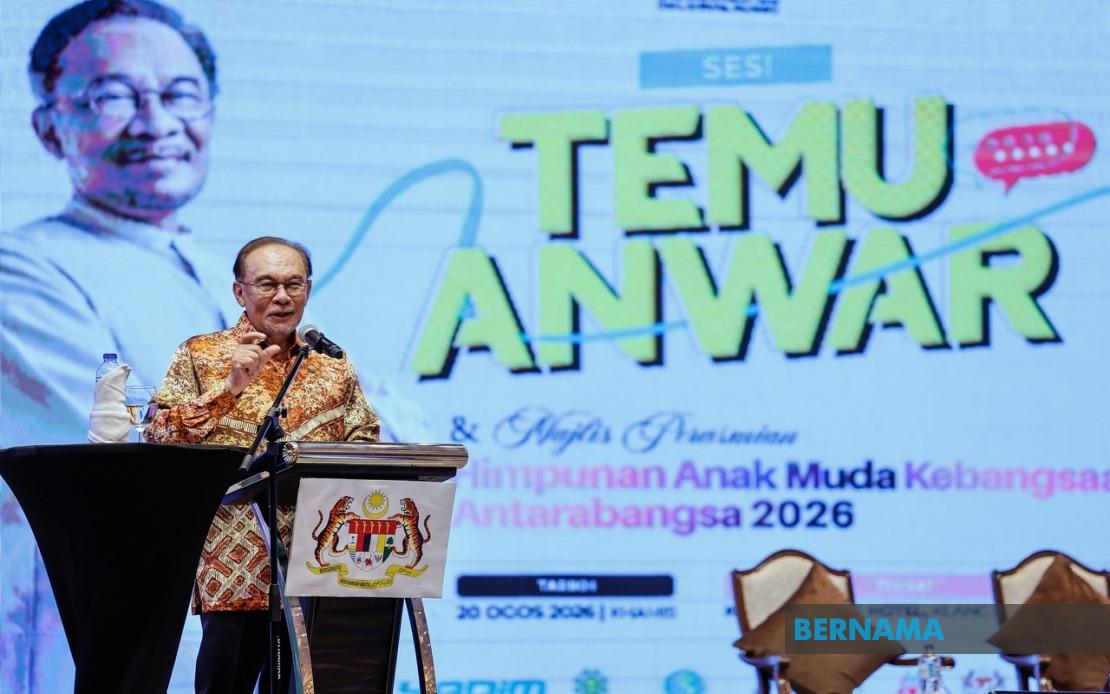
Prime Minister Datuk Seri Anwar Ibrahim has signalled that major policy announcements are forthcoming during two pivotal national celebrations, building anticipation for government initiatives at a critical time for youth engagement and economic policy. Speaking at a youth gathering in Klang on August 20, Anwar confirmed plans to unveil unspecified measures on the eve of Merdeka Day on August 30, followed by another announcement during Malaysia Day festivities on September 16, with a third phase of announcements expected during the budget presentation in early October. The timing suggests the government is strategically aligning policy rollouts with nationally significant dates, a tactic that amplifies public attention while reinforcing patriotic messaging.
The Prime Minister deliberately withheld specifics about the August 30 announcement, choosing instead to frame his upcoming statement as the culmination of extensive consultation. He explained that his decision-making process involves listening to diverse perspectives before committing to policy positions, a methodology he emphasised would conclude by August 31 with a formal public declaration. This measured approach reflects a broader governing philosophy where announcements emerge from what Anwar characterised as careful deliberation rather than hasty pronouncement, though the secrecy surrounding content may also serve to maintain media momentum across three successive occasions.
The context for these announcements centred on vocational opportunities for young Malaysians, particularly those engaged in the burgeoning gig economy sector. At the Temu Anwar session held during the opening of Himpunan Anak Muda Antarabangsa (HAMKA) 2026, a youth participant raised concerns about government safeguards for workers in informal employment arrangements, a demographic increasingly significant in Malaysia's evolving labour market. The question provided an entry point for Anwar to articulate existing initiatives while acknowledging that current protections remain contested among workers themselves, who frequently argue that available support mechanisms inadequately address their vulnerabilities.
The Malaysian Gig Economy Commission, known as SEGiM, represents the government's institutional response to formalising oversight of the sector. Anwar highlighted this body as evidence of commitment to protecting gig workers, a constituency that has grown substantially with the expansion of ride-sharing, food delivery, and freelance digital platforms. Complementing this commission, the government has drafted new legislation targeting small business operators, recognising that many gig workers function simultaneously as micro-entrepreneurs requiring regulatory clarity and supportive frameworks. These measures attempt to bridge the gap between traditional employment protections and the fluid nature of platform-based work.
Beyond existing structures, the government is actively exploring mechanisms to reduce barriers to entrepreneurship for educated young Malaysians seeking to transition from employment to business ownership. The National Entrepreneurial Group Economic Fund (TEKUN) already provides financing pathways, yet Anwar acknowledged that qualification criteria may have become misaligned with contemporary economic realities. Specifically, the requirement that applicants demonstrate prior business experience before accessing financing has come under scrutiny, as it potentially excludes recent graduates whose expertise lies in specialised fields rather than commercial track records.
Anwar's commitment to reviewing this requirement reflects recognition that employment landscapes have transformed significantly, particularly following pandemic-induced accelerations in digital and flexible work arrangements. For Malaysia, where youth unemployment remains a policy concern and entrepreneurship is positioned as a driver of innovation and job creation, relaxing unnecessarily restrictive criteria could unlock potential among tertiary-educated cohorts. The Prime Minister framed this willingness to reassess as contingent on government capacity, implying that budgetary or administrative constraints may influence the pace and scope of implementation.
The youth focus evident in these announcements aligns with broader Southeast Asian trends where governments confront demographic transitions and shifting employment paradigms simultaneously. Malaysia's youthful population represents both opportunity and challenge—a potential engine for economic dynamism but also a constituency vulnerable to policy failures if income security and career progression pathways remain precarious. Gig economy workers, in particular, occupy an ambiguous regulatory space across the region, and Malaysia's approach through SEGiM and legislative reform may offer lessons for peer nations grappling with comparable structural changes.
The three-phased announcement strategy itself warrants analytical attention. By distributing policy unveilings across August 30, September 16, and October, the government sustains public discourse around youth-centric initiatives while capitalising on patriotic moments that elevate engagement. Malaysia Day on September 16, marking the formation of the Malaysian federation, carries particular resonance in Sabah and Sarawak, territories where economic opportunities and youth retention remain pressing concerns. A Malaysia Day announcement could strategically address regional dimensions of national policy, reinforcing the federation's commitment to equitable development.
Anwar's language throughout the discussion emphasised listening and collaborative problem-solving rather than unilateral decision-making. This rhetorical choice, whether reflecting genuine methodology or political positioning, signals to youth audiences that their concerns influence executive action. For gig workers and aspiring entrepreneurs hearing these remarks, the message suggests their grievances register at the highest levels of government. However, the gap between expressing willingness to address issues and enacting substantive change remains significant, and the months ahead will test whether announced measures translate into material improvements in income stability, access to credit, and formal recognition for non-traditional workers.
For Malaysian readers and stakeholders in Southeast Asia, these forthcoming announcements merit close attention as indicators of government priorities and governance philosophy. The emphasis on youth welfare reflects demographic realities and electoral calculus, but also legitimate recognition that economic security and opportunity access among younger generations determine national competitiveness and social stability. Whether the August 30, September 16, and October announcements deliver transformative reform or incremental adjustments will largely determine the government's effectiveness in addressing what constitutes, by multiple measures, a defining challenge of contemporary Malaysia.

