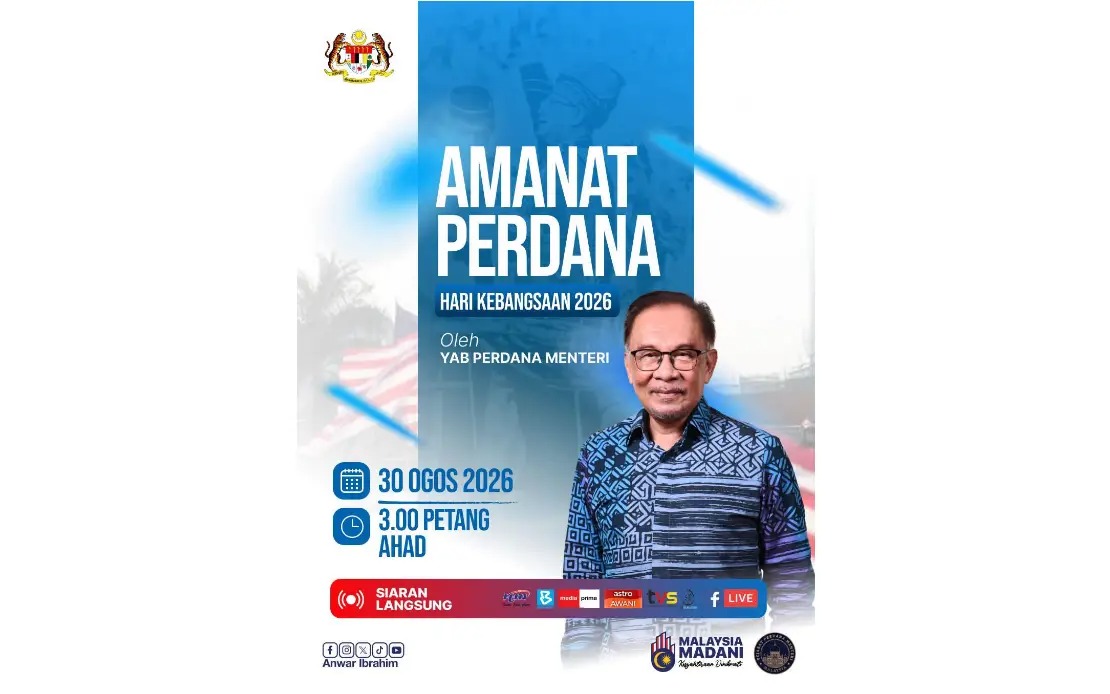
Prime Minister Datuk Seri Anwar Ibrahim is set to deliver his National Day address at the Putrajaya International Convention Centre (PICC) on August 30, where he will roll out several important programmes aimed at addressing pressing concerns affecting ordinary Malaysians. The announcement comes as the nation marks nearly seven decades since achieving independence, a milestone that Anwar has emphasised demands reflection on both historical sacrifice and contemporary responsibility.
Through a Facebook statement, Anwar outlined the thematic focus of his address, signalling his intent to centre the speech on issues directly impacting citizens' daily existence. The Prime Minister's emphasis on practical governance concerns reflects an approach that links national celebration to tangible policy outcomes, bridging the ceremonial nature of National Day with substantive commitments to citizens' welfare. This framing suggests the initiatives will span multiple policy domains rather than representing narrow sectoral interests.
The address carries particular significance given Malaysia's demographic and social complexity. Anwar's decision to foreground unity and inter-communal harmony in his messaging indicates awareness that national celebrations can either reinforce social cohesion or, if mishandled, become vehicles for divisive rhetoric. His explicit call for Malaysians to reject incitement that could generate animosity across racial and religious lines appears deliberate, suggesting his office views such warnings as essential counterweights to existing tensions in the national discourse.
The reflection on previous generations' struggles and sacrifices—framed through imagery of sweat, blood and tears—serves both commemorative and cautionary functions. For Malaysian readers, this generational framing invokes the historical negotiated independence process that distinguished Malaysia's path from other postcolonial transitions. The implicit message addresses younger citizens who lack direct memory of colonial rule or early nationalist movements, attempting to cultivate appreciation for institutional stability achieved through earlier political compromises.
Anwar's emphasis on the current generation's responsibility to "uphold and give meaning to our independence" introduces a forward-looking dimension that transcends nostalgic commemoration. This phrasing suggests that independence is not a static achievement but rather an ongoing project requiring active stewardship. For Southeast Asian observers, such language reflects broader regional debates about whether independence gained decades ago retains substantive meaning amid contemporary challenges including economic vulnerability, climate pressures, and geopolitical competition.
The location chosen for the address—the Putrajaya International Convention Centre—carries symbolic weight. Putrajaya itself represents Malaysia's post-1998 administrative modernisation, embodying aspirations toward technological advancement and institutional efficiency. Delivering the National Day message from this venue rather than traditional ceremonial sites in Kuala Lumpur may signal Anwar's desire to associate his premiership with forward momentum and institutional renewal, particularly relevant given his administration's engagement with economic restructuring and governance reform initiatives.
The timing of the announcement at end-August positions the National Day address within Malaysia's political calendar at a moment when Parliament typically reconvenes following its annual break. This proximity to legislative sessions may allow policy initiatives announced during the address to transition relatively swiftly into parliamentary discussion and budgetary consideration. For analysts tracking Malaysian governance, this sequencing provides tactical advantages in converting ceremonial announcements into legislative action.
Anwar's invocation of unity carries special resonance in Malaysia's contemporary political context, where coalition governance following the 2022 general elections has required negotiation across diverse political parties and communal interests. The explicit rejection of sectarian incitement in his National Day message can be read as both a general civic appeal and a specific reinforcement of the inclusive governance model his administration has attempted to construct. Whether such messaging effectively counters divisive rhetoric circulating in Malaysian social media and political discourse remains an empirical question beyond the address itself.
The promise to address "issues affecting the people, their daily lives" suggests policy focus on bread-and-butter concerns—likely encompassing cost-of-living pressures, employment, healthcare access, and educational opportunity. These domains represent conventional governing priorities yet carry heightened importance in Malaysia's context given inflation concerns, youth unemployment challenges, and ongoing debates about public service quality. Citizens expecting targeted announcements regarding fiscal support, wage policies, or subsidy adjustments will scrutinise the address for specificity versus rhetorical generality.
For regional observers in Southeast Asia, Malaysia's National Day address provides a window into how a major regional economy's leadership frames national identity during periods of economic and political transition. The emphasis on preserving peace and citizen well-being as preconditions for national progress reflects universal governance imperatives, yet the specific Malaysian context of managing plural society complexity adds particular urgency to such messaging. How Anwar's initiatives balance developmental ambitions with social cohesion maintenance will likely influence assessments of Malaysia's political stability and economic competitiveness within the broader ASEAN framework.
The National Day address represents more than ceremonial obligation; it functions as a leadership statement establishing priorities, rhetorical positioning, and policy intentions for the months ahead. Anwar's decision to couple celebration of independence with urgent calls for national unity and generational responsibility suggests his administration views this platform as an opportunity to recalibrate national conversation around shared challenges rather than sectarian grievances. The specific initiatives he unveils will ultimately determine whether such messaging translates into substantive programme delivery or remains aspirational political communication.

