Prime Minister Datuk Seri Anwar Ibrahim will take to the campaign trail in Negeri Sembilan this Wednesday, marking a significant show of leadership for Pakatan Harapan (PH) as the coalition enters its final push toward the 16th state election. Datuk Seri Aminuddin Harun, who chairs PH's Negeri Sembilan branch, confirmed the Prime Minister's participation at multiple campaign rallies scheduled for Sikamat and Paroi, signalling the coalition's determination to retain control of the state administration.
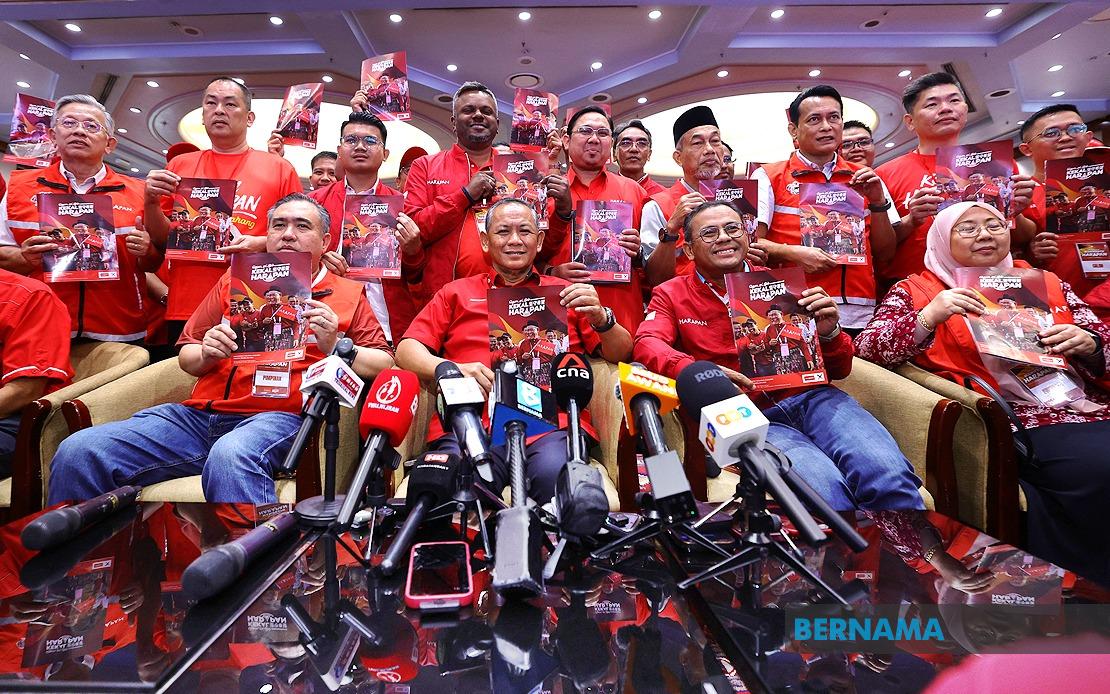
Anwar's involvement comes even as he was absent from tonight's manifesto launch event in Seremban, a ceremony designed to outline PH's vision and policy commitments for the coming term. Rather than viewing this absence as a setback, Aminuddin—who is also contesting the Linggi constituency—framed the Prime Minister's scheduled Wednesday appearance as compensation, emphasising that the coalition has maintained strong momentum and internal coordination throughout the election cycle. The manifesto launch proceeded successfully with prominent party figures taking centre stage, underscoring PH's organisational depth and bench strength.
The manifesto itself reflects a comprehensive policy platform spanning multiple governance domains. The coalition has prioritised administrative continuity and governmental efficiency, recognising that voter confidence rests partly on institutional stability. Equally important is the explicit focus on household prosperity and cost-of-living pressures that directly affect everyday Negeri Sembilan residents. Economic competitiveness features prominently, suggesting PH's awareness that the state cannot simply rely on its current standing but must actively position itself within Malaysia's regional and national economic landscape.
Educational advancement and affordable housing remain perennial voter concerns in Malaysia's state politics, and PH has devoted manifesto space to both. Youth development and employment pathways are also highlighted, reflecting demographic realities in Negeri Sembilan and the broader concern that younger voters face uncertain career prospects in a competitive job market. Women's empowerment and family-centred policies appear alongside commitments to tourism development and the preservation of Negeri Sembilan's cultural and customary traditions—a careful balance that acknowledges both modernisation impulses and respect for heritage.
Modern agricultural practices and rural infrastructure investment round out the manifesto, addressing the concerns of voters in Negeri Sembilan's more farming-dependent constituencies. Strategic infrastructure development is positioned as a driver of long-term competitiveness, while social cohesion and interethnic harmony underscore PH's message that governance transcends narrow partisan interests. This breadth suggests a coalition attempting to appeal across demographic and geographic divides within the state.
The campaign events themselves will feature not only Anwar but also senior party leadership and ground-level election machinery. Datuk Seri Amirudin Shari, who serves both as Selangor Menteri Besar and PH's election director for this race, will participate, bringing experience from administering Malaysia's largest state. DAP secretary-general Anthony Loke, contesting the Chennah seat, adds the Democratic Action Party's electoral presence and urban support base. PKR secretary-general Datuk Dr Fuziah Salleh and Amanah vice-president Datuk Dr Mohd Hatta Md Ramli round out a leadership lineup designed to project unity and capability.
The electoral timeline creates a compressed campaign phase requiring efficient deployment of senior figures. Early voting occurs on July 28, allowing certain categories of voters—including election officials, security personnel, and overseas voters—to cast ballots in advance. Polling day itself is set for August 1, meaning the coalition has less than two weeks to mobilise supporters, counter opposition messaging, and secure voter turnout. Anwar's personal campaign interventions carry symbolic weight, signalling that PH's highest echelons view Negeri Sembilan as strategically significant.
For Negeri Sembilan voters and Malaysia's broader political landscape, this state election carries implications extending beyond the state level. Negeri Sembilan has traditionally been a competitive battleground where opposition forces have made inroads, making retention important for PH's narrative of electoral resilience. The state's location between Kuala Lumpur and Selangor, combined with its mixed urban-rural character, makes it a bellwether for measuring voter sentiment across Malaysia's core heartland. Results will be closely analysed for signs of whether PH's coalition can sustain or rebuild support following years of internal tensions and governance challenges at federal level.
The emphasis on manifesto-based campaigning, with PH attempting to shift focus toward concrete policy promises rather than personalities, reflects lessons learned from previous electoral contests. By presenting a detailed platform across multiple domains—from housing and education to cultural preservation and economic dynamism—the coalition hopes to demonstrate that it has matured beyond internal squabbling toward programmatic governance. Aminuddin's assertion that the manifesto represents genuine commitments rather than hollow promises is an implicit acknowledgment that voter cynicism about political pledges remains a significant campaign obstacle.
Anwar's participation in Wednesday's campaign events will be watched for the tone and substance of his remarks, particularly regarding how he frames PH's achievements at federal level and its vision for Negeri Sembilan's development. His presence potentially helps counter any narrative that the Prime Minister is neglecting state-level concerns in favour of federal preoccupations. Conversely, opposition parties will likely criticise the late insertion of top-level campaigning as evidence that PH lacks grassroots confidence in its ground machinery and must rely on executive-level star power to compensate.

