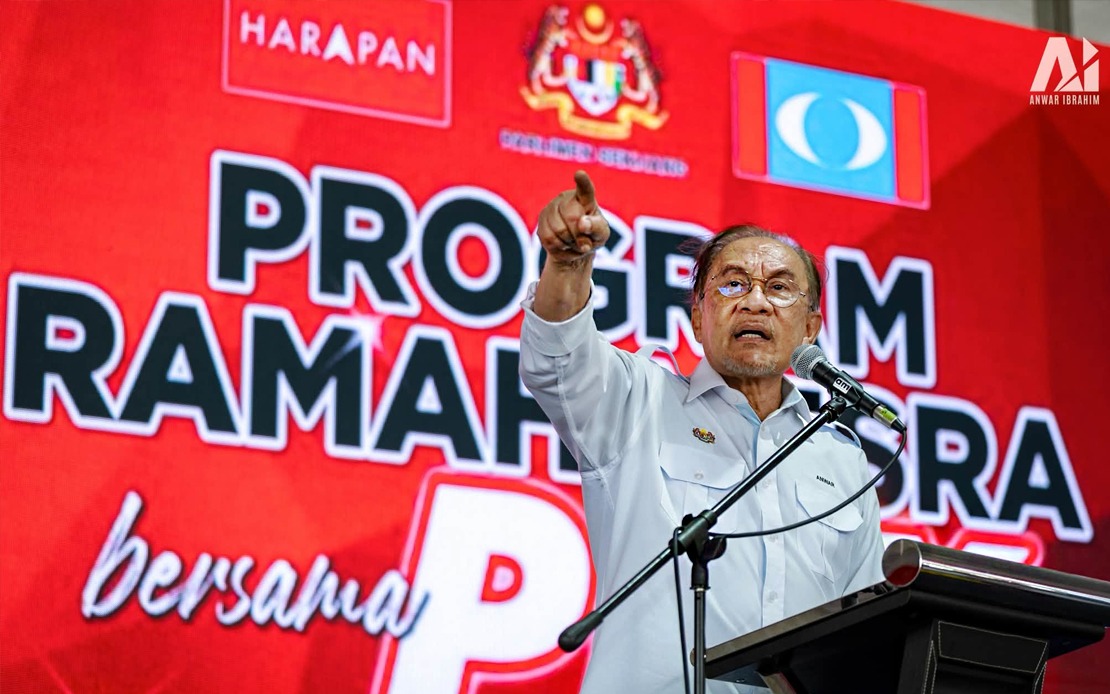
Prime Minister Datuk Seri Anwar Ibrahim has thrown his political weight behind Malaysian durian farmers grappling with a severe price collapse, pledging to champion their cause at the highest levels of Chinese government. Speaking at a grassroots meet-the-people session in the Gambir state constituency in Tangkak on July 5, Anwar outlined an ambitious strategy to tackle the agricultural crisis by directly engaging with China's Premier Li Qiang during a planned visit to Beijing next month. The commitment signals the administration's recognition that the durian sector, a cornerstone of Malaysian agriculture and a major export commodity, requires urgent intervention at the diplomatic level.
The durian market turmoil stems from an unusual convergence of harvest cycles across Peninsular Malaysia, where growers from multiple regions brought their crops to market simultaneously. This synchronized peak season flooded the market with supply precisely when international demand could not absorb the volume, triggering a sharp decline in farm-gate prices that has directly eroded farmer income and livelihoods. The situation reflects broader vulnerabilities in Malaysia's agricultural export infrastructure, where production timing and market access remain critically dependent on external factors beyond farmer control.
Anwar's diplomatic strategy hinges on leveraging the strong personal relationship between Malaysia and China to unlock greater market opportunities for Malaysian durian in the Chinese market. Recognizing that China maintains stringent import standards and quality requirements, the Prime Minister indicated his willingness to engage in serious negotiations to help Malaysian producers meet these benchmarks and gain preferential access. This approach acknowledges that solving the durian crisis requires not merely temporary price support but structural improvements in market penetration that will create sustained demand from Asia's largest economy.
The significance of this intervention cannot be overstated for Malaysian agriculture. China represents the world's largest consumer market for premium tropical fruits, and securing reliable access for Malaysian durian would fundamentally reshape the sector's economics. During periods of oversupply like the current crisis, a robust Chinese market would provide crucial demand absorption and price stability. Anwar's framing emphasized that stronger Malaysia-China trade ties should be mobilized to create continuous benefits for local producers rather than leaving them vulnerable to periodic market gluts.
Beyond the durian-specific challenge, Anwar's comments underscore a broader vision of using bilateral relationships to solve domestic economic problems. By positioning agricultural market access as a strategic trade priority rather than a sectoral afterthought, the government seeks to demonstrate that diplomatic engagement translates into tangible benefits for rural communities and farming households. This messaging carries particular weight in agricultural constituencies like Gambir, where farm-dependent voters directly experience commodity price volatility.
The visit also featured remarks from Anwar on Malaysia's fuel subsidy regime, which he characterized as uniquely generous within the global context. Current retail prices stand at RM3.37 per litre for RON95 and RM3.97 per litre for diesel as of July 1 to 8, but consumers benefit from the government's BUDI MADANI initiative, which subsidizes fuel to RM1.99 per litre for RON95 and RM2.10 per litre for diesel. This substantial gap between global market rates and domestic pump prices represents a significant government expenditure aimed at shielding ordinary Malaysians from the full impact of global oil price movements.
Anwar defended the subsidy program by arguing that Malaysia uniquely maintains downward pressure on fuel prices despite adverse global conditions. He acknowledged that international conflicts, particularly tensions between Iran and the United States, have created supply disruptions that would normally drive prices upward according to standard economic principles. Rather than allowing these external shocks to translate into higher domestic prices, the government has opted to absorb the cost differential, a policy choice that Anwar framed as a deliberate decision to prioritize the welfare of ordinary citizens over orthodox fiscal management.
The Finance Minister's remarks reveal an underlying tension within government policy between orthodox economics and populist protection. While economists typically argue that fuel price controls distort markets and create inefficiencies, Anwar positioned the government's stance as a humanitarian imperative that transcends conventional economic doctrine. This rhetorical framing resonates with Malaysian voters who have experienced multiple fuel price increases over previous decades and remain sensitive to energy cost pressures on household budgets and business operations.
The presence of senior Pakatan Harapan figures at the Tangkak event, including Johor Election director Datuk Seri Amirudin Shari and Ledang MP Syed Ibrahim Syed Noh, underscores the political significance of these commitments. Anwar's direct engagement with local constituencies on pressing agricultural and economic issues demonstrates an effort to build grassroots support through personal accountability and tangible policy responses. The selection of Gambir, a state seat where PH fielded candidate Mohd Nor Mohd Yusof, suggests a targeted strategy to strengthen party positioning in crucial local contests.
For Malaysian farmers and food producers, Anwar's durian diplomacy represents a potentially transformative opening that could address underlying structural weaknesses in agricultural export markets. However, the pledges also carry implicit pressure on the government to deliver concrete results during the China visit. Failure to secure meaningful improvements in durian market access would undermine the credibility of high-level diplomatic engagement as a tool for solving sectoral crises. The coming weeks will test whether personal relationships between leaders can translate into expanded trade opportunities that provide lasting relief for struggling agricultural communities across Malaysia.

