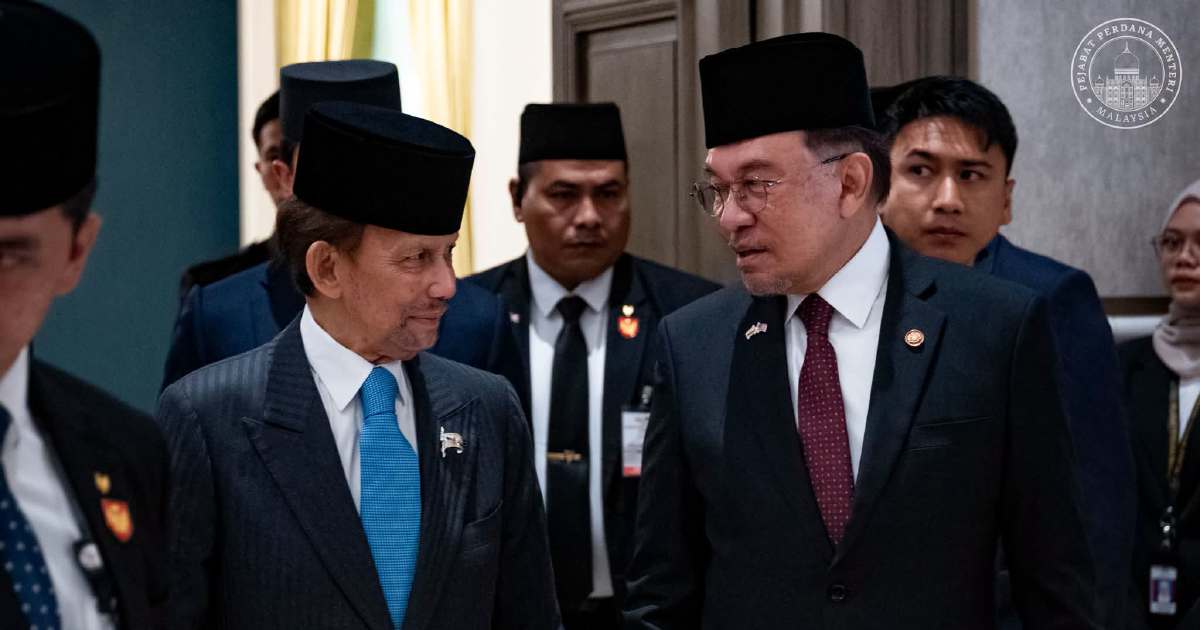
Prime Minister Datuk Seri Anwar Ibrahim is set to travel to Brunei Darussalam next week for high-level bilateral consultations with Sultan Hassanal Bolkiah. The visit will mark the 27th iteration of the Annual Leaders' Consultation, a flagship diplomatic mechanism that has anchored Malaysia-Brunei relations for nearly three decades. The meeting in Bandar Seri Begawan reflects the enduring importance both nations place on direct leadership engagement to shape regional policy and address shared challenges.
The Annual Leaders' Consultation framework has evolved into one of Southeast Asia's most consistent bilateral engagement platforms. Established to facilitate candid dialogue between the Malaysian Prime Minister and the Brunei Sultan, these meetings typically cover trade, security, border management, and cultural cooperation. The regularity of these consultations—now spanning 27 years—demonstrates a relationship built on institutional continuity rather than reactive diplomacy, distinguishing Malaysia-Brunei ties from many other regional partnerships that depend heavily on individual leaders' rapport.
For Malaysia, the visit carries particular significance given the country's broader strategic positioning in the ASEAN framework and its efforts to maintain strong bilateral relationships with all member states. Brunei, despite its smaller economic footprint, occupies a crucial geographic position along the South China Sea and shares maritime boundaries with Malaysia. The leaders' meeting provides an opportunity to coordinate positions on regional issues including maritime security, fishing rights, and the implementation of the ASEAN Comprehensive Investment Agreement (ACIA) that affects both economies.
The consultation agenda likely encompasses Malaysia's current economic priorities and Brunei's oil-dependent economy. Malaysia has been pushing regional infrastructure initiatives and digital economy frameworks within ASEAN, areas where Brunei's participation and support are valuable. Simultaneously, both nations have mutual interests in managing transnational challenges including human trafficking, drug smuggling across the maritime border, and cybersecurity threats that transcend traditional borders. These practical cooperation areas often form the substantive core of such high-level meetings, though they receive less public attention than ceremonial aspects.
Anwar Ibrahim's presidency of various international forums and his active role in ASEAN affairs make his bilateral visits particularly consequential. His meetings with individual ASEAN leaders often serve dual purposes: advancing bilateral interests while also testing consensus positions before major regional gatherings. The Brunei consultation may provide a venue for discussing Malaysia's priorities ahead of upcoming ASEAN summits or to align positions on contentious regional issues where Malaysia and Brunei might otherwise find themselves at loggerheads with other member states.
Brunei's role within ASEAN should not be underestimated despite its modest population of roughly 400,000. The sultanate holds significant soft power through its chairmanship of regional forums and its historical position as a founder member of ASEAN. Sultan Hassanal Bolkiah's tenure has spanned nearly six decades, granting him unparalleled regional experience and making his counsel valued by other Southeast Asian leaders. For Anwar, engaging directly with such an experienced interlocutor provides access to perspectives shaped by decades of regional observation.
The bilateral economic relationship between Malaysia and Brunei, while not dominant in either nation's overall trade statistics, remains strategically important. Malaysian companies operate substantially in Brunei's downstream petroleum sector, while Brunei's sovereign wealth fund maintains investments in Malaysian assets. The consultation provides a formal venue to discuss investment frameworks, trade facilitation measures, and responses to global economic headwinds that affect small, open economies disproportionately. Both nations have signalled interest in expanding cooperation in halal certification and Islamic finance, sectors where they enjoy complementary advantages.
Security cooperation represents another crucial dimension of these consultations. Malaysia and Brunei share concerns about maritime security, particularly regarding unauthorised fishing and transnational crime in their maritime zones. The joint commitment to implementing regional frameworks such as the ASEAN Regional Forum and the East Asia Summit allows bilateral leaders to discuss how their individual efforts contribute to broader regional stability architecture. These conversations, conducted at the highest level, often lead to concrete agreements on military coordination or intelligence sharing that enhance both nations' security capabilities.
The consultation format itself—as a recurring, institutionalised dialogue—differs from ad-hoc bilateral meetings or multilateral forums where leaders encounter each other briefly. The annual structure allows both sides to maintain institutional memory of previous agreements, track implementation progress, and build on established momentum. Over 27 iterations, these meetings have accumulated significant diplomatic capital and have likely prevented disputes from escalating while creating pathways for pragmatic issue resolution.
From a Malaysian perspective, the emphasis on regular consultation with all ASEAN counterparts demonstrates Kuala Lumpur's commitment to multilateralism and bilateral parity, even with smaller neighbours. This approach contrasts with a purely transactional foreign policy and signals Malaysia's investment in relationships that enhance regional cohesion. For Brunei, similarly, engaging regularly with Malaysia reaffirms its equal standing within the regional community and provides opportunities to voice concerns that might otherwise be marginalised in larger forums.
The visit also carries symbolic weight in demonstrating continuity of Malaysian foreign policy across different administrations. Regardless of domestic political changes, Malaysia's commitment to the Annual Leaders' Consultation with Brunei has remained consistent, providing reassurance to neighbouring states about Malaysia's reliability as a diplomatic partner. This consistency is particularly valuable in a region where political transitions can sometimes trigger uncertainty about policy direction.

