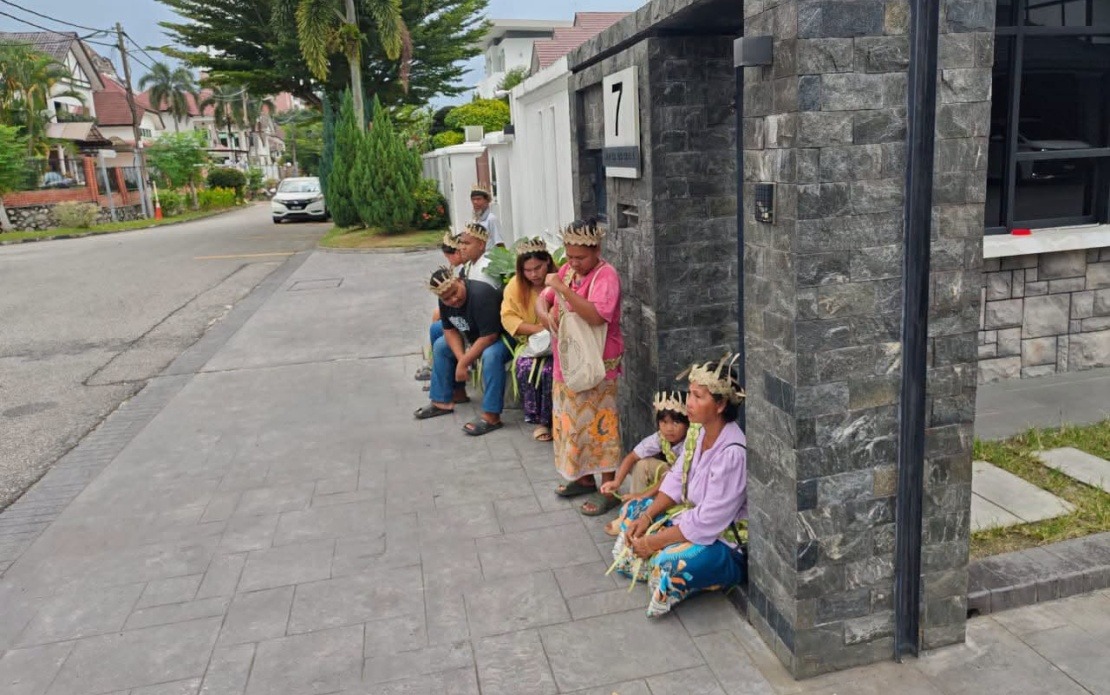
Prime Minister Datuk Seri Anwar Ibrahim has committed to escalating a longstanding land dispute affecting the Orang Asli community of Kampung Sungai Cot in Maran, Pahang, signalling heightened federal attention to indigenous land grievances that have simmered across Malaysia's peninsula. The Prime Minister's pledge came after representatives from the community visited his residence on July 17, a development that underscores the growing visibility of Orang Asli land rights concerns within federal political discourse and the government's responsiveness to direct appeals from indigenous constituencies.
Through a social media statement released that evening, Anwar indicated he had engaged directly with the community delegation, absorbing an account of their predicament that extends beyond land tenure issues to encompass alleged police detention of three village residents. The involvement of law enforcement adds a layer of complexity to what many view as a fundamental property rights question, suggesting that tensions between state authorities and the indigenous community may have escalated into criminal matters. This intersection between civil disputes and police action has often characterised Orang Asli confrontations with state machinery, reflecting broader concerns about how indigenous communities are treated when asserting territorial claims.
The Prime Minister noted with apparent satisfaction that the three individuals who had faced detention had subsequently been released by police, framing this as a positive development warranting acknowledgment. The rapid release, whether attributable to intervention or the conclusion of police inquiries, represents one concrete outcome from the delegation's advocacy efforts. However, the fact that detention occurred at all continues to raise questions about how authorities initially responded to the community's land assertion activities, a pattern that has characterised other Orang Asli disputes across Peninsular Malaysia in recent years.
Campung Sungai Cot, situated within Maran district, represents one among numerous Orang Asli settlements where land security remains tenuous despite legal frameworks ostensibly designed to protect indigenous land rights. The community's willingness to travel to the Prime Minister's residence reflects both desperation and strategic calculation—understanding that federal intervention might carry more weight than appeals through state channels alone. For many Orang Asli communities, Pahang state government institutions have historically proven unresponsive or actively hostile to indigenous land claims, making federal-level engagement a necessary escalation tactic.
Anwar's emphasis that all parties should refrain from politicising the issue and instead pursue legally and ethically sound resolutions carries implications for how the federal government intends to manage the dispute going forward. His language—calling for prudence, legality, and fairness—suggests an awareness that Orang Asli land issues carry significant reputational and political consequences in contemporary Malaysia, where indigenous rights advocacy has gained traction among civil society organisations and international observers. The call for restraint likely addresses concerns that the situation could deteriorate if either the state government or community members resort to confrontational tactics.
The Pahang state government, as custodian of land administration within the state and holder of considerable discretionary authority over land allocation and settlement matters, now faces implicit pressure to engage constructively with federal-level interventions. State-federal coordination on Orang Asli issues has historically been fraught with jurisdictional tensions and divergent priorities, with state authorities sometimes prioritising development agendas over indigenous land security. Anwar's commitment to raise the matter signals that the federal government views the issue as sufficiently serious to warrant executive attention and potential diplomatic engagement with state counterparts.
The broader context for this dispute involves Malaysia's complicated relationship with Orang Asli land rights, notwithstanding constitutional recognition of customary land tenure under Article 89 of the Federal Constitution. In practice, enforcement of these protections has proven inconsistent, with state governments and federal agencies often privileging commercial, agricultural, or infrastructure development over indigenous occupation and usage rights. Kampung Sungai Cot's experience likely reflects tensions between competing land-use visions, though the specific details of the dispute remain unreported in the Prime Minister's public statement.
For other Orang Asli communities monitoring developments in Pahang and elsewhere, Anwar's intervention creates precedent suggesting that direct appeals to federal leadership may yield tangible responses, potentially emboldening similar advocacy efforts. However, the distance between federal acknowledgment and actual resolution of land disputes—which often require relinquishment of competing claims or compensation arrangements—remains substantial. Communities will likely assess how forthcoming federal engagement translates into concrete outcomes before viewing this intervention as genuinely transformative.
The Prime Minister's characterisation of the situation as involving both land dispute and detention issues suggests a multifaceted approach to resolution rather than narrow focus on land boundaries and title. This encompasses restoring community dignity, ensuring legal protection against arbitrary police action, and achieving substantive land security. Such comprehensive framing aligns with contemporary approaches to indigenous rights that recognise security concerns extend beyond property titles to encompass personal safety and freedom from state harassment.
The involvement of federal leadership in what might conventionally be treated as a routine state-level land matter reflects shifting political calculations around indigenous constituencies and their electoral significance. As Malaysia's indigenous populations become increasingly organised and politically aware, federal leaders recognise that demonstrable responsiveness to Orang Asli concerns carries political value across urban and rural constituencies that harbour sympathy for indigenous rights causes.
Anwar's commitment, while carefully qualified with language about legality and fairness, represents a baseline expectation that the federal government will now actively engage with Pahang authorities to facilitate some form of resolution. The coming weeks and months will prove instructive regarding whether this federal engagement produces meaningful movement toward addressing the community's grievances or whether the issue becomes relegated to bureaucratic processes that characterise many unresolved Orang Asli disputes. For indigenous communities across Southeast Asia observing Malaysia's indigenous rights trajectory, this moment carries symbolic importance despite its modest scale.
The path forward requires careful navigation among competing interests—acknowledging indigenous land rights while respecting whatever legitimate claims or development plans other stakeholders may hold. Anwar's invocation of both fairness and legality suggests recognition that solutions cannot simply favour one party entirely but must achieve some balance acceptable to government institutions, land administrators, and the Orang Asli community themselves. How well federal and state authorities execute this balancing act will significantly influence whether Kampung Sungai Cot's experience becomes a model for resolving similar disputes or merely another instance of indigenous grievances receiving bureaucratic attention without substantive resolution.

