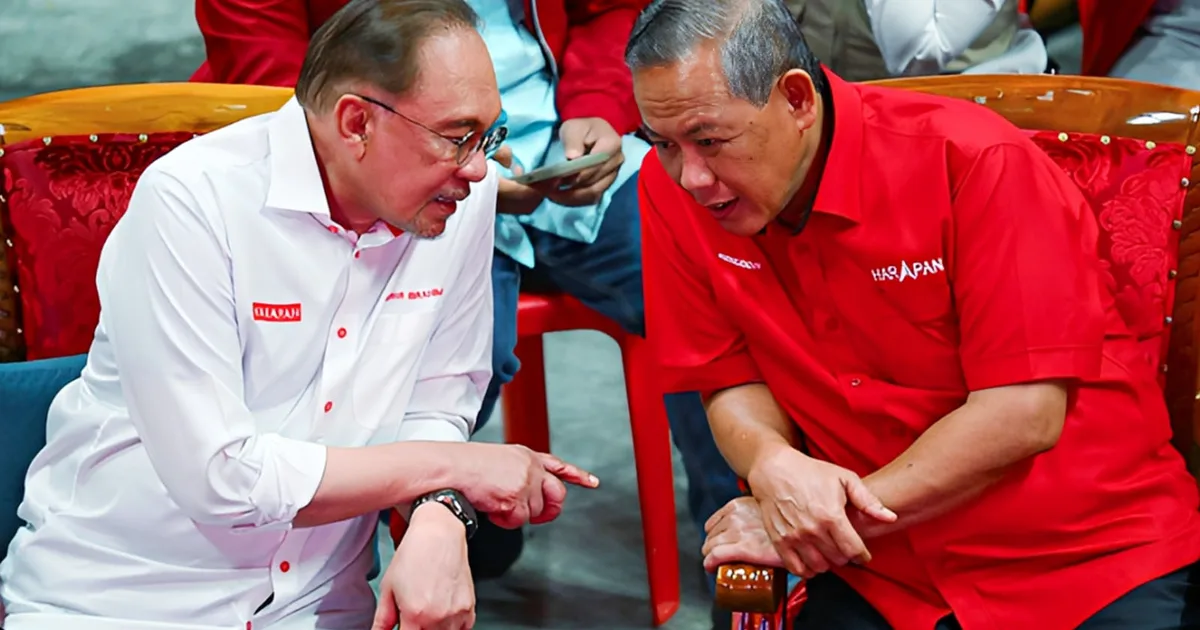
Prime Minister Anwar Ibrahim has moved to retain the political influence of Aminuddin Harun within the PKR fold, emphasizing that the former Negeri Sembilan menteri besar possesses invaluable guidance to offer younger party members despite his recent electoral loss. The PKR president's remarks underline a deliberate strategy to preserve institutional knowledge and mentorship within the party hierarchy, even as leadership transitions occur following electoral challenges.
Anwar's public endorsement of Aminuddin's continued relevance reflects a broader recognition within PKR that political experience and ethical conduct extend beyond holding elected office. The Prime Minister specifically highlighted Aminuddin's approach to accepting defeat without recrimination or blame-shifting as a powerful example that should resonate across the party membership. This emphasis on gracious acceptance of electoral outcomes carries particular significance in the Malaysian political context, where disputes over election results and attempts to delegitimize outcomes have occasionally troubled the nation's democratic discourse.
The former menteri besar's willingness to absorb electoral defeat without scapegoating rivals or casting aspersions on the democratic process itself represents a model of political maturity that Anwar appears keen to transmit to younger PKR cadres. In a party environment where personality-driven factions and internal rivalries can sometimes undermine organizational coherence, Aminuddin's demonstrated restraint offers a counterbalance to more confrontational political styles. This distinction becomes increasingly important as PKR seeks to consolidate support ahead of future electoral contests.
Aminuddin's tenure as Negeri Sembilan menteri besar, though it ended in electoral disappointment, provided him with extensive administrative experience and exposure to the complexities of state-level governance. His tenure navigated the intricate political dynamics of a state where multiple parties hold influence, requiring diplomatic skills and coalition management expertise. These practical competencies, accumulated through years of executive responsibility, remain applicable to contemporary party challenges and can inform strategic decision-making even from a non-elected position.
The PKR's internal structure increasingly relies on mentorship frameworks that connect experienced politicians with younger aspirants seeking to build careers within the party. Anwar's framing of Aminuddin as a continued resource for this developmental pipeline suggests a deliberate effort to construct institutional stability amid potential generational shifts. Rather than allowing electoral setbacks to lead to the sidelining of capable operatives, PKR appears to be positioning defeated candidates in advisory and developmental roles that preserve their influence through alternative channels.
Within the broader Malaysian political landscape, Anwar's statement carries implications for how the ruling coalition manages its human resources. As Pakatan Harapan navigates the complex electoral arithmetic that shapes contemporary Malaysian politics, retaining experienced figures in mentorship capacities provides continuity and institutional memory. The coalition's performance in future elections may depend significantly on the quality of candidate recruitment and preparation, areas where seasoned mentors like Aminuddin can contribute substantively.
The emphasis on accepting electoral defeat without blame becomes particularly resonant given the polarized nature of contemporary Malaysian politics. Anwar's highlighting of this virtue suggests a concern that losing candidates might otherwise drift toward narratives of unfairness, external interference, or conspiracy. By elevating Aminuddin's dignified response as a party exemplar, the PKR president implicitly sets standards for how other defeated candidates should conduct themselves. This cultural reinforcement may help maintain party cohesion during periods of electoral difficulty.
For younger PKR members and candidates, access to Aminuddin's counsel potentially offers practical advantages in understanding state-level politics, coalition management, and the administrative dimensions of governance. His experience navigating Negeri Sembilan's unique political composition, where no single party typically commands absolute dominance, equips him with insights applicable across multiple Malaysian states. This transferable knowledge represents a valuable resource for cadres preparing for leadership opportunities in their own constituencies and states.
Anwar's public affirmation of Aminuddin's continued importance also carries symbolic weight in terms of party loyalty and institutional commitment. By ensuring that electoral defeat does not translate into exile or marginalization, PKR signals that it values its members' contributions beyond electoral performance metrics alone. This approach potentially strengthens party cohesion by demonstrating that dedicated service remains recognized and valued even when electoral outcomes prove unfavorable.
The retention of experienced figures in advisory capacities reflects international best practices in political party management, where organizations recognize that electoral cycles inevitably produce winners and losers, but institutional continuity requires ongoing engagement with seasoned operatives. Aminuddin's transition from executive office to mentorship role exemplifies a mature political system where experience and expertise remain mobilized across different organizational contexts. As Malaysian politics continues evolving amid generational changes and electoral uncertainties, such institutional frameworks for preserving and transmitting political knowledge become increasingly valuable.

