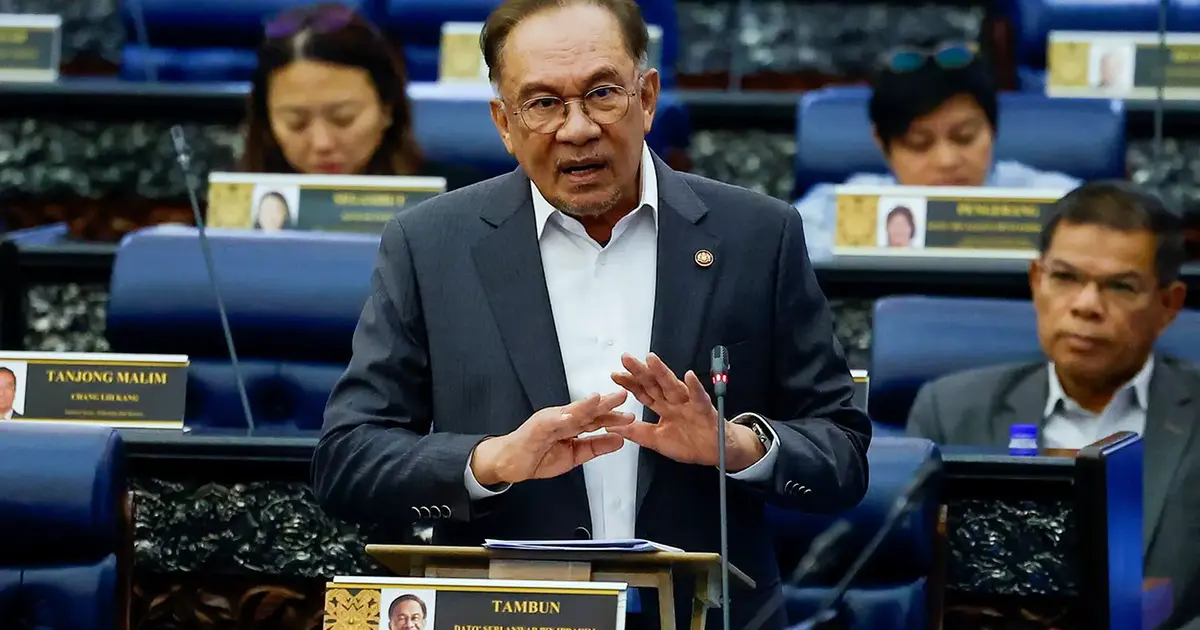
Prime Minister Anwar Ibrahim has clarified that the escalating special grant rates directed towards Sabah were not introduced unilaterally by the federal government, but rather represented an agreement already secured with the previous state administration under the Warisan party. The disclosure sheds light on the financial arrangements underpinning federal-state relations in one of Malaysia's largest and most strategically important East Malaysian states.
According to Anwar's statements, the financial commitment to Sabah has undergone substantial growth over recent years. The grants began at RM53.4 million annually during 2020 and 2021, a baseline that reflected the economic circumstances and political negotiations of that period. This initial allocation represented a significant commitment from Kuala Lumpur to the state's development priorities and operational needs.
The trajectory of these grants demonstrates a policy shift towards enhanced regional development spending. By 2024, the annual allocation had doubled to RM106.8 million, indicating a doubling of federal support over a four-year span. This doubling reflects both inflationary adjustments and potentially enhanced strategic importance assigned to Sabah within federal development frameworks. The progression from approximately RM53 million to over RM100 million annually signals substantial commitment to addressing the state's infrastructure, social services, and economic development needs.
The significance of Anwar's confirmation lies in establishing that such arrangements typically require inter-governmental consensus rather than unilateral federal imposition. By noting that the previous Warisan government had agreed to these rates, the Prime Minister emphasizes the cooperative nature of federal-state financial relations. This context matters considerably for understanding how development funding decisions are negotiated and implemented within Malaysia's federal structure. Sabah, as a state with considerable autonomy under the Federal Constitution's provisions for Sabah and Sarawak, requires substantial engagement before major financial agreements are finalized.
Warisan, which governed Sabah from 2018 to 2020 before the state returned to Barisan Nasional control, had pursued various development agendas during its tenure. The agreement on expanding special grants under that administration suggests alignment between federal objectives and state-level priorities, even as political dynamics shifted subsequently. Understanding these pre-existing commitments is essential context for evaluating current federal allocations to the state.
For Malaysian readers, these figures carry importance beyond mere statistics. Special grants to states represent a mechanism through which federal governments address regional development disparities and respond to demographic, geographic, and economic challenges. Sabah, as the second-largest Malaysian state by land area with a dispersed population across numerous districts, faces distinctive infrastructure and service delivery challenges. Increased federal grants help address these structural constraints.
The doubling of grants within four years also reflects broader patterns in Malaysian fiscal federalism. As the federal government has sought to strengthen governance and development outcomes in East Malaysia, direct grants have increasingly complemented the traditional system of state revenue allocations. These grants often target specific policy priorities identified jointly by federal and state authorities—whether infrastructure development, healthcare expansion, education quality improvement, or economic diversification initiatives.
Anwar's framing also carries political dimensions. By emphasizing prior agreement, the Prime Minister provides historical legitimacy for current spending levels and demonstrates continuity across different federal administrations. This approach suggests that substantial Sabah funding represents established policy consensus rather than partisan preference. Such framing matters for inter-governmental relations and for maintaining confidence among state-level political actors regarding federal reliability in honoring commitments.
For Southeast Asian context, Malaysia's arrangement exemplifies how federal systems manage resource distribution and regional equity. Unlike some neighbouring countries with more centralized structures, Malaysia's constitutional framework requires substantial negotiation and consensus-building on fiscal matters between federal and state governments. The Sabah grants illustrate this dynamic in practice.
The transition from Warisan to Barisan Nasional governance in Sabah did not apparently disrupt these financial arrangements, suggesting that both political coalitions recognized the legitimacy and importance of the established grant structure. This continuity reflects pragmatic acknowledgement that Sabah's development needs transcend partisan considerations and that federal support remains essential for addressing them effectively.
Moving forward, these established grant levels create baseline expectations for future federal allocations. Any reduction would likely generate considerable political friction, while further increases would be welcomed by state policymakers seeking expanded resources for development projects. The fact that these rates were previously agreed provides a foundation for subsequent negotiations and prevents disputes over whether current levels represent unprecedented generosity or simply the honouring of existing commitments.
Understanding the origins of these grant arrangements also helps clarify the broader relationship between Kuala Lumpur and Sabah. The substantial commitment—whether RM53 million or RM106 million annually—reflects recognition of Sabah's importance to Malaysia's economic future, demographic composition, and regional stability. These are not minor allocations, and their growth signals serious federal intent to prioritise East Malaysian development.

