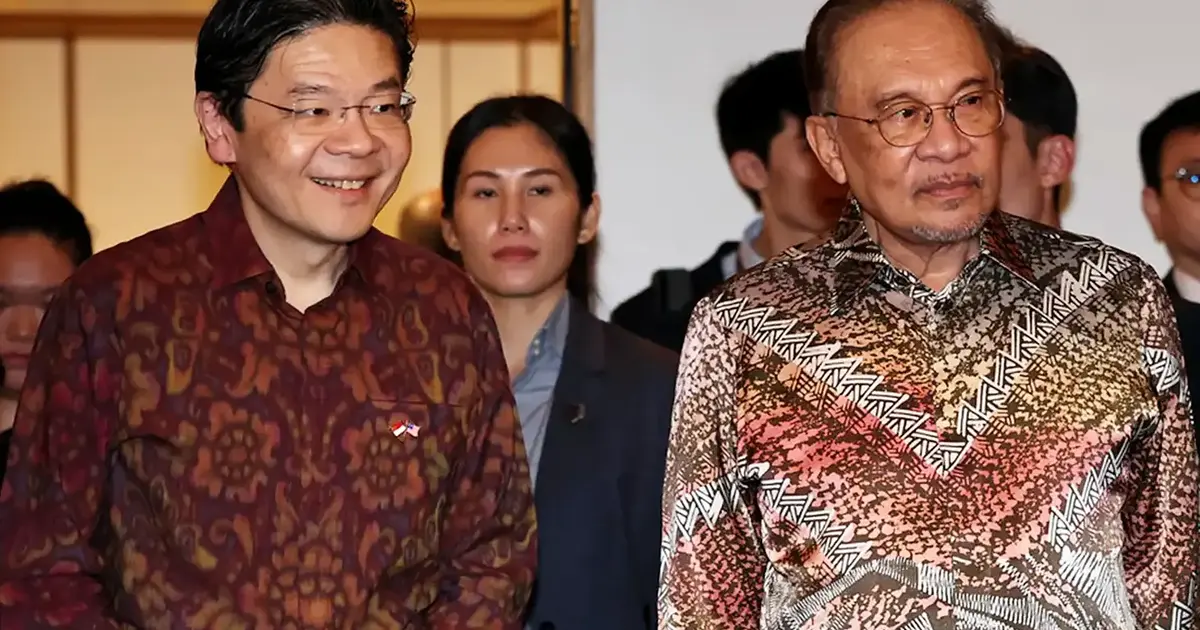
Prime Minister Anwar Ibrahim has moved to dispel speculation about diplomatic overtures to Singapore regarding the upcoming Johor state election, stating unequivocally that he has made no formal request to his Singaporean counterpart on the matter. The clarification came in response to queries about whether the federal government would seek assistance from Singapore's leadership to enable Malaysians currently residing across the causeway to return and cast their votes in the polls.
The question of overseas voter participation, particularly among Malaysians working or studying in Singapore, has periodically emerged as a contentious issue in electoral cycles. Singapore hosts a significant population of Malaysian workers spanning various sectors, from finance and technology to manufacturing and services. These individuals typically maintain electoral registration in their home states but face logistical and economic challenges in returning to vote during scheduled polling periods. The prospect of coordinating with Singapore authorities to facilitate such movement has occasionally been mooted by stakeholders keen on maximising voter turnout.
Anwar's statement suggests the government is not pursuing diplomatic channels to address this challenge during the Johor electoral exercise. This position indicates reliance on existing constitutional and electoral frameworks rather than seeking bilateral arrangements with Singapore. Malaysia's Election Commission operates within the parameters of domestic law, and any measures to assist overseas voters would require procedural clarity within that system. The Prime Minister's response essentially indicates that conventional mechanisms are deemed sufficient for managing voter participation in this instance.
The broader context involves the practical difficulties faced by Malaysian voters abroad who wish to participate in democratic processes. International best practices in some democracies include postal voting systems, overseas polling stations, or extended early voting windows. Malaysia has experimented with limited postal voting provisions for certain categories of voters, particularly military and security personnel. However, expanding such mechanisms to cover all Malaysians abroad, especially those in neighbouring countries, involves complex administrative and diplomatic considerations.
Singapore, as a distinct sovereign state with its own governance systems and border protocols, would naturally require clear communication about any special arrangements affecting its residents. Anwar's clarification that no such request has been made signals confidence in existing arrangements or acceptance that such matters fall outside the scope of current government priorities. This pragmatic stance avoids creating diplomatic friction over what could be perceived as an internal Malaysian matter.
The Johor state election carries particular significance within Malaysia's political landscape. The state remains strategically important both economically and politically, sharing direct borders with Singapore and serving as a major industrial and commercial hub. Electoral participation rates in Johor thus have broader implications for mandate legitimacy and political stability in the region. However, the challenge of ensuring comprehensive voter turnout must be balanced against administrative feasibility and diplomatic considerations.
For Malaysian professionals and workers in Singapore, voting typically requires taking unpaid leave and arranging transport across the causeway, representing tangible costs beyond the nominal inconvenience. While some voters prioritise this participation, others face employment constraints or financial pressures that preclude travel. The gap between registered voters and those who actually cast ballots in constituencies with significant overseas populations remains a notable feature of Malaysian electoral data.
Anwar's position aligns with a broader governmental approach that emphasises working within established democratic institutions rather than seeking exceptional arrangements. This reflects confidence in the existing electoral architecture while also respecting Singapore's sovereign right to govern its own borders and the movement of persons within its territory. Any special arrangements would inevitably involve complex discussions about precedent and reciprocal obligations.
The clarification also avoids suggesting that voter participation in Johor is contingent upon external coordination, which could undermine the narrative of a self-contained democratic process. Malaysia's electoral system, despite acknowledged challenges around accessibility and inclusivity, operates as a constitutionally-grounded mechanism requiring no international cooperation to function legitimately. This independence from external arrangements reinforces the integrity of the democratic exercise.
Looking forward, the question of overseas voter participation may resurface in broader electoral reform discussions. Some analysts and civil society organisations have advocated for modernising Malaysia's voting mechanisms to accommodate geographical dispersion of the electorate, citing demographic trends showing increasing numbers of Malaysians working internationally. However, such reforms would require legislative attention and administrative restructuring independent of bilateral arrangements with any specific country.
Anwar's straightforward denial of requests to Singapore reflects a clear-eyed assessment of what is procedurally appropriate and diplomatically practical. While sympathetic to challenges faced by voters abroad, the government evidently views these as matters to be addressed through domestic policy mechanisms rather than international negotiation. This stance maintains clarity about Malaysia's electoral sovereignty while acknowledging the practical limitations that geography and employment patterns impose on voter participation.

