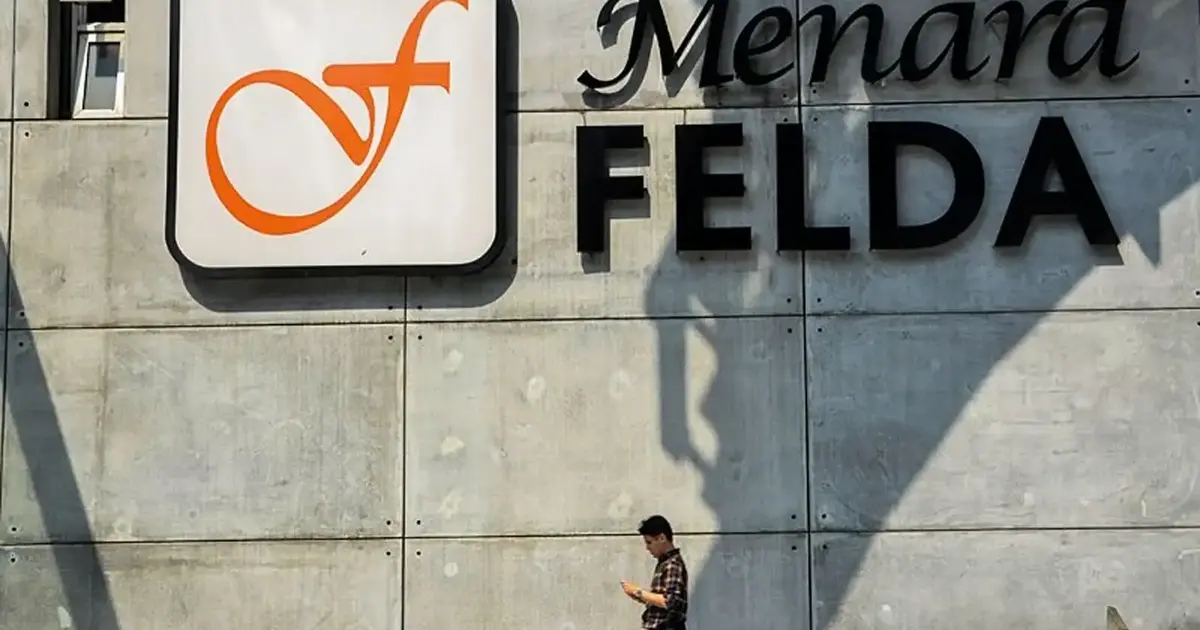
Prime Minister Anwar Ibrahim has placed responsibility for Felda's near-collapse squarely on the shoulders of past management and political interference, rather than on the resilience of the settlers themselves. In a statement that reflects growing accountability demands within the administration, Anwar attributed the federal land development agency's loss of nearly RM10 billion to systemic failures in oversight and governance compounded by undue political pressure on operational decisions.
Felda, once a flagship institution for rural development across Malaysia, has faced mounting scrutiny over its financial performance and strategic direction. The organisation, which manages settler livelihoods across thousands of hectares, was designed to provide sustainable agricultural opportunities for rural communities. However, mounting evidence of financial deterioration has prompted searching questions about how such significant resources were depleted. Anwar's intervention suggests the government is taking a firmer stance on accountability at state-owned enterprises that have underperformed.
The prime minister's comments distinguish between the fundamental problem and its symptoms. Rather than blaming farmers and plantation workers for insufficient productivity, Anwar identified poor decision-making at senior management levels as the core issue. This framing matters politically, as it acknowledges that Felda's original mission—supporting rural livelihoods through structured development—remains sound, but execution has been fundamentally compromised. It also reflects evolving government thinking about how to reform large bureaucratic institutions without dismantling the social safety nets they provide.
Political meddling emerged as a co-conspirator in Felda's decline according to Anwar's assessment. Throughout its history, the agency has been subject to various political agendas and pressure from different interest groups seeking to direct resources or influence procurement decisions. Such interference, when it overrides professional management standards, creates inefficiencies, inflates costs, and diverts funds from their intended developmental purposes. The prime minister's willingness to acknowledge this dimension publicly suggests an effort to establish clearer boundaries between political oversight and operational autonomy at state enterprises.
The RM10 billion figure represents not merely accounting losses but squandered opportunity for rural communities that depend on Felda structures. These resources, had they been properly steered, could have modernised plantation infrastructure, improved commodity processing capabilities, enhanced farmer training programmes, or expanded market access channels. Instead, they were dissipated through mechanisms that remain partially opaque but are understood to involve questionable investments, inflated contracts, and strategic misjudgements that compounded losses over multiple fiscal years.
Felda's situation carries implications beyond the agency itself. It reflects broader patterns in how Malaysian state-owned enterprises operate and the challenges of maintaining institutional integrity under political pressure. Other GLCs and government agencies likely face similar dynamics, where the tension between political accountability and professional management creates vulnerabilities. Anwar's public attribution of blame may signal a broader pivot toward tighter oversight of state institutions, particularly those managing critical rural infrastructure and welfare systems.
The agency's struggles also illustrate the complexity of agricultural sector reform in Southeast Asia. Felda must compete in global commodity markets while maintaining social obligations to thousands of settlers and their families. This dual mandate requires sophisticated financial management and strategic foresight. When political considerations override market logic, the institution becomes increasingly uncompetitive. Acknowledging this reality is a necessary precondition for any meaningful recovery or restructuring.
Looking ahead, Anwar's framing creates space for potential restructuring initiatives. By removing blame from settlers and placing it on management systems, the government can justify reform measures without appearing to punish rural communities. This might include leadership changes, governance restructuring, enhanced audit mechanisms, or revised operational mandates. However, translating diagnosis into effective remedial action requires sustained political will and insulation from the very pressures that contributed to the agency's decline in the first place.
For Malaysian investors, civil society observers, and regional development professionals, Felda's predicament serves as a case study in institutional vulnerability. Large development agencies operating across diverse constituencies face inherent challenges in balancing efficiency with equity, profitability with social responsibility. The question now is whether the government can implement reforms that address the underlying governance failures while preserving the legitimate developmental mission that justifies Felda's continued existence. Anwar's accountability narrative represents a necessary first step, but sustained institutional transformation will require follow-through commitments and demonstrable results.

