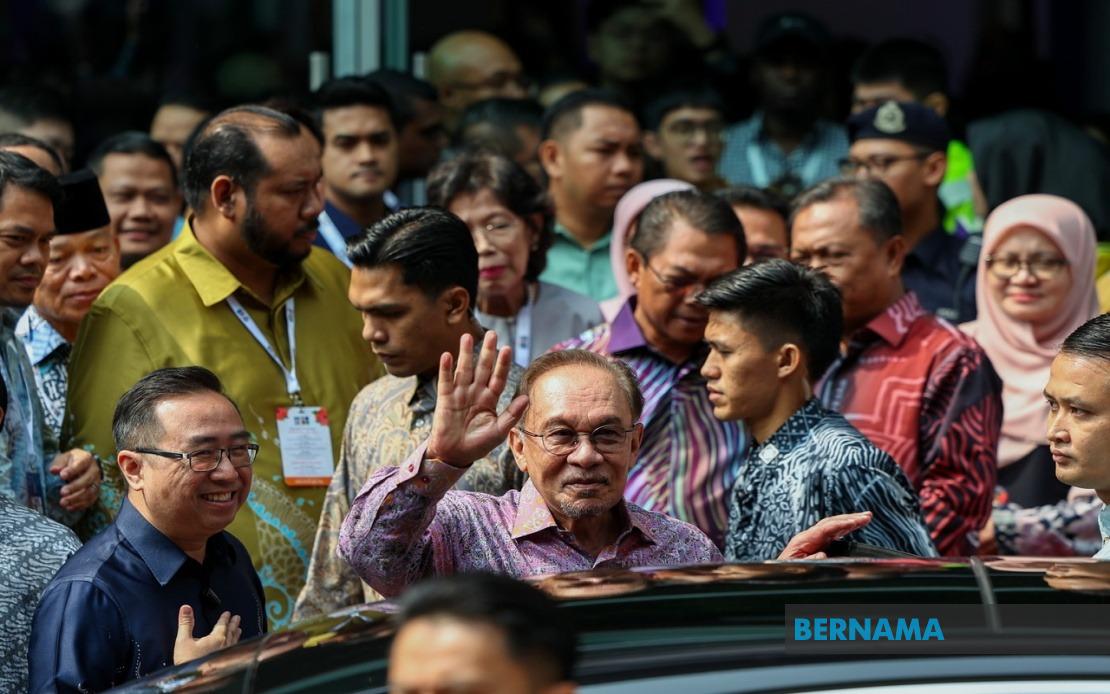
Prime Minister Datuk Seri Anwar Ibrahim has disputed knowledge of any formal invitation extended to former PKR deputy president Datuk Seri Mohamed Azmin Ali to rejoin the party, responding with noticeable brevity when questioned about the matter. During remarks made at the opening of the National Innovation and Commercialisation Expo (NICE) 2026 at the Kuala Lumpur Convention Centre (KLCC) on Wednesday, Anwar declined to elaborate on whether party leadership had sanctioned overtures to Azmin, instead emphasizing his personal lack of awareness regarding such communications.
The Prime Minister's terse response came amid reports that Azmin, who currently serves as secretary-general of Parti Pribumi Bersatu Malaysia (Bersatu), had publicly stated he would not entertain a return to PKR despite invitations apparently being circulated to various former party members. The timing and manner of Anwar's denial suggest internal tensions within PKR leadership regarding its recruitment strategy and the handling of high-profile figures who departed the party during previous political realignments.
The broader context involves a reported reconciliation campaign within PKR aimed at consolidating its membership base. Several prominent former members have been identified as potential targets for recruitment, including former Bandar Tun Razak MP Datuk Kamarudin Jaffar and former Nibong Tebal MP Datuk Mansor Othman, both of whom have been associated with discussions about returning to the fold. In contrast to Azmin's apparent resistance, former PKR vice-president Datuk Dr Xavier Jayakumar has already confirmed his intention to rejoin the party, signalling that not all departures are permanent.
The situation highlights the fluid nature of Malaysian politics, where party loyalty remains contingent on factional alignments, leadership dynamics, and ministerial opportunities. Azmin's position as Bersatu's secretary-general likely makes a return to PKR politically complicated, given the competitive relationship between the two Pakatan Harapan coalition partners. His public rejection of overtures may reflect both personal conviction and strategic calculations about maintaining his current standing within the Anwar-led government structure.
Anwar's denial of involvement in issuing invitations to Azmin raises questions about command and control within PKR's organizational hierarchy. If such invitations were extended without the party president's knowledge or approval, this would suggest either that lower-ranking officials acted autonomously or that communication channels within the party require clarification. Conversely, Anwar's statement could represent a strategic disavowal, distancing himself from a failed recruitment initiative or avoiding the appearance of desperation in wooing back departed members.
The recruitment drive targeting former members reflects PKR's underlying concerns about maintaining electoral competitiveness and organizational strength as Malaysia approaches its next general election cycle. The party has experienced significant membership churn over the past decade due to political realignments, personality clashes, and migration of influential figures to competing coalitions. Re-establishing relationships with seasoned political operators like Kamarudin and Mansor could enhance party infrastructure in critical constituencies.
Xavier Jayakumar's confirmed return carries particular symbolic weight given his seniority within PKR's historical structure and his expertise in policy formulation. His decision to rejoin, following a period outside the party, may indicate that conditions have stabilized sufficiently for senior figures to reconcile their differences with current leadership. This contrasts sharply with Azmin's position, suggesting that not all departures respond to identical grievances or future prospects.
For Malaysian political observers, these developments underscore the continuing volatility within Pakatan Harapan's constituent parties and the personal rivalries that transcend formal organizational boundaries. Azmin's unwillingness to return to PKR despite invitations demonstrates that some political separations reflect fundamental incompatibilities that invitations alone cannot overcome. The Bersatu portfolio he currently holds provides both institutional security and potential advancement paths that PKR cannot necessarily match or accelerate.
Anwar's handling of questioning about Azmin's invitation also illustrates the careful navigation required when addressing internal party matters in public forums. By claiming lack of information, the Prime Minister avoided either endorsing recruitment efforts or attacking dissidents, maintaining plausible deniability while the party pursues its broader consolidation strategy. This measured approach reflects the political sensitivities involved in openly discussing defections or attempted reconciliations within a coalition government.
Looking forward, the outcome of these recruitment initiatives will shape PKR's numerical strength and factional balance heading into the next electoral cycle. Success in bringing back figures like Kamarudin and Mansor could offset some organizational losses, while continued defections or public rejections from prominent former members might signal underlying structural weaknesses requiring deeper organizational reform rather than simply re-recruiting former personnel.

