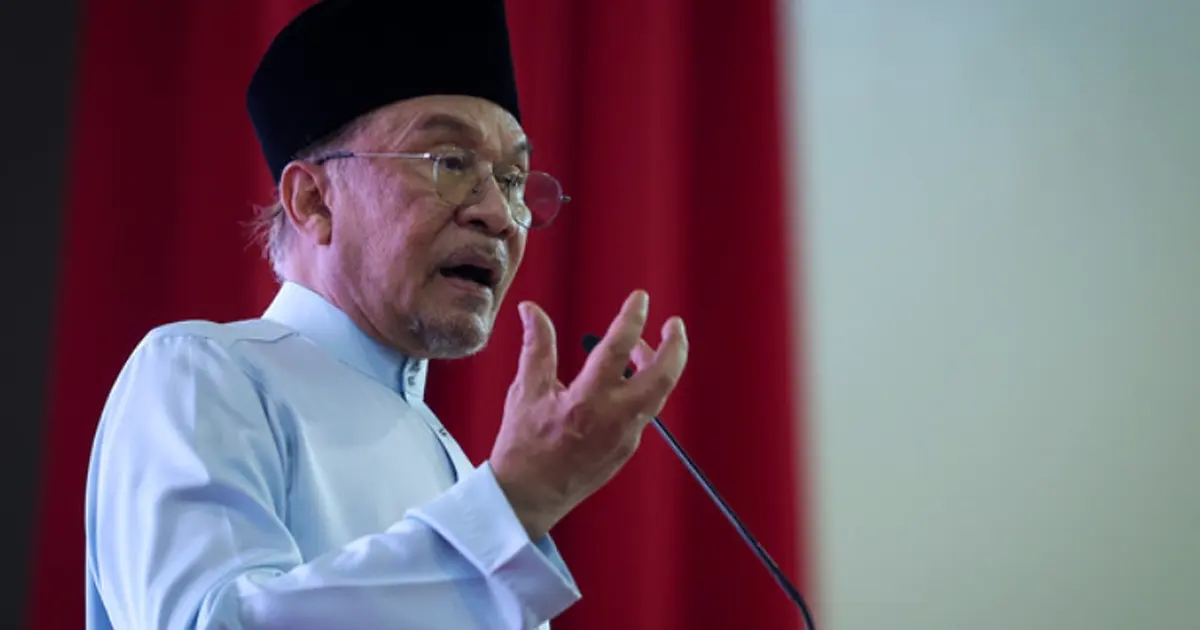
Prime Minister Anwar Ibrahim should be remembered as a steadfast ally who rescued Umno from political turmoil, yet the party has repaid his assistance with betrayal, according to PKR Youth leader Huraimi Husri from the Federal Territories chapter. The accusation underscores deepening tensions within Malaysia's ruling coalition as partners navigate competing interests and shifting allegiances ahead of upcoming electoral contests.
The charge reflects a broader narrative that has emerged from PKR circles regarding the precarious political arrangement that has defined Malaysia's governance since the 2023 general election. When Umno faced an existential challenge following its poor performance in GE15, analysts and political observers widely acknowledged that the formation of a unity government required bridging deep historical animosities. Anwar's decision to extend an olive branch to Umno, traditionally positioned as a political rival across multiple decades, represented a pragmatic political manoeuvre designed to establish stable governance during an uncertain period.
Huraimi's comments gain particular significance when viewed against the backdrop of coalition dynamics that have repeatedly tested the unity government's cohesion. Umno's participation proved essential for securing parliamentary numbers, yet the party's leadership has simultaneously pursued strategies that critics argue undermine collaborative governance. The tension between maintaining coalition stability and advancing partisan interests has created a paradox that continues to shape Malaysian politics, with smaller coalition partners often caught in the crossfire.
The Federal Territories-based youth leader's remarks represent an escalation in inter-coalition rhetoric, moving beyond diplomatic language to direct accusations of betrayal. Such statements typically emerge when parties perceive shifts in power dynamics or anticipate electoral challenges that might strengthen their negotiating position within the broader political alliance. In Malaysia's fluid political environment, where coalitions are constructed from necessity rather than ideological alignment, such friction remains endemic.
Anwar's outreach to Umno was widely interpreted as essential statecraft following GE15's fragmented results, which prevented any single coalition from commanding a decisive parliamentary majority. The Pakatan Harapan leader's willingness to set aside historical grievances earned acknowledgement across the political spectrum, though it simultaneously constrained his ability to pursue aggressive partisan agendas. This compromise has arguably benefited Malaysia's institutions by providing governance continuity, yet it has also created frustration within PKR ranks who view concessions to Umno as unrequited.
The question of political reciprocity now dominates coalition discussions, with PKR Youth's intervention suggesting growing impatience among party grassroots with what they perceive as one-sided accommodation. Umno's own internal dynamics—including leadership contests and factional maneuvering—have occasionally created friction points that impact coalition functioning. The party's historical dominance in Malaysian politics means that expectations regarding its behavior within coalitions differ markedly from those applied to other partners.
For Malaysian voters and regional observers, the coalition friction carries practical implications regarding governance stability and policy implementation. When coalition partners engage in public accusations rather than private negotiations, it typically signals deteriorating trust that may eventually manifest in parliamentary votes on contentious legislation. The unity government's ability to advance economic reforms, address cost-of-living concerns, and implement institutional changes depends substantially on maintaining functional working relationships across coalition parties.
The timing of Huraimi's comments also warrants examination, as they coincide with persistent speculation about electoral dynamics and coalition restructuring. Opposition parties closely monitor such inter-coalition tensions, viewing them as opportunities to exploit divisions and peel away support. In this context, public statements from coalition members criticizing partners serve multiple audiences simultaneously—internal party supporters, coalition partners, and potential swing voters assessing governance performance.
Anwar's political calculus in supporting Umno, regardless of perceived returns, reflected a commitment to institutional stability that transcended narrow partisan advantage. Whether such decisions generate long-term political dividends remains contested terrain, particularly as PKR Youth's frustration demonstrates. The broader question for Malaysia's political future concerns whether coalition governments constructed from electoral necessity can evolve into collaborative frameworks based on shared policy objectives, or whether they remain inherently unstable arrangements vulnerable to blame-shifting and recriminations.
Huraimi's accusations ultimately highlight the challenging mathematics of Malaysian coalition politics, where supporting partners during difficulties does not guarantee reciprocal loyalty when political winds shift. This dynamic will likely persist as parties balance coalition commitments against electoral pressures and internal factional interests, creating ongoing volatility in Malaysia's governance landscape.

