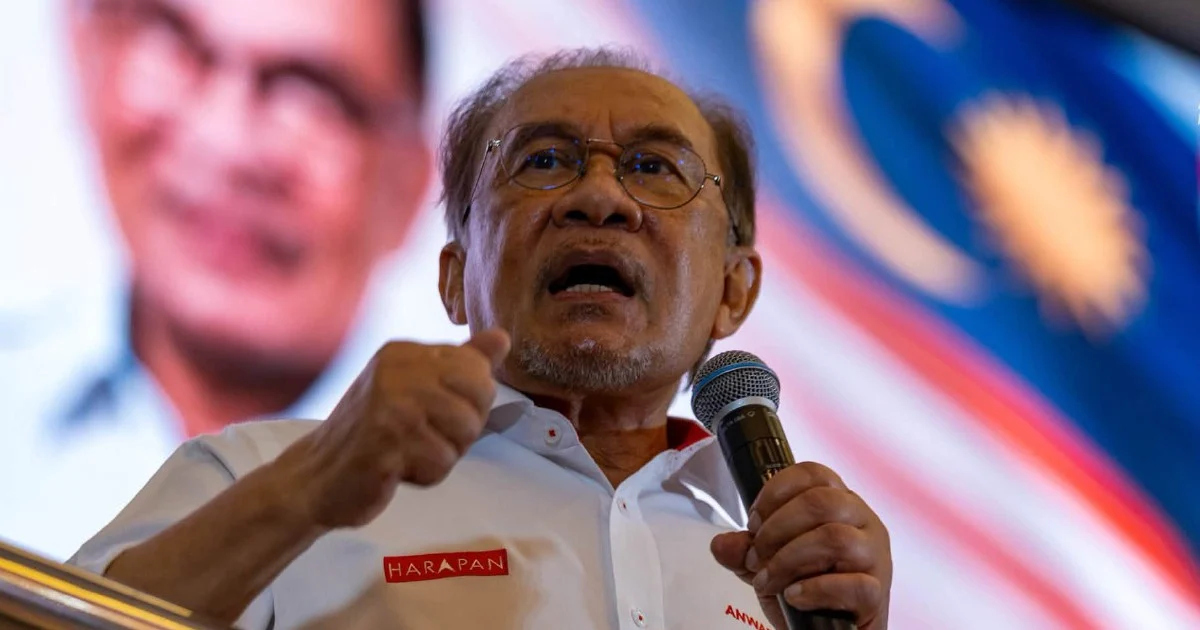
Prime Minister Datuk Seri Anwar Ibrahim has explicitly stated that the government harbours no intention of requesting Singapore's cooperation to enable voting by Malaysians employed in the neighbouring republic during the upcoming Johor state election scheduled for July 11. The announcement clarifies the position on a logistical question that has lingered as voting day approaches for the peninsular state, where electoral participation across the porous border region has historically presented administrative challenges.
The Johor election represents a significant political moment for the ruling coalition, particularly as the state remains a crucial battleground in Malaysia's electoral landscape. The timing of the poll, during the middle of the working week, means thousands of Johor residents who maintain employment in Singapore will face the difficult choice between their jobs and their civic duty. This recurring tension between economic necessity and democratic participation has prompted periodic discussion about whether bilateral arrangements might facilitate greater voter turnout among this demographic.
Anwar's decision reflects a pragmatic acknowledgment of diplomatic and administrative realities. Formalising cross-border voting mechanisms would require intricate coordination with Singapore's authorities and would necessitate establishing temporary polling infrastructure in a foreign jurisdiction. Such arrangements, while theoretically possible, would represent a significant departure from conventional electoral practice and would almost certainly demand extensive negotiation and mutual agreement on logistical details, security protocols, and the legal frameworks governing voter verification.
The situation underscores the particular challenges facing Malaysia's northern state, which has transformed into a regional economic hub with deep integration into Singapore's labour market. Daily commuters crossing the Causeway number in the tens of thousands, creating a substantial constituency of voters whose geographic location on election day may prevent participation. Unlike some democracies that have established overseas voting mechanisms or extended polling periods, Malaysia has traditionally relied upon in-country voting, requiring citizens to return to their registered constituencies.
This approach places Johor residents working in Singapore in a precarious position. Taking leave from employment to vote carries potential professional consequences, while forgoing voting means losing democratic representation in decisions affecting their home state. The announcement from the Prime Minister's office essentially confirms that this tension will remain unresolved for the July 11 poll, leaving affected workers to make individual decisions about whether to travel home.
The broader context of Malaysian electoral administration reveals a system that, while generally robust, has not evolved to accommodate modern labour mobility patterns. Regional integration within Southeast Asia has accelerated dramatically over recent decades, yet electoral frameworks in most member states have not similarly adapted. Malaysia's experience mirrors challenges faced by other nations with significant cross-border worker populations, though solutions remain inconsistently deployed across the region.
From a regional perspective, Anwar's statement carries implications beyond immediate electoral mechanics. It signals that while Malaysia and Singapore maintain extensive bilateral cooperation across numerous domains, electoral matters remain distinctly national prerogatives. Facilitating voting for Malaysian citizens in foreign territory, even for a neighbouring country with which Malaysia shares exceptionally close ties, appears to exceed the boundaries of acceptable coordination in the view of the Malaysian government.
The decision also reflects practical political considerations. Johor has historically been a stronghold of opposition politics, and any arrangement perceived as favouring one coalition over another could invite controversy. Establishing voting facilities in Singapore might hypothetically increase turnout among workers whose political preferences differ from those of voters who remain geographically mobile within Malaysia. Electoral regulators would need assurance that any cross-border arrangement carried no partisan implications.
The technical challenges involved should not be underestimated. Singapore's authorities would need to designate space within their territory for Malaysian polling operations, enforce Malaysian electoral security protocols on foreign soil, and ensure proper chain-of-custody procedures for ballots and materials. These logistical demands, multiplied across multiple polling locations to accommodate significant voter numbers, would constitute an unprecedented undertaking requiring months of preparation and substantial resource allocation.
For Malaysian workers in Singapore facing the July 11 election, the announcement clarifies their options: vote by travelling home, arrange proxy voting if eligible, or forego participation. Each choice carries distinct implications, and workers must now make calculated decisions about time away from employment during a mid-week working day. Some employers may grant leave, while others may prioritise business continuity over employee civic participation.
The broader significance lies in how Malaysia's evolving economy and workforce patterns increasingly misalign with electoral infrastructure designed for earlier eras. As regional integration deepens and more Malaysian citizens work abroad, this tension will likely intensify across multiple state and national elections. Anwar's statement, while addressing the immediate Johor situation, leaves open the question of whether future electoral cycles might prompt reconsideration of these arrangements as the scale and impact of the workforce mobility challenge grows more pronounced.
Ultimately, the Prime Minister's position confirms that Malaysia will manage the July 11 Johor election within conventional constitutional and electoral parameters. Workers must navigate the competing demands of employment and political participation individually, an arrangement that serves institutional clarity but may inadvertently suppress voter turnout among this economically important demographic, with implications for electoral representation and the legitimacy of outcomes in constituencies with substantial cross-border commuting populations.

