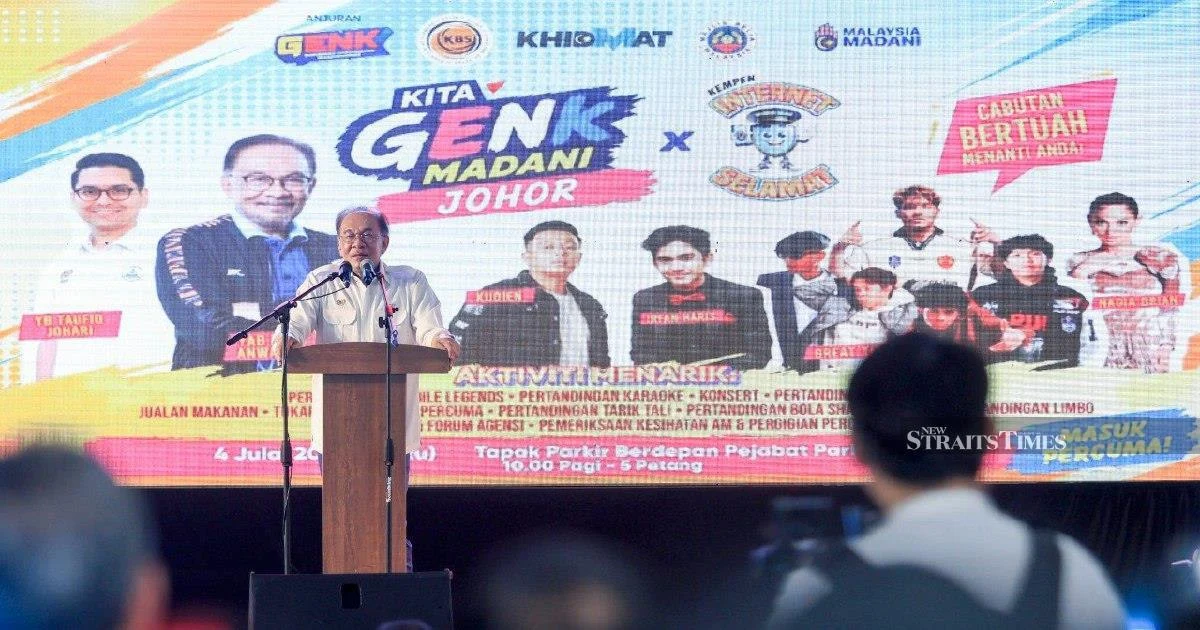
While traversing the breadth of Johor in pursuit of electoral support, Pakatan Harapan chairman Datuk Seri Anwar Ibrahim has divulged an unconventional wellness practice that sustains him through his demanding campaign itinerary. Speaking in Kulai, the political leader revealed his reliance on Tibetan ginseng, a traditional herbal supplement known for its purported energising properties, as an integral part of maintaining his vigour during the intensive election period.
The disclosure provides a window into the personal strategies employed by senior Malaysian politicians who navigate schedules that typically involve multiple constituency visits, rallies, meet-and-greet sessions, and media engagements across extended geographical areas. Election campaigns in Malaysia are notoriously physically demanding, requiring candidates and their leaders to sustain energy levels and mental acuity across weeks of continuous public appearances. For Anwar, managing these physiological demands whilst maintaining the composure necessary for political leadership represents a significant challenge.
Tibetan ginseng, also known as Cordyceps or yarsha gomba, occupies a distinct position within traditional Asian medicinal practices. The fungus has been utilised in Tibetan, Chinese, and Indian traditional medicine for centuries, with practitioners attributing qualities including enhanced stamina, improved oxygen utilisation, and augmented physical endurance to regular consumption. In contemporary wellness circles, particularly among individuals subjected to high-stress environments or demanding physical schedules, such supplements have gained considerable traction despite varying levels of scientific validation regarding their efficacy.
Anwar's openness about his wellness routine reflects a broader trend among Malaysian political figures in recent years toward greater transparency regarding personal health practices. Rather than maintaining the historical reticence that characterised political discourse around such matters, contemporary leaders increasingly discuss their approaches to managing the taxing demands inherent to high-level governance and campaigning. This shift potentially resonates with Malaysian audiences who themselves juggle professional pressures, family obligations, and health considerations.
The Johor campaign period represents a particularly gruelling iteration of electoral activity. The southern state encompasses diverse communities, from urban centres like Johor Bahru to rural constituencies requiring substantial travel time and logistical coordination. Campaign schedules during state-level elections typically compress extensive ground coverage into compressed timeframes, necessitating rapid transitions between venues, fluctuating environmental conditions, and variable audience dynamics. For a leader orchestrating nationwide party strategy whilst simultaneously engaging directly with constituents, the cumulative toll manifests across multiple dimensions—physical exhaustion, cognitive fatigue, and the emotional labour of sustained public engagement.
Anwar's physical health and apparent vitality carry particular significance for Pakatan Harapan supporters and Malaysian voters more broadly. As a senior statesman who has navigated a complex political trajectory spanning decades, including periods of imprisonment and personal adversity, public perceptions of his current wellbeing intersect with assessments of his capability to lead. Campaign visibility operates as a crucial mechanism through which voters evaluate candidates' fitness for office, and maintaining demonstrated energy levels throughout the electoral period communicates tacit messages regarding capacity and determination.
The use of herbal supplements within Malaysian political and business contexts remains common, though frequently discussed within more informal settings rather than public forums. Anwar's willingness to address this dimension of his personal regimen openly suggests calculated confidence regarding voter perception. By acknowledging such practices rather than maintaining stoic silence, he potentially positions himself as pragmatic and self-aware regarding his own limitations and the mechanisms through which he addresses them. This approach contrasts with alternative strategies that might emphasise superhuman endurance or minimise the demands inherent to the political process.
From a health communication perspective, Anwar's disclosure raises considerations regarding supplement efficacy, scientific evidence, and public figures' influence on wellness behaviour adoption. When senior political leaders publicly endorse particular products or practices, they inevitably influence public consumption patterns regardless of underlying clinical validation. Malaysian consumers, like their counterparts across Southeast Asia, frequently demonstrate strong receptiveness to recommendations emerging from trusted public figures, particularly those perceived as successful or accomplished.
The broader context of the Johor campaign reflects intensifying competition across Malaysian politics, with major coalitions investing substantially in grassroots engagement and visible leadership presence. The physical stamina required to execute contemporary campaign strategies effectively has become implicitly recognised as a political asset. Voters unconsciously evaluate candidates' apparent vitality as a proxy indicator of broader competence, resilience, and dedication. In this context, Anwar's strategic approach to maintaining campaign energy levels operates simultaneously as a personal wellness practice and an implicit political communication strategy.
Energy management during election cycles extends beyond individual leaders to encompass entire campaign organisations. Campaign teams across Malaysia routinely incorporate wellness practices, nutritional strategies, and rest protocols into their operational planning, though these remain largely invisible to public observation. Anwar's public reference to his own supplementation practices potentially serves to normalise broader awareness of such considerations within political contexts, whilst simultaneously reinforcing narratives regarding his commitment to remaining visible and active throughout the campaign period.
Looking forward, the implications of such wellness disclosures may extend into conventional political discourse more substantially. As Malaysian voters increasingly evaluate candidates across multifaceted dimensions—policy positions, track records, personal integrity, and apparent wellbeing—the intersection between health practices and political leadership becomes more salient. Anwar's approach to managing campaign demands through supplementation represents one strategic response to an enduring challenge confronting political figures across Malaysia and the broader Southeast Asian region.

