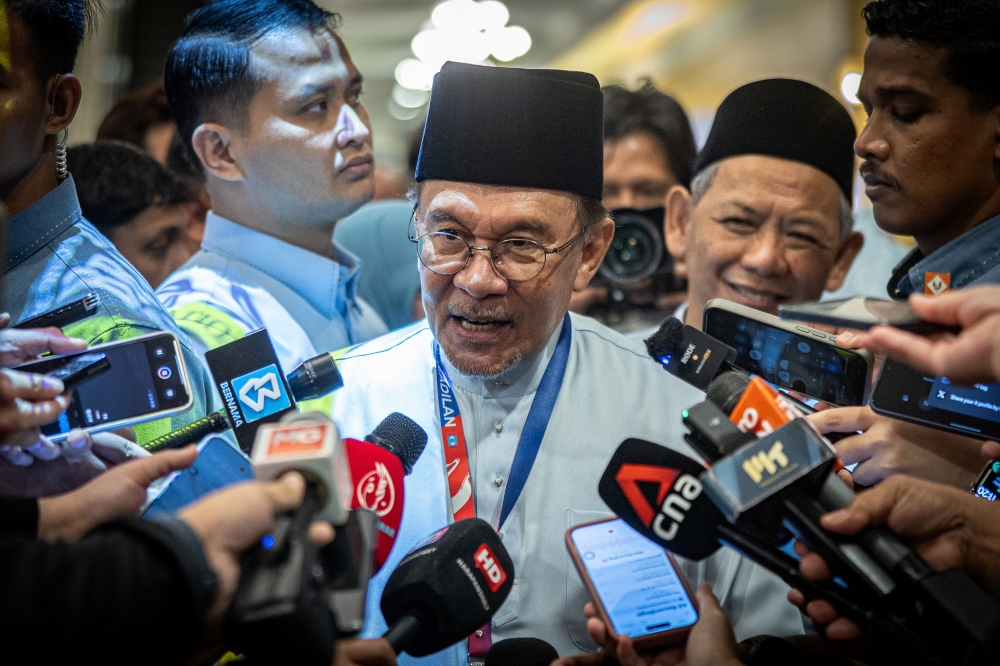
Prime Minister Datuk Seri Anwar Ibrahim has moved to quell suggestions of internal friction within Malaysia's ruling coalition, asserting that he maintains a steadfast commitment to collaborative governance and dismissing narratives of discord at the highest levels of his administration.
Speaking in Melaka, Anwar characterised his approach to leading the nation as rooted in peaceful principles, signalling that any assertions regarding strained relationships with senior government figures do not align with his leadership philosophy. The premier's comments appear directed at recent claims made by Khairy Jamaluddin, the Health Minister, who had suggested mounting tensions between Anwar and Deputy Prime Minister Datuk Seri Zahid Hamidi, potentially threatening the stability of the current governing arrangement.
The Malaysian political landscape has proven particularly sensitive to perceptions of leadership discord in recent years. Following the tumultuous transitions of power between 2018 and 2023, during which three prime ministers served in rapid succession, observers remain acutely attuned to signs of governmental instability. Any indication of fracture within the ruling coalition risks reigniting concerns about the durability of the current administration and its capacity to execute long-term policy initiatives.
Anwar's deliberate emphasis on peaceful governance carries particular significance within this context. Rather than engaging in public disputes or directly addressing specific allegations, the premier has opted for a messaging strategy that positions him above factional disputes whilst simultaneously asserting the government's foundational commitment to harmony. This rhetorical approach serves multiple functions: it projects stability to international observers and investors, whilst also signalling to coalition partners that internal differences will be managed through private channels rather than public confrontations.
The tensions between different factions within Malaysia's Pakatan Harapan-led coalition government have been an ongoing feature of the current administration. The incorporation of formerly opposition parties such as Barisan Nasional into the government structure created a complex multi-party arrangement that, whilst broad-based, contains inherent tensions between groups with differing ideological inclinations and political bases. Managing these disparate interests whilst maintaining an appearance of unified governance represents one of Anwar's central strategic challenges.
Khairy's decision to publicly articulate concerns about government cohesion reflects the delicate balance that coalition partners must maintain. As Health Minister and a prominent figure within UMNO, Khairy operates within a party structure that yields considerable influence over government stability. His comments, whether intended as genuine warnings or tactical positioning ahead of potential party elections and intra-coalition negotiations, served to place the question of governmental unity directly into public discourse.
Anwar's response indicates a preference for de-escalation and for maintaining the strategic ambiguity that often characterises coalition management. By rejecting the characterisation of rifts without explicitly addressing specific policy disagreements or personal tensions, the premier attempts to prevent what might otherwise become a cascading crisis of confidence. This approach reflects lessons learned from preceding administrations, where public displays of internal division frequently precipitated rapid unravelling of political arrangements.
The timing of Anwar's remarks in Melaka, a state historically significant to UMNO, carried its own symbolic weight. Melaka remains a crucial component of the overall political arithmetic supporting the government, and addressing coalition stability whilst physically present in the state represents a form of political signalling to regional power brokers and party members alike.
For Malaysian observers and the broader Southeast Asian region, the maintenance of governmental stability in Malaysia remains consequential. As the region's third-largest economy and a key player in regional forums including ASEAN, sustained political uncertainty in Kuala Lumpur has ramifications extending beyond domestic policy implementation. International investors and trading partners maintain heightened sensitivity to political developments that might affect policy continuity or regulatory frameworks.
The broader implication of Anwar's stance suggests that whilst coalition management remains challenging, the premier continues to command sufficient political capital to frame narratives around government unity. Whether this reflects genuine consensus among coalition partners or represents a temporary holding pattern ahead of more significant political contests remains unclear. Malaysian political observers note that such periods of apparent calm have occasionally preceded substantial shifts in alignment and composition of governing coalitions.
Moving forward, the sustainability of Anwar's emphasis on peaceful governance will depend substantially on the tangible delivery of coalition benefits to constituent parties and their electoral bases. Should economic conditions deteriorate or particular factions perceive themselves as systematically disadvantaged within resource allocation and ministerial portfolios, the capacity of peaceful rhetoric alone to maintain cohesion may be tested. The government's ability to navigate the remainder of its term whilst managing internal pressures will significantly shape the trajectory of Malaysian politics through to the next general election.

