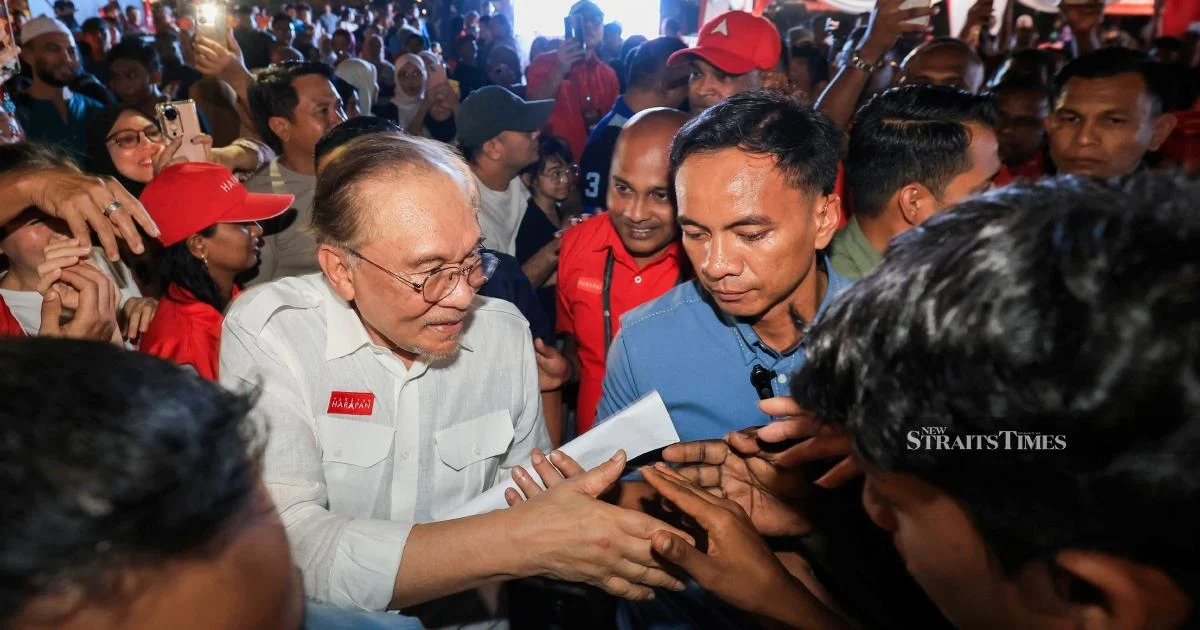
Prime Minister Datuk Seri Anwar Ibrahim has pushed back against growing pressure for an early dissolution of Parliament, insisting that the current unity administration maintains adequate political support to serve out its full term without recourse to fresh elections.
The statement represents a clear positioning by the Prime Minister at a moment when speculation about the electoral calendar has intensified within Malaysian political circles. Such calls for premature ballots typically emerge from opposition parties seeking to capitalise on perceived shifts in public sentiment or attempts by coalition members to reset political calculations ahead of the constitutionally mandated election window.
Anwar's assertion hinges on the claim that the unity coalition—which encompasses historically rival political factions bound together after the 2022 general election—retains sufficient parliamentary numbers to sustain its legislative agenda and government functions. This coalition model has transformed Malaysian politics by merging formerly competing blocs, though it has also created internal tensions as parties negotiate influence and portfolio allocations within this unusual arrangement.
The rejection of early election calls carries particular significance for Malaysia's economic and investment landscape. Electoral uncertainty disrupts policy continuity, deters foreign direct investment, and diverts government attention from pressing economic reforms. An extended governing horizon permits the administration to pursue medium-term structural initiatives without the perpetual distraction of campaign cycles and political positioning. For businesses and investors monitoring the regulatory environment, Anwar's statement signals an intention toward stability and predictable governance frameworks.
Regionally, Malaysia's political stability matters beyond its borders. As a significant Southeast Asian economy and key player in regional forums, domestic political turbulence creates ripples across ASEAN deliberations and bilateral partnerships. A government securing its full term enhances Malaysia's capacity to maintain consistent foreign policy positions and regional commitments, particularly on contentious issues ranging from maritime disputes to economic partnerships with major powers.
The timing of such assertions also reflects broader demographic and electoral realities. The Prime Minister likely calculates that attempting premature elections during global economic headwinds and domestically sensitive economic adjustments would risk severe electoral punishment. Delayed elections permit governments to demonstrate economic stabilisation and policy effectiveness, potentially improving electoral prospects when ballots are eventually held.
Anwar's mandate claim references both the numerical parliamentary arithmetic and the moral legitimacy derived from the 2022 democratic exercise. Though that election produced a fragmented parliament requiring coalition-building, the constitutional framework recognises such arrangements as legitimate governmental formations. This distinction between electoral mandates and coalition-constructed governments remains important in Westminster-influenced systems like Malaysia's, where governing coalitions negotiate legitimacy through parliamentary majorities rather than requiring fresh electoral validation.
Internal pressures within the unity coalition itself probably feature in calculations about electoral timing. Coalition partners continuously evaluate their respective political positions, membership bases, and optimal moments for seeking fresh electoral endorsement. By resisting early elections, Anwar potentially demonstrates to nervous coalition members that the administration prioritises stability over attempting risky electoral gambles that could destabilise the carefully balanced arrangement.
The broader context includes Malaysia's persistent economic challenges, including inflation concerns, employment uncertainties, and ongoing fiscal pressures that constrain government spending. Governing through these difficulties requires sustained policy focus rather than the distraction and spending sprees typically accompanying election campaigns. An extended timeline theoretically permits data-driven policy adjustments and corrections to economic strategies without the political constraints of approaching ballots.
Opposition parties and political actors advocating for early elections present counter-narratives, often questioning whether the unity government's mandate genuinely reflects contemporary public preferences or whether shifting sentiment demands electoral validation. This tension between maintaining coalitional stability and responding to evolving electoral mathematics remains fundamental to Malaysian politics under the current system.
Anwar's stance also reflects lessons from recent regional experiences. Neighbouring governments have faced severe electoral consequences following economic mismanagement or perceived disconnection from public concerns. By emphasising the government's continuing mandate, the Prime Minister implicitly commits to demonstrating that the coalition merits voter confidence when elections eventually occur, whether through improved economic conditions or substantive policy achievements.
The institutional implications extend to Parliament itself, where extended sitting terms allow greater legislative work and policy development compared to truncated sessions preceding early elections. An undisrupted parliamentary calendar theoretically improves legislative productivity and enables more careful deliberation on complex policy matters, though opposition parties argue that extended terms without electoral validation diminish democratic accountability.
Ultimately, Anwar's rejection of early election calls represents a strategic decision emphasising governmental continuity and policy execution over political opportunism. Whether this calculation proves correct depends on economic developments, coalition cohesion, and public sentiment in the lead-up to the constitutionally mandated election window. The government's ability to convert this declared mandate into tangible achievements for Malaysian voters will ultimately determine whether voters validate or repudiate this decision.

