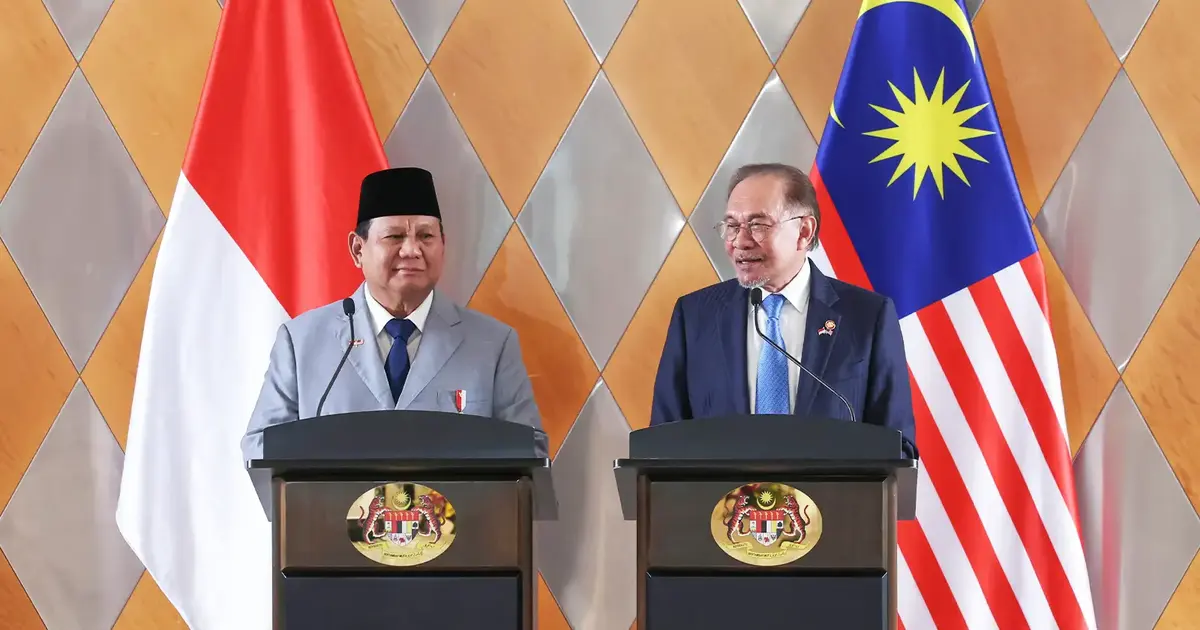
Prime Minister Anwar Ibrahim has turned to direct diplomatic channels with Indonesian President Prabowo Subianto to address escalating concerns surrounding Felda's substantial investment in Eagle High Plantation, a venture that has become a significant financial liability for Malaysia's settler development agency. The correspondence underscores mounting anxiety within the government about the fate of capital deployed across the border in Kalimantan, where the agricultural project continues to struggle with operational and governance challenges that threaten to erode Malaysian interests substantially.
The scale of potential financial exposure is substantial enough to warrant prime ministerial intervention. Felda stands to lose more than RM2 billion of its investment if current difficulties persist without meaningful intervention, according to Anwar's assessment, leaving the agency to recover merely RM200 million should deterioration continue. This grim projection reflects the deteriorated condition of an investment that was once envisioned as a major expansion of Felda's agricultural footprint into neighboring Kalimantan, promising returns and operational scale that would strengthen the agency's long-term viability and settler incomes.
The Eagle High investment represents a critical juncture for Felda, an institution fundamental to Malaysia's rural development framework since its establishment. The settler population has long depended on Felda's investment strategies and returns to sustain livelihoods across generations, making portfolio mishaps at this scale deeply consequential for vulnerable communities across the country. The venture's troubles have become impossible to ignore, forcing intervention at the highest levels of government to explore recovery pathways and protect stakeholder interests that extend far beyond boardroom calculations.
Felda's regional expansion strategy has historically been viewed as essential to maintaining competitiveness in palm oil cultivation and production. The Kalimantan venture was conceived during an era of optimism about cross-border agricultural consolidation, when Felda sought to leverage its operational expertise and capital in Indonesian jurisdictions offering lower labor costs and substantial land availability. However, execution challenges, regulatory complications, and possibly inadequate due diligence have transformed what was meant to be a growth engine into a cautionary tale about overseas investment risk in the palm oil sector.
The decision to escalate this matter through prime ministerial correspondence with Jakarta suggests Malaysian officials believe Indonesian government-level engagement is essential to salvaging value from the investment. Prabowo's administration may possess leverage to influence provincial authorities in Kalimantan or facilitate negotiations with local stakeholders that could improve Eagle High's operational viability or enable strategic repositioning of the asset. The diplomatic approach indicates recognition that purely commercial remedies have likely been exhausted and that political intervention from Indonesia's highest office offers the most promising avenue for meaningful progress.
For Felda settlers, the implications extend beyond abstract balance sheet concerns. Many depend on agency distributions and returns to meet daily expenses, invest in education for their children, and prepare for retirement. A RM2 billion loss represents real diminishment of resources that would otherwise flow into settler communities, compounding existing pressures from fluctuating commodity prices and structural changes in global palm oil markets. The agency's credibility with settler populations also faces damage if massive investments abroad are permitted to deteriorate without demonstrable efforts at recovery or transparent accountability.
The venture also carries broader implications for Malaysia-Indonesia bilateral relations and investor sentiment. How effectively both governments collaborate to address the situation could signal the ease or difficulty foreign investors can expect when complications emerge in cross-border agricultural or resource projects. A collaborative approach demonstrating problem-solving capability might encourage future mutually beneficial ventures, while protracted dispute or deterioration could generate wariness among institutional investors considering regional expansion.
Palm oil sector dynamics have shifted considerably since Eagle High was conceived. Global consciousness about deforestation and sustainability has intensified regulatory scrutiny and market pressures on large-scale plantation operations. Kalimantan's geography and development patterns may present environmental challenges that complicate operations and future viability, independent of operational management quality. These headwinds suggest that even successful dispute resolution might yield only partial recovery rather than restoration to original expectations.
The RM200 million recovery projection, while substantially below the RM2 billion exposure, might represent management's assessment of residual asset value—land, infrastructure, and equipment—if operations ceased and assets were liquidated. This suggests that significant value destruction has already occurred or is underway. Understanding whether recovery prospects depend on operational turnaround, asset sale, or alternative arrangements remains critical context for evaluating the investment's true salvageability and the realistic scope of Anwar's diplomatic initiative.
Felda's leadership faces intensifying pressure to explain how such substantial capital was deployed with apparently inadequate safeguards against the deterioration now apparent. Governmental and parliamentary scrutiny will likely intensify if recovery efforts prove unsuccessful or slow. The agency must simultaneously manage settler expectations, government accountability, and complex negotiations with Indonesian counterparts—a multifaceted challenge requiring sustained diplomatic and commercial engagement. Anwar's letter to Prabowo represents an opening move in what may become extended negotiations addressing an investment gone substantially awry.

