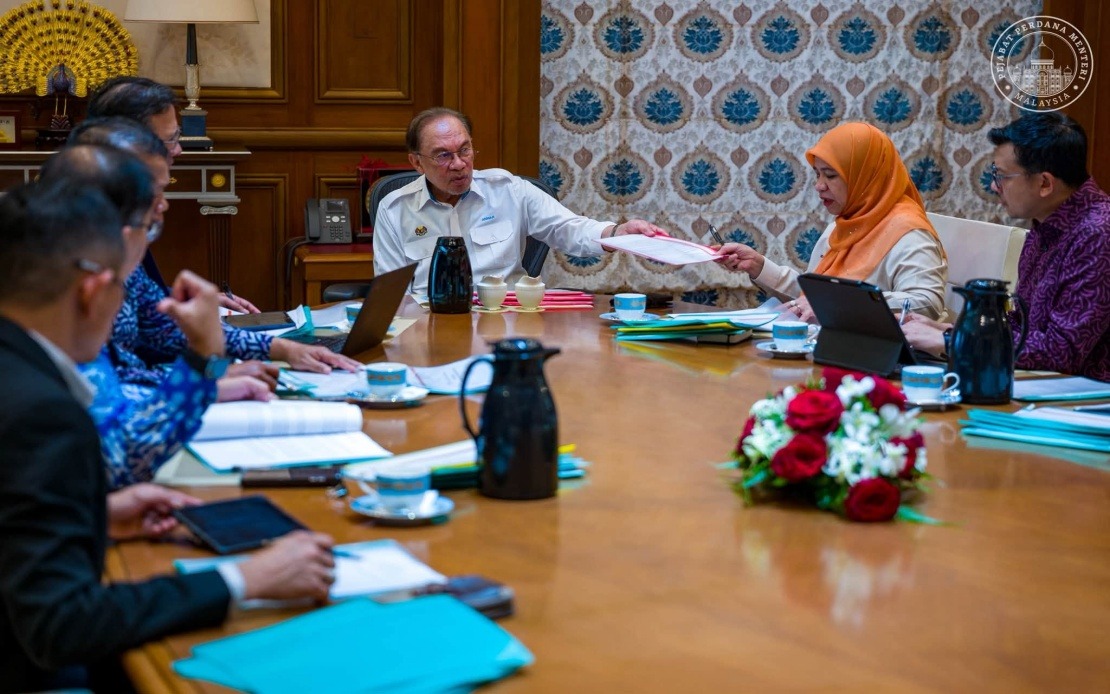
Prime Minister Datuk Seri Anwar Ibrahim has directed the Federal Land Development Authority to accelerate efforts in resolving persistent grievances among its settler communities, with particular focus on second-generation housing and land ownership complications. The prime minister's intervention, made public through a Facebook statement on July 6, signals heightened attention to problems that have accumulated over decades within Malaysia's largest land settlement scheme and continue to frustrate beneficiaries across the country.
The issues facing FELDA settlers represent a complex intersection of generational succession, property rights, and social provision that has resisted easy resolution despite numerous policy reviews and administrative initiatives. Second-generation settlers—those inheriting plots and entitlements from original scheme participants—have faced particular difficulties in formalising their claims and accessing housing improvements. Many find themselves in legal limbo, unable to fully realise the economic value of their inheritance or secure financing for home development because of unclear title documentation and bureaucratic obstacles. The situation has created considerable frustration, especially as original FELDA participants reach advanced age and seek to transfer their holdings to children.
Anwar's directive emphasises that these accumulated difficulties cannot persist indefinitely and that FELDA management must implement concrete solutions rather than allowing matters to drift through incremental reviews. His characterisation of the problem—that each issue requires meticulous examination coupled with transparent resolution pathways—reflects the administrative approach his government has adopted across multiple portfolios. The prime minister positioned the matter as a test of FELDA's institutional commitment to its core constituency, implying that mere acknowledgment of problems without decisive action would be insufficient.
The MADANI Government, which took office in late 2022, has positioned itself as a corrective administration attentive to grassroots economic concerns and social provision gaps left by previous administrations. FELDA settlers represent a politically significant constituency—scattered across rural communities nationwide, they maintain particular importance in peninsular states with substantial agricultural operations. Their concerns have historically commanded attention during election cycles but often received desultory follow-up between campaigns. Anwar's public intervention suggests a determination to demonstrate substantive progress on long-deferred matters rather than relegating such issues to bureaucratic processing.
The housing dimension of the FELDA challenge reflects deeper structural problems within the settlement scheme. Many second-generation settlers lack adequate residential structures suitable for modern living standards, with original FELDA housing stock dating from the 1960s and 1970s now severely deteriorated. Upgrading initiatives have been sporadic and insufficient relative to need. Simultaneously, the land ownership question touches on fundamental questions about property rights and economic security. Settlers require absolute clarity regarding their entitlements, the mechanisms for formal transfer, and the conditions governing land use. Ambiguity on these fronts prevents settlers from leveraging their assets for productive investment or secured borrowing.
Implementing comprehensive resolution will require coordination across multiple government bodies and possibly legislative amendments to FELDA's operational framework. The authority itself requires adequate resources to conduct systematic audits of individual settler circumstances, process accumulated documentation, and facilitate formal title regularisation. State governments control certain land registration functions, necessitating coordinated effort between federal authority and state administrations. Additionally, FELDA's financial capacity to support housing improvements through accessible credit arrangements or direct grants may require budget reallocation or external financing.
The regional context adds urgency to FELDA's modernisation. Other Southeast Asian land settlement schemes face comparable generational transition challenges as original participants age and successor cohorts inherit holdings. Malaysia's experience with FELDA, spanning six decades, offers instructive lessons about both the scheme's accomplishments in rural development and the institutional rigidities that accumulate over time. Demonstrating successful resolution of these succession and housing issues could provide valuable policy examples for neighbouring countries contemplating similar agricultural settlement models.
For individual FELDA communities, accelerated resolution would yield tangible benefits extending beyond mere administrative tidiness. Settlers gaining formal title security could access credit markets more readily, enabling productive agricultural investment or value-added processing initiatives. Housing improvements would enhance living standards and reduce disparities between rural FELDA communities and urban counterparts. Younger-generation settlers equipped with clear ownership documentation and improved housing infrastructure represent a more economically dynamic population capable of sustaining viable rural livelihoods.
The prime minister's intervention carries implicit expectations regarding FELDA management accountability. By publicly identifying these issues and calling for urgent action, Anwar has created a performance benchmark against which FELDA's progress will be measured. Government agencies and state administrations involved in implementing solutions now operate under heightened scrutiny. The matter will likely resurface in parliamentary questioning and public discourse if visible progress remains inadequate within reasonable timeframes.
Moving forward, FELDA requires a comprehensive, time-bound action plan that specifies which settler communities will receive assistance in what sequence, what documentation will be required, how disputes will be resolved, and what financial resources will be allocated. Transparency regarding implementation benchmarks and periodic public reporting on progress would reinforce the government's commitment while managing settler expectations. Without such structured accountability mechanisms, FELDA risks returning to the pattern of acknowledged problems receiving insufficient remedial attention.

