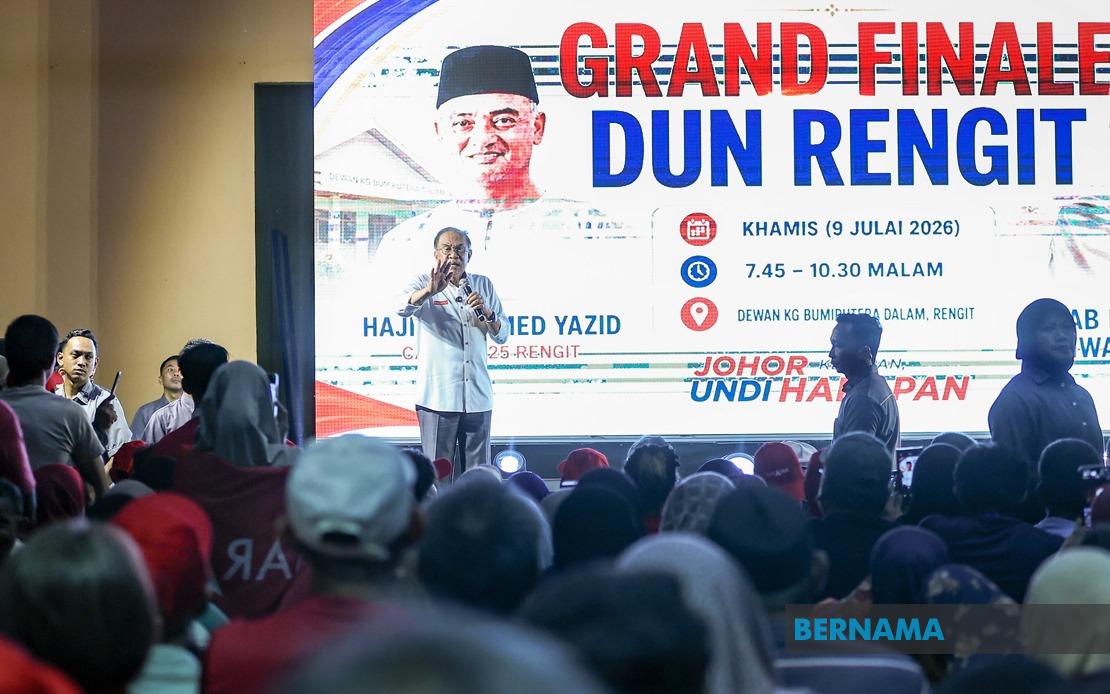
Prime Minister Datuk Seri Anwar Ibrahim has made a direct commitment to overhaul deteriorating health facilities and resolve chronic water disruptions plaguing residents in the Rengit constituency, underscoring that such basic services should reflect Johor's standing as a developed Malaysian state. Speaking at a Pakatan Harapan campaign event in Batu Pahat on July 9, Anwar emphasised that adequate healthcare infrastructure and reliable clean water access represent fundamental rights rather than luxuries, and must be prioritised without further delay. His remarks carried an implicit critique of the current state of affairs, where medical facilities themselves are often in poor working condition—a reality he captured in a pointed observation that clinics should be places where sick people receive treatment, not venues defined by their own structural deficiencies.
The prime minister's intervention in the Rengit campaign reflects the strategic importance Pakatan Harapan assigns to the constituency as voters prepare for the 16th Johor state election scheduled for Saturday. Anwar attended three separate campaign rallies across Johor on the evening of his Rengit visit, demonstrating the coalition's commitment to mobilising federal support behind its state-level candidates. The 'Serumpun Kasih Sejiwa Harmoni Grand Finale' event brought together party machinery and key figures including Sri Gading Member of Parliament Aminolhuda Hassan, who chairs Johor's Amanah branch, alongside PH's Rengit candidate Yazid Abu Bakar. This layering of federal and state leadership signals the coalition's determination to translate national popularity into gains at the state level, where governance directly affects service delivery in constituencies like Rengit.
Anwar broadened his remarks beyond the Rengit-specific issues to articulate a wider governance philosophy centred on core infrastructure and social services. He positioned water supply, housing, education, and healthcare as non-negotiable government priorities, suggesting that these pillars form the bedrock upon which economic development and citizen welfare must rest. The framing carries particular resonance in Johor, a state historically associated with industrial growth and regional economic importance, yet one where basic service provision remains uneven across constituencies. By tying infrastructure adequacy to Johor's status as a developed state, Anwar implicitly challenged the current administration to raise its performance standards and accused it of falling short of what residents legitimately expect from a prosperous region.
An undercurrent of anti-corruption messaging also characterised the Prime Minister's remarks, as he cautioned government officials and community leaders against misusing their positions for personal enrichment. This appeal to integrity and responsible conduct addresses a persistent concern among Malaysian voters, particularly in state elections where accusations of local-level corruption and patronage networks frequently surface. By coupling infrastructure promises with explicit reminders about ethical governance, Anwar sought to position Pakatan Harapan as not merely offering material improvements but also a different quality of administration—one accountable to public interest rather than factional advantage. Such messaging matters especially in Johor, where political competition has historically been intense and concerns about governance quality regularly influence voter behaviour.
Anwar's campaign strategy for the Johor election emphasises alignment between state and federal governments as essential for efficient implementation of development projects. He urged voters to elect representatives sympathetic to the Federal Government, arguing that political coherence between state and national levels accelerates policy execution and resource mobilisation. This approach acknowledges the structural reality of Malaysian federalism, where state governments nominally enjoy autonomy yet depend on federal cooperation for major infrastructure funding and support. In Johor's case, where Pakatan Harapan currently holds the federal level but faces a different political configuration at the state level, Anwar's appeal for voter unity behind federal allies carries strategic weight—successful state-level gains would allow PH to coordinate policy across both tiers of government more seamlessly.
Packatan Harapan is fielding a full slate of 56 candidates across all state constituencies, drawn from its three component parties in proportions reflecting internal power-sharing arrangements. The coalition has allocated 20 seats to PKR, 19 to Amanah, and 17 to DAP, demonstrating a negotiated balance that acknowledges each party's contribution while maintaining coalition unity. This distribution matters for understanding campaign dynamics, as it reflects PH's attempt to present itself as a cohesive force rather than a collection of competing factions. The broader election field includes 172 candidates total, indicating competition remains robust and no single outcome is predetermined, despite PH's federal advantages in resources and visibility.
For Rengit specifically, the focus on healthcare and water infrastructure addresses grievances that extend beyond electoral convenience. The constituency has genuinely faced persistent challenges with clinic conditions and water supply reliability, issues that directly impact daily life and public health outcomes. By naming these problems explicitly at a major campaign event, Anwar and PH attempt to convert dissatisfaction into political support, offering Yazid Abu Bakar as the vehicle for promised remediation. Whether such infrastructure commitments translate into post-election action will significantly influence voter perceptions of whether campaign promises hold substance, particularly in constituencies like Rengit where unmet basic needs fuel cynicism about political pledges.
The timing of these campaign events, occurring just days before Saturday's election, reflects the intensity of final mobilisation efforts. In Malaysian state elections, the last week of campaigning often determines marginal outcomes, particularly in constituencies where voter sentiment remains fluid. Anwar's personal presence at multiple Johor venues underscores the national leadership's assessment that the state result carries implications beyond Johor itself—a strong performance would strengthen PH's position within Malaysia's broader political landscape and provide momentum for potential future federal gains. Conversely, a weak showing would invite questions about whether federal popularity translates effectively to state-level support.
For Malaysian voters and the Southeast Asian region observing Johor's election dynamics, the contest represents a significant test of Malaysia's competitive democracy. State elections function as important mechanisms for accountability and representation, and Johor's status as Malaysia's second-largest state by population makes its outcome particularly consequential. The infrastructure and governance priorities articulated by Anwar during the Rengit campaign reflect broader questions about how governments at both state and federal levels address service delivery gaps that persist despite the nation's middle-income status. Successful implementation of promised improvements in healthcare and water infrastructure would demonstrate that electoral competition can drive meaningful improvements in citizen welfare, while failure to deliver would reinforce public scepticism about political commitments.

