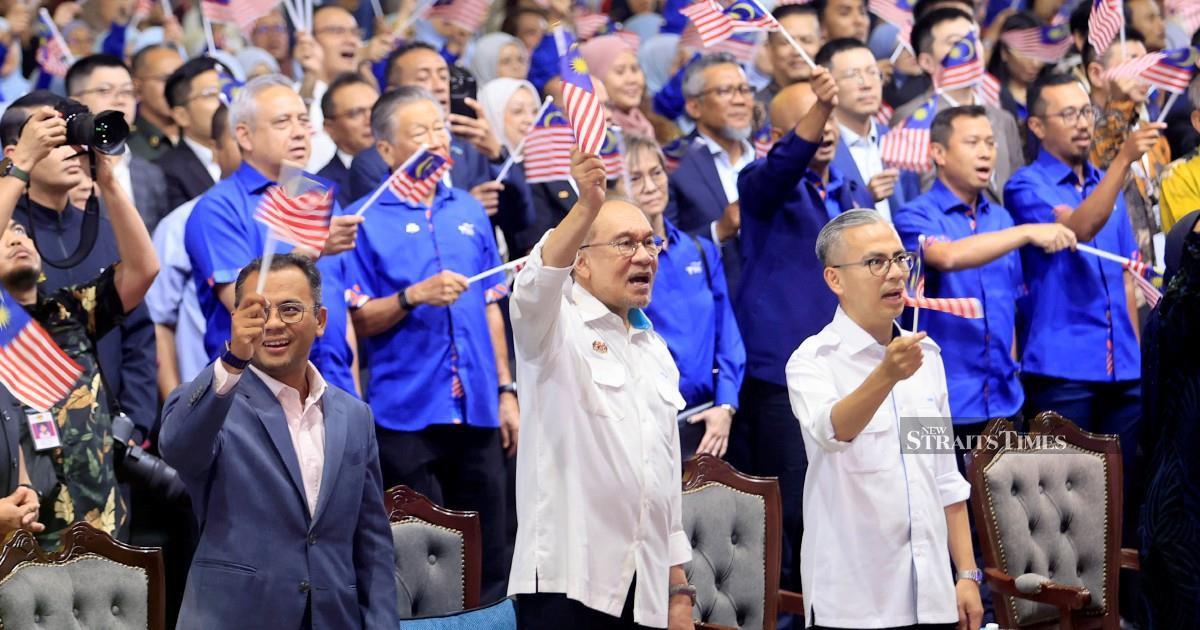
Prime Minister Datuk Seri Anwar Ibrahim has issued a directive ordering Malaysia's universities to grant students comprehensive freedom without delay, declining to wait for the formal abolition of legislative restrictions under the Universities and University Colleges Act (AUKU). The instruction takes effect immediately, signalling a significant shift in the government's approach to university autonomy and student rights.
The decision represents a pragmatic move to accelerate reform at tertiary institutions across the country. Rather than await parliamentary procedures for formally repealing AUKU's most contentious provisions—a process that could extend over months or even years—Anwar has chosen to mandate institutional change through executive direction. This approach allows universities to implement liberalisation measures promptly while legislative frameworks undergo formal revision.
AUKU, enacted during the British colonial period and retained after independence, has long restricted student political activity, freedom of expression, and assembly on campus grounds. The legislation effectively prohibits undergraduates from engaging in political parties and unions, attending political rallies, or organising public demonstrations without official approval. These constraints have drawn sustained criticism from civil society organisations, international observers, and student advocacy groups who argue they contradict democratic principles and limit the development of informed citizenship among young Malaysians.
The Prime Minister's intervention addresses growing pressure for university reform from multiple quarters. Student organisations have increasingly challenged restrictions they perceive as outdated, while academics have highlighted how such limitations constrain intellectual discourse and civic engagement. International rankings frequently penalise Malaysian universities on academic freedom metrics, affecting their competitive standing globally. Anwar's directive attempts to harmonise Malaysian higher education standards with international expectations while respecting campus autonomy.
For Malaysian universities operating under financial and reputational pressures, the directive offers flexibility to modernise student policies without awaiting centralised legislative change. Institutions can now revise disciplinary codes, review student conduct regulations, and establish new guidelines governing campus political activity. This decentralised approach acknowledges that universities operate as distinct communities with varying contexts, allowing each institution to calibrate reforms according to their particular circumstances and stakeholder expectations.
The timing of this announcement carries significance in Malaysia's broader political landscape. The government has positioned itself as committed to democratic renewal and institutional reform following the 2022 change of administration. Student freedoms represent a tangible domain where reform demonstrates genuine commitment to liberalisation. For young voters who comprise an expanding electoral constituency, university policies directly affect their lived experience and civic participation, making this directive symbolically important to the administration's reform narrative.
However, the directive's practical implementation will reveal whether universities genuinely expand student freedoms or simply modify surface-level restrictions while preserving substantive constraints. Some institutions may interpret the order broadly, fundamentally reconceiving student political spaces, while others might adopt minimal changes. Campus administrators face complicated negotiations between competing interests: student demands for freedom, concerns from conservative factions about political radicalisation, and pressure from government bodies regarding national security and institutional stability.
The move also reflects international trends toward greater university autonomy and student freedom. Tertiary institutions across Southeast Asia increasingly recognise that openness to diverse viewpoints, protection of academic inquiry, and student political participation strengthen rather than weaken institutional quality. Countries competing for international students and global academic talent recognise that restrictive regulations deter talent and damage institutional reputation.
For Malaysian students specifically, the directive opens possibilities for broader engagement with political ideas, participation in democratic processes, and development of civic leadership. Student unions can potentially operate with greater independence, debate forums can accommodate diverse perspectives, and campus organisations can pursue advocacy roles previously constrained by regulation. These changes may cultivate more politically informed graduates equipped with experience in democratic deliberation and public participation.
Nonetheless, questions remain regarding enforcement mechanisms and how effectively the directive will be implemented across Malaysia's diverse institutional landscape. Private universities, public research universities, and polytechnics operate under different governance structures and may interpret directives with varying stringency. Whether campus security forces, academic administrators, and student disciplinary committees will consistently honour expanded freedoms depends on institutional culture, leadership commitment, and available training.
The directive also raises questions about parliamentary action on formal AUKU abolition. Anwar's order establishes immediate practical effect while legislative processes proceed separately. This dual approach suggests the government recognises political complexity around formal repeal—some constituencies may resist complete abolition—while demonstrating willingness to implement substantive reform through executive authority.
International observers watching Malaysian democratic development will scrutinise whether this directive translates into genuine expansion of campus freedoms or represents symbolic gesture without proportionate institutional change. Student movements, civil society organisations, and international educational bodies will likely monitor compliance and hold universities accountable for implementing meaningful reform in student rights and campus political space.
Ultimately, Anwar's directive signals a recalibration of government relationships with student populations and educational institutions. Whether this heralds comprehensive liberalisation or represents incremental adjustment will become apparent through implementation across Malaysia's tertiary sector in coming months. The decision reflects broader questions about balancing institutional autonomy, student freedoms, national security concerns, and democratic principles that Malaysia continues navigating as it evolves its higher education system.

