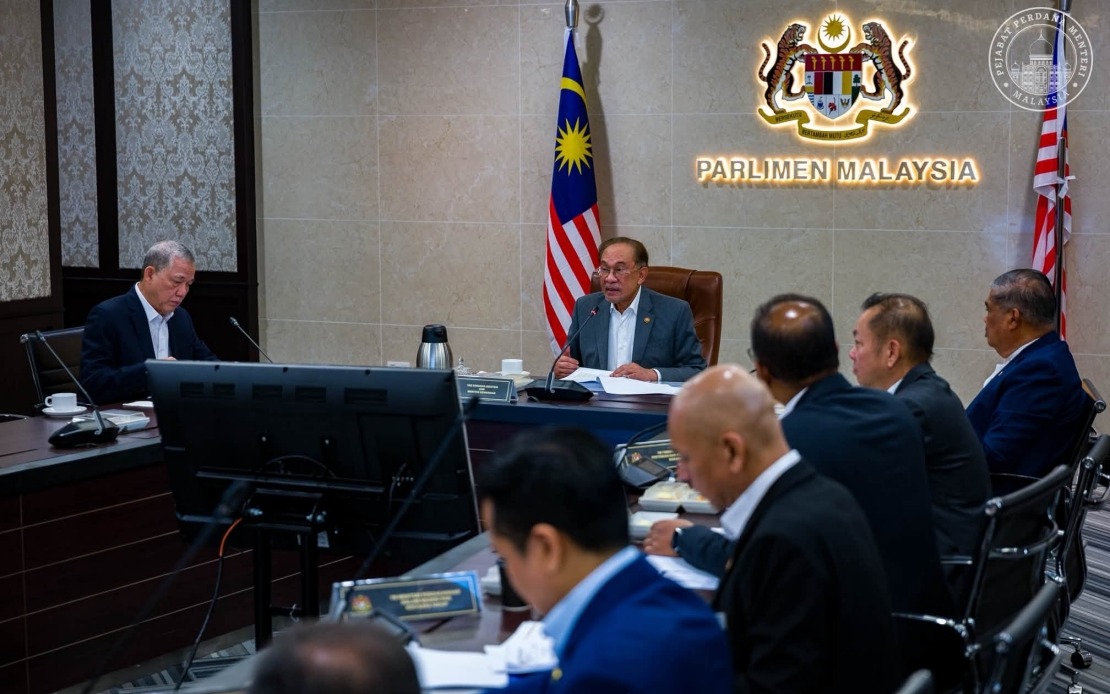
Malaysia is bracing for a critical period ahead as Prime Minister Datuk Seri Anwar Ibrahim moved to mobilise government resources against the looming Super El Niño event. At the inaugural National Food Security Council Meeting, held in the first week of July 2026, Anwar prioritised the formulation of comprehensive mitigation strategies designed to protect domestic agricultural output and sustain the incomes of farming communities across the country. The meteorological phenomenon, forecast to materialise beginning November, represents a significant threat to food production networks that already face mounting pressures from climate variability and changing weather patterns.
The gravity of the situation is reflected in Anwar's direct intervention, signalling that food security now occupies elevated standing within the government's policy hierarchy. The Ministry of Agriculture and Food Security has received explicit instructions to accelerate the development and implementation of protective measures, working through established institutional frameworks whilst maintaining rigorous adherence to food safety protocols. This dual mandate—moving with urgency whilst safeguarding quality—reveals the delicate balance officials must strike between rapid response and consumer protection standards that Malaysian markets rightfully demand.
Super El Niño conditions are characterised by exceptionally warm oceanic temperatures across the central and eastern Pacific, which fundamentally alter rainfall patterns across vast geographical regions including Southeast Asia. For Malaysia, such events historically precipitate prolonged dry spells that stress crop cultivation, reduce water availability for irrigation systems, and create environmental pressure on aquaculture operations. The anticipated November arrival provides a window for preparatory action, though agricultural cycles move on their own temporal rhythms, and interventions initiated today may only partially mitigate impacts that unfold across months.
The council meeting examined not only meteorological threats but also the structural challenges facing Malaysia's agricultural sector more broadly. Officials reviewed strategies aimed at enhancing the competitiveness of local agrifood producers—a recognition that long-term food security depends upon economically viable farming operations staffed by producers who can sustain their operations through difficult periods. This encompasses rice growers, livestock producers, fishermen, and the broader network of agricultural enterprises that supply Malaysian dinner tables. Without attention to profitability and sustainability, even well-resourced emergency programmes struggle to maintain productive capacity when crisis passes.
Technological advancement emerged as a central pillar in the government's strategic approach. The emphasis on innovation and best practices reflects global agricultural trends where precision farming, improved irrigation efficiency, and climate-resilient crop varieties offer pathways to maintain productivity even when environmental conditions deteriorate. Malaysia's agricultural sector, traditionally more labour-intensive than its developed-economy counterparts, increasingly requires investment in mechanisation, data analytics for crop management, and hybrid approaches that combine traditional knowledge with contemporary techniques. Such transitions require coordinated support spanning training, credit access, and knowledge dissemination networks.
Fisheries cooperation with Thailand constituted another substantive element of council deliberations, underscoring the transnational dimensions of food security in Southeast Asia. Cross-border coordination on marine resource management, particularly during environmental disruptions, enhances the resilience of regional protein supplies. The government's emphasis on ensuring fishing community products meet prescribed standards speaks to both quality assurance and the technical requirements of trade compliance—matters increasingly intertwined as international markets demand verifiable supply chain documentation and safety certifications.
The engagement of fishing communities in standards compliance reflects a broader governance challenge across Malaysia's food production sectors. Implementation of quality standards sometimes creates friction between regulatory bodies and producers operating under tight margin constraints. The council's explicit commitment to continuous dialogue with fishing communities suggests recognition that compliance mechanisms function most effectively when grounded in genuine partnership rather than enforced compliance alone. This collaborative orientation potentially strengthens the legitimacy of regulatory frameworks whilst identifying practical obstacles to standard implementation that might otherwise go unrecognised at ministerial levels.
From a regional perspective, Malaysia's proactive response to El Niño forecasts contrasts with less structured approaches in some neighbouring economies. Indonesia, Thailand, and Vietnam face comparable agricultural vulnerabilities, yet coordination and information-sharing mechanisms across borders remain underdeveloped. Malaysia's systematic attention to food security through institutional bodies like the National Food Security Council positions the country to better navigate the coming months, though spillover effects from neighbouring agricultural disruptions could still constrain regional supply chains and influence commodity pricing that affects Malaysian consumers regardless of domestic policy effectiveness.
The timing of these directives also reflects lessons embedded within recent climate events and global food market volatility. The pandemic-era disruptions to supply chains combined with Ukraine-related agricultural export constraints have heightened awareness among policymakers that food security cannot be assumed but requires active, forward-looking state engagement. Malaysia's reliance on food imports for roughly one-third of consumption means that domestic production cannot entirely insulate the country, yet maximising local output during periods when international markets face stress provides crucial buffers for food availability and price stability.
Looking beyond the immediate El Niño threat, the council meeting's agenda reveals how climate adaptation is becoming embedded within Malaysia's development policy apparatus. Food security increasingly functions as a lens through which officials evaluate competitiveness, livelihood sustainability, technological adoption, and international cooperation. These interconnections mean that responses to meteorological phenomena cascade across multiple policy domains, requiring coordination and long-term vision extending well beyond emergency management. Whether Malaysia's institutional framework can sustain such integrated approaches across political cycles and changing priorities remains an open question that coming months will help illuminate.

