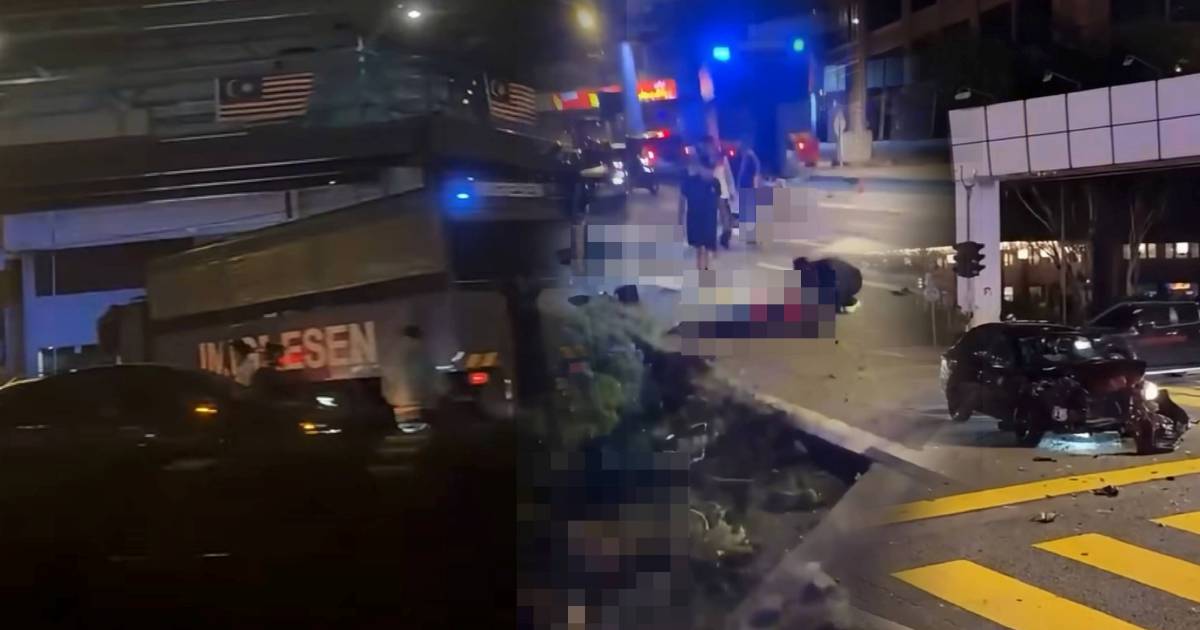
Prime Minister Datuk Seri Anwar Ibrahim has moved swiftly to intervene following a fatal accident involving an Immigration Department truck that occurred in the early hours of today on Jalan Sultan Ismail in Kuala Lumpur. The incident, which resulted in loss of life, has prompted direct executive intervention, with Anwar ordering the department to conduct an immediate and thorough probe into the circumstances surrounding the collision.
The fatal crash highlights ongoing concerns about road safety within government-operated vehicle fleets across Malaysia. The Immigration Department, which operates numerous vehicles for operational purposes including personnel transport and logistical support, will now face a comprehensive examination of the incident. The Prime Minister's direct involvement signals the gravity with which the federal government views the accident and underscores the need for urgent clarification regarding how the collision occurred.
Jalan Sultan Ismail, a major arterial route in Kuala Lumpur's central business district, has been the scene of various traffic incidents in recent years. The location's significance as a primary thoroughfare for both commercial and official vehicle movement means such accidents carry particular weight for public safety perception. Authorities will likely examine whether traffic conditions, vehicle maintenance, driver fatigue, or mechanical failure contributed to the crash.
The Immigration Department's operational responsibilities demand high standards of fleet management and driver protocols. Transporting personnel across the capital and conducting field operations requires vehicles to navigate congested urban environments regularly. An investigation into this incident will necessarily examine whether existing safety procedures were being followed and whether additional measures might be warranted across the department's transport operations.
Immediate investigation directives from the Prime Minister's office typically trigger responses from the Land Transport Authority and police traffic investigation units, who collaborate on determining causation in fatal vehicle accidents. These agencies employ accident reconstruction specialists to analyze impact patterns, vehicle damage, and site evidence. The involvement of multiple authorities ensures both technical precision and accountability in the findings.
For Malaysia's civil service, this incident reinforces the importance of fleet safety standards across government departments. With hundreds of vehicles operating daily under various ministry and agency oversight, ensuring driver competency, vehicle maintenance schedules, and adherence to traffic regulations remains critical. The Immigration Department's probe will likely become a case study for other departments regarding best practices in vehicle operation and personnel safety.
The early morning timing of the accident raises questions about visibility, traffic volume, and potential driver fatigue factors. Dawn hours often present challenging driving conditions with shifting light levels and potential reduced alertness among drivers completing overnight shifts or beginning early operations. These variables typically feature prominently in reconstruction analysis and subsequent recommendations for operational protocol improvements.
Anwar's directive for a thorough investigation reflects the government's accountability expectations regarding public resources and personnel welfare. The Prime Minister's office statement emphasizes the seriousness with which the federal government treats incidents involving loss of life, particularly where government vehicles and operations are implicated. This approach aims to instill public confidence that such accidents trigger genuine inquiry rather than routine bureaucratic processing.
The Immigration Department's response to this investigative directive will likely influence how other government agencies approach fleet safety going forward. Public agencies often observe how senior leadership responds to operational failures, and a rigorous investigation here may catalyze broader safety audits across ministerial transport fleets. Malaysia's drive toward improved governance standards depends partly on such responsiveness to incidents that affect public safety and government credibility.
Beyond the immediate investigation, the accident prompts consideration of whether systematic improvements in driver training, vehicle technology, or operational procedures could prevent similar incidents. Modern vehicles equipped with collision avoidance systems and enhanced braking technology represent one dimension of safety enhancement. Human factors including rest periods, alertness monitoring, and route optimization represent another.
The fatal nature of this collision underscores the human cost of traffic accidents and the responsibility borne by government departments operating significant vehicle fleets. Families affected by the incident deserve thorough answers regarding how the accident occurred and what safeguards failed or proved inadequate. The investigation must balance speed with thoroughness to deliver meaningful findings rather than superficial conclusions.
As Malaysia continues developing its transport infrastructure and operational standards, incidents like this serve as crucial reference points for policy evaluation. The Prime Minister's intervention signals that such matters receive serious attention at the highest executive level, potentially catalyzing systemic improvements across government agencies responsible for vehicle operations and personnel safety.

