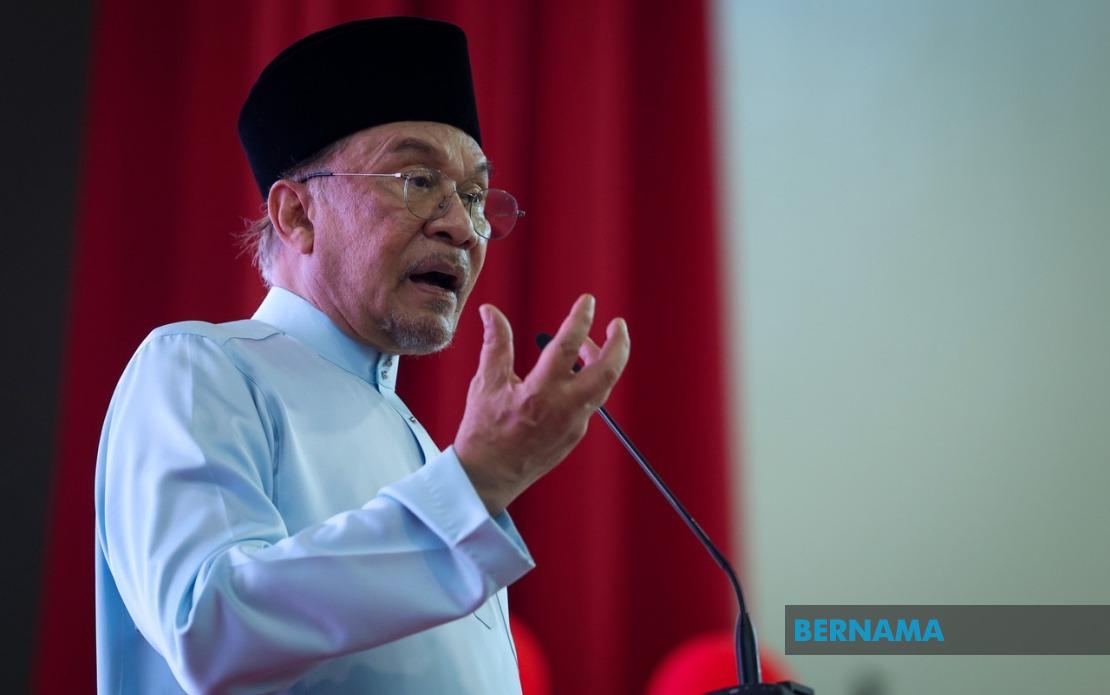
Prime Minister Datuk Seri Anwar Ibrahim has intervened in a controversial property transaction, refusing to authorise the sale of a hotel owned by the Federal Land Development Authority at a price substantially below its original acquisition cost. Speaking at a national programme with the Malaysian Armed Forces at Terendak Camp in Melaka on August 7, Anwar revealed that Felda's management had approached him two months earlier seeking approval to dispose of the asset for 100 million British pounds—a figure representing a 37.5 per cent loss on the 160 million British pounds paid by the previous administration. The Prime Minister's direct action underscores growing scrutiny of how major government-linked entities manage their commercial portfolios and shareholder value.
Anwar, who also holds the Finance Ministry portfolio, described his shock upon reviewing the proposed transaction. He questioned why Felda would consider divesting an asset at such a significant discount without compelling strategic justification, particularly when the organisation's core constituency continues to struggle with inadequate resources. The Prime Minister emphasised that he immediately halted the process and instructed the Felda board to conduct a thorough investigation, indicating concern that either poor governance, mismanagement, or possibly improper dealings had led to the proposal reaching his desk.
The timing of this disclosure highlights ongoing tensions within Malaysia's state-owned enterprise sector regarding financial accountability and decision-making standards. Felda, established as a flagship institution to develop smallholder agriculture and raise living standards among rural Malays, has faced recurring questions about its operational efficiency and the welfare outcomes for its settler communities. Anwar's intervention suggests senior political leadership is now applying greater scrutiny to major commercial transactions that might previously have escaped ministerial attention, particularly when they appear detrimental to the organisation's long-term financial health.
The Prime Minister's remarks reflected frustration with the contradiction between Felda settlers' documented needs and the agency's apparent willingness to crystallise significant financial losses. During his visits to settler communities, Anwar noted that residents have appealed for basic improvements including air conditioning systems in residential facilities, school repairs, and measures to supplement inadequate household incomes. Against this backdrop, the proposed hotel sale at a substantial loss appeared particularly incongruous, suggesting either a disconnect between commercial operations and settler welfare priorities, or a breakdown in financial governance at institutional level.
Anwar framed the issue within a broader context of protecting and rehabilitating Malaysia's indigenous state institutions. He expressed concern that without decisive intervention, government agencies in which Malaysians take particular pride risk deteriorating through accumulated poor management decisions. His language suggested alarm that institutional decline often proceeds incrementally, with each questionable transaction normalising the next, until fundamental damage becomes difficult to reverse. By publicly halting this transaction and demanding accountability, Anwar signalled that his administration intends to reverse what he characterised as a pattern of neglect affecting important national institutions.
The scope of the inquiry Anwar has ordered remains to be clarified, but his remarks indicate the investigation will examine not only the financial rationale for the proposed sale but also who within Felda's management authorised or recommended the transaction. Identifying decision-makers could prove significant, particularly if the inquiry uncovers evidence of negligence, conflicts of interest, or procedural irregularities in how the deal was conceived and advanced through the organisation's governance structures. Such findings could trigger further personnel or organisational changes within the authority.
For Malaysian investors and observers of government-linked company performance, this incident carries broader implications. It suggests that ministerial-level oversight of major commercial transactions is intensifying, potentially creating additional hurdles for property disposals and significant asset sales by statutory authorities. While stronger scrutiny could theoretically improve decision-making quality, it may also slow transaction timelines or create uncertainty for counterparties in negotiations. Foreign investors and Malaysian corporations engaged with government-linked entities may need to anticipate more extensive due diligence and political sensitivity around large transactions, particularly those involving nominal losses or strategic assets.
The Felda situation also reflects unresolved tensions about the appropriate balance between commercial imperatives and social obligations within Malaysia's state enterprise ecosystem. Many statutory authorities juggle competing pressures: maintaining financial viability while meeting government directives to support vulnerable populations, pursuing market-rate returns while operating constrained by policy considerations, and modernising their operations while preserving legacy commitments to founding constituencies. Anwar's intervention in this case suggests his government expects such entities to find solutions that do not require choosing between financial health and social responsibility through fire-sales of assets.
Felda's particular predicament may also reflect changing asset values in global real estate markets, regional tourism dynamics, or management decisions made under previous administrations when strategic circumstances differed. The hotel in question, presumably a commercial property acquired when prices or market conditions were more favourable, may now be underperforming relative to expectations or carrying operational costs that justified divestment to specialist operators. However, such explanations were apparently not adequately communicated to Anwar during the approval request, suggesting communication gaps between Felda's commercial management and political oversight.
The institutional context matters significantly for understanding this dispute. Felda operates across diverse business lines including plantation agriculture, downstream processing, real estate, and hospitality. A hotel asset represents an unusual holding for an organisation whose core mandate centres on land development and settler welfare, suggesting it may have been acquired through corporate expansion or inherited through acquisition of other entities. This diversification, while potentially generating revenue, also increases complexity in governance and exposes Felda to sector-specific challenges, such as hospitality industry cycles, that fall outside its historical expertise.
Looking ahead, the outcome of the inquiry will likely influence how Felda and other government agencies approach major asset sales and commercial decisions. If the investigation identifies specific individuals or procedural failures, remedial action could strengthen governance frameworks across the broader state enterprise sector. Conversely, if the inquiry concludes that the sale was commercially sound but poorly communicated, the episode may simply reinforce requirements for enhanced documentation and ministerial briefing standards.
The hotel sale controversy also occurs against Malaysia's broader fiscal context, where government revenue from state enterprises is monitored carefully and asset disposals at losses represent foregone resources for development or welfare spending. By halting this transaction, Anwar has signalled that protecting state assets' productive capacity is a priority for his administration, even when doing so requires overriding recommendations from operational management. This stance aligns with reform narratives around strengthening institutional governance and curbing wasteful practices, themes that have featured prominently in recent Malaysian political discourse.

