Prime Minister Datuk Seri Anwar Ibrahim has reiterated his administration's commitment to pressing ahead with Sarawak's electoral boundary redelineation, tasking the Election Commission with delivering a comprehensive updated report on the initiative. This directive emerged from deliberations during a recent Cabinet meeting, where senior government officials highlighted the urgency of expanding the Sarawak State Legislative Assembly from its current 82 seats to 99, a gain of 17 additional constituencies that would reshape the state's political landscape.
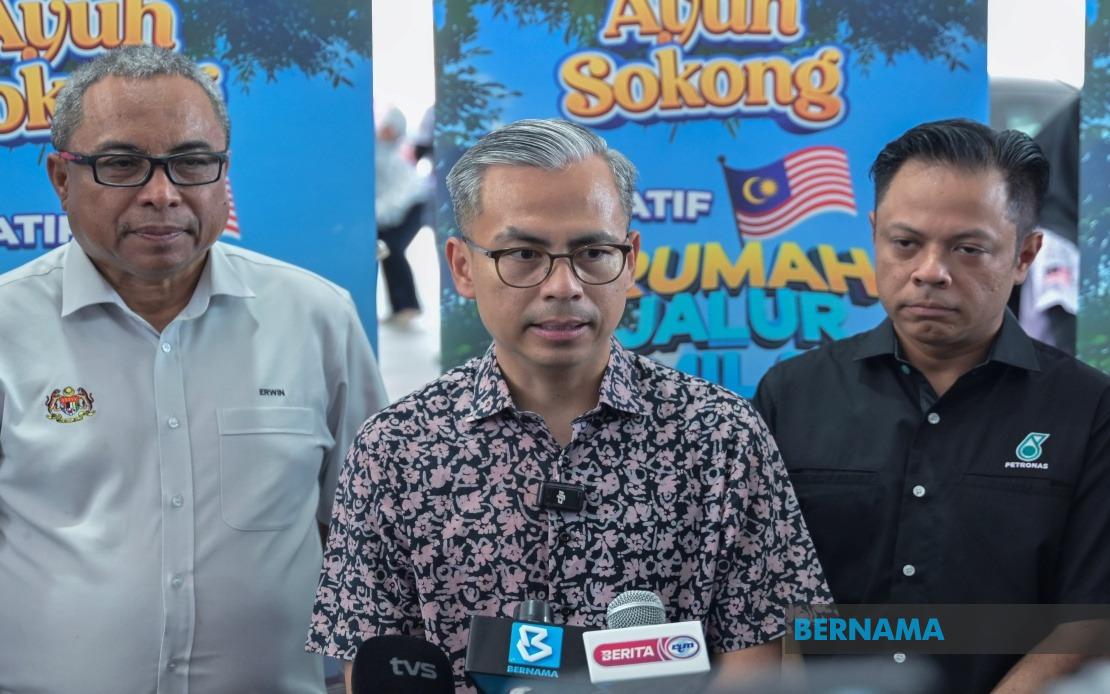
The Premier's renewed focus on the matter signals the MADANI Government's determination to advance electoral redistricting in the eastern state, a process that carries significant implications for political representation and electoral dynamics across the region. According to Government spokesman Datuk Seri Fahmi Fadzil, the Cabinet has been informed of Anwar's position, though the specific timeline for implementation remains contingent upon outstanding recommendations from the Electoral Commission. This measured approach reflects the complexity inherent in redelineation exercises, which require extensive consultation, mapping, and technical coordination before any legislative action can proceed.
The Sarawak State Legislative Assembly (Composition of Membership) Bill 2025, which crystallises the proposed seat expansion, represents a significant structural reform in the state's governance architecture. The addition of 17 constituencies would alter the proportional representation framework and potentially reshape competition dynamics among political parties contesting in Sarawak. For a state where indigenous representation and regional interests have historically figured prominently in electoral calculations, the expansion carries broader ramifications for how communities and constituencies are delineated and represented at the state level.
Fahmi clarified that while the Cabinet has embraced the principle of implementation, the practical mechanics remain in flux pending the Electoral Commission's technical work. The Commission must conduct detailed demographic analysis, assess population distribution across existing and proposed constituencies, and ensure that any new boundaries comply with constitutional requirements regarding electoral equality and fairness. Such exercises typically demand considerable time investment, hence the government's pragmatic stance in awaiting the Commission's formal recommendations before announcing a fixed implementation date.
Two Cabinet ministers, Women, Family and Community Development Minister Datuk Seri Nancy Shukri and Works Minister Datuk Seri Alexander Nanta Linggi, had previously championed the redelineation cause within government circles, underscoring the initiative's cross-portfolio significance. Their advocacy reflects recognition that electoral expansion in Sarawak touches upon multiple policy domains, from infrastructure planning and community services to governance representation and political inclusion. This whole-of-government engagement suggests the administration views the matter as a priority worthy of high-level ministerial attention.
Beyond Sarawak's redelineation, the government is simultaneously preparing operational infrastructure for the forthcoming Melaka state election, demonstrating its capacity to manage multiple electoral exercises concurrently. Communications Minister Fahmi disclosed that extensive logistical planning has commenced, including identification of media facilities and coordination of internet connectivity at polling stations statewide. This preparatory work builds upon lessons learned during recent state elections in Johor and Negeri Sembilan, where the government refined its technical protocols for ensuring seamless electoral administration and media operations.
The Malaysian Communications and Multimedia Commission has been tasked with collaborating closely with the Election Commission to catalogue internet requirements across all Melaka polling centres and to address any connectivity gaps proactively. Such technical coordination reflects the evolution of electoral administration in Malaysia toward greater transparency and digital accessibility, enabling real-time reporting and enhanced observer access. For Malaysian and regional observers alike, improvements in electoral infrastructure underscore the country's gradual refinement of democratic processes and institutional capacity.
Sarawak's electoral expansion carries particular resonance for a state that has experienced significant demographic shifts and economic development over recent decades. The addition of 17 seats suggests growing population concentration in certain areas, potentially reflecting urbanisation patterns and the gravitational pull of commercial hubs. How these new constituencies are ultimately configured will influence the balance of power among Sarawak's established political parties and may create opportunities for newer political formations seeking foothold in the state's competitive arena.
The redelineation initiative also reflects broader constitutional and governance questions relevant across Southeast Asia regarding how electoral systems must adapt to changing demographic realities. Malaysia's experience with boundary adjustments and seat additions offers valuable lessons for neighbouring democracies grappling with similar tensions between historical constituency boundaries and contemporary population distribution. The transparency and procedural rigour applied to the Sarawak exercise could serve as a model for deliberate, consultative redelineation processes that accommodate political change while maintaining institutional credibility.
For investors, political analysts, and stakeholders monitoring Malaysia's political trajectory, the government's systematic approach to managing both Sarawak's structural electoral reform and concurrent state elections demonstrates institutional capacity and political will to advance governance modernisation. The coordination between the Prime Minister's office, the Cabinet, and technical agencies like the Electoral Commission and MCMC exemplifies the integrated planning necessary for successful electoral administration in a federal, multi-ethnic democracy with considerable geographic and demographic diversity.
Moving forward, the Electoral Commission's updated report on Sarawak redelineation will prove critical in determining whether the expansion can proceed prior to the state's next scheduled election or whether it may need to be implemented subsequently. The government's refusal to rush the process, despite manifest political desire to advance the agenda, suggests maturity in recognising that electoral legitimacy depends upon thorough, credible technical work rather than accelerated timelines. This measured approach may ultimately strengthen the redelineation's political and institutional acceptance across Sarawak's diverse communities.

