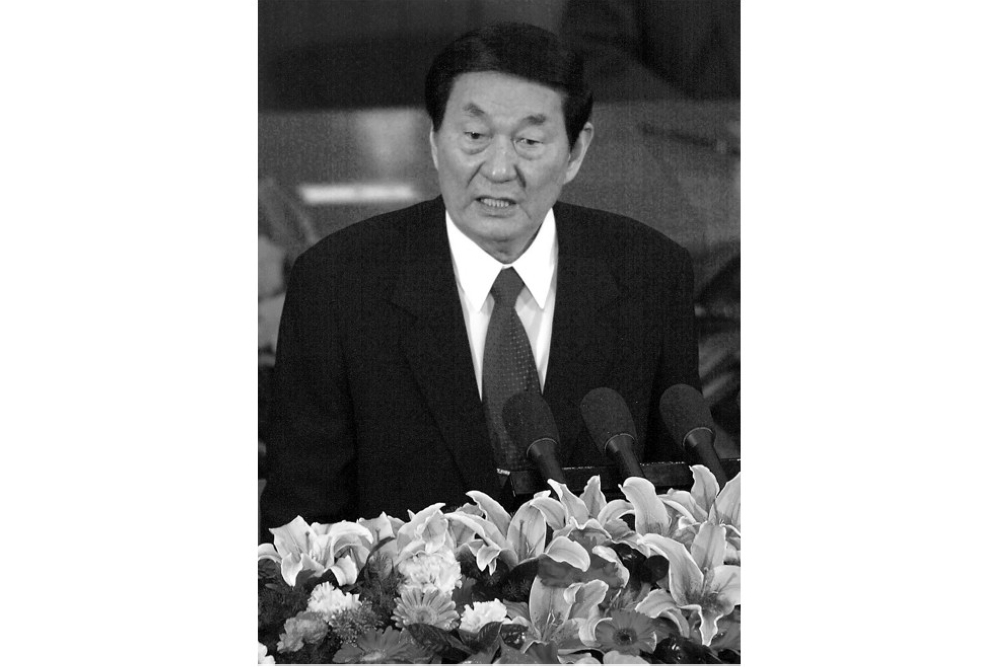
Prime Minister Datuk Seri Anwar Ibrahim has mourned the passing of Zhu Rongji, the former Premier of China, recognising him as a valued friend who played an instrumental role in deepening diplomatic and economic partnerships between Malaysia and Beijing. Anwar's tribute underscores the personal relationships that have underpinned bilateral cooperation at the highest levels of government, reflecting the importance both nations place on their ongoing strategic engagement.
Zhu Rongji served as China's Premier during a pivotal period of the nation's economic development and global integration. His tenure witnessed China's accelerating modernisation and increasing involvement in regional affairs, positioning Beijing as a major economic and political player in Asia. The former leader's influence extended well beyond China's borders, particularly into Southeast Asia where his diplomatic efforts helped shape regional dynamics and strengthen bilateral relationships with key partners including Malaysia.
Anwar's characterisation of Zhu as a "good friend" reflects the warm ties that have historically existed between Malaysian and Chinese leadership, transcending political transitions and shifts in government. These personal relationships serve as crucial foundations for formal state-to-state relations, particularly in a region where personal networks and trust between decision-makers continue to influence policy direction and cooperation initiatives. The Malaysian Prime Minister's public acknowledgment of Zhu's contributions signals continuity in Malaysia's approach to its Chinese counterpart.
The late Premier's involvement in Malaysia-China relations spanned multiple domains, from trade and investment to cultural and educational exchanges. During his time in office, bilateral commerce expanded significantly, and Malaysian businesses found new opportunities within China's rapidly growing markets. Chinese investment in Malaysia similarly increased, contributing to infrastructure development and economic growth across various sectors. These tangible benefits created constituencies on both sides with vested interests in maintaining strong bilateral ties.
Beyond economic metrics, Zhu Rongji distinguished himself as a pragmatist capable of navigating complex geopolitical relationships. His willingness to engage with Southeast Asian nations at a time of China's rising prominence helped establish cooperative frameworks that persist today. For Malaysia, which has historically sought to balance relationships with major powers while maintaining its own policy independence, Zhu's approach offered reassurance that engagement with Beijing need not come at the expense of broader strategic autonomy.
The timing of Anwar's remarks carries particular significance given current regional discussions about China's role in Southeast Asia. Debates surrounding infrastructure investment, territorial claims, and regional security arrangements remain contentious in many Southeast Asian capitals. Anwar's tribute to a Chinese leader known for pragmatic engagement and respect for bilateral relationships implicitly suggests Malaysia's preference for sustained dialogue and mutually beneficial cooperation rather than confrontation or zero-sum competition.
Zhu Rongji's legacy also resonates with Malaysian policymakers because he championed economic development and market-oriented reforms. His tenure coincided with China's accession to the World Trade Organization and deeper integration into global economic structures. Malaysian officials, themselves focused on economic modernisation and attracting foreign investment, found common ground with Zhu's emphasis on practical development challenges and commercial opportunities. This shared developmental outlook created natural channels for cooperation.
For Malaysia's current government under Anwar, honouring Zhu's memory serves multiple purposes. It demonstrates Malaysia's commitment to maintaining excellent relations with China regardless of leadership transitions in either country. It also appeals to Malaysian constituencies that have benefited from closer China ties, whether through employment in Chinese-invested enterprises, access to Chinese markets, or infrastructure development projects. Simultaneously, publicly mourning a figure known for measured diplomacy allows Anwar to signal that Malaysia will continue pursuing balanced engagement rather than aligning with any particular regional bloc.
The broader context of Malaysia-China relations involves ongoing cooperation across numerous sectors including the Regional Comprehensive Economic Partnership, 5G infrastructure development, and cultural initiatives. Recent years have witnessed renewed emphasis on people-to-people exchanges and student mobility programmes. These programmes directly stem from the foundations of trust and goodwill that leaders like Zhu Rongji helped establish when serving in office, demonstrating how individual statecraft contributes to institutional relationships lasting generations.
Anwar's public expression of grief also reflects Malaysia's diplomatic culture, where respecting the contributions of neighbouring states' former leaders carries symbolic weight beyond mere courtesy. In Southeast Asian political traditions, acknowledging such relationships reinforces Malaysia's standing as a country that values stability, continuity, and mature state-to-state engagement. This approach contrasts with more confrontational diplomatic styles and appeals to other regional governments similarly invested in institutional stability.
Moving forward, Zhu Rongji's passing marks the end of an era when China's premier levels took direct personal interest in Southeast Asian relationships during their formative phase. Younger generations of Chinese and Malaysian leaders will inherit the institutional frameworks and cooperative patterns that Zhu helped construct. Their challenge will be maintaining momentum in bilateral relations while adapting to new regional challenges including climate change, pandemic resilience, and evolving geopolitical rivalries among major powers.
The tribute also serves as a reminder that despite contemporary tensions in China-Southeast Asia relations, the foundation of engagement remains rooted in decades of cooperation, personal relationships, and mutually recognised benefits. As Malaysia navigates complex regional dynamics and strategic choices, the legacy of pragmatic leaders like Zhu Rongji continues offering lessons in balancing national interests with regional stability and interdependence.

