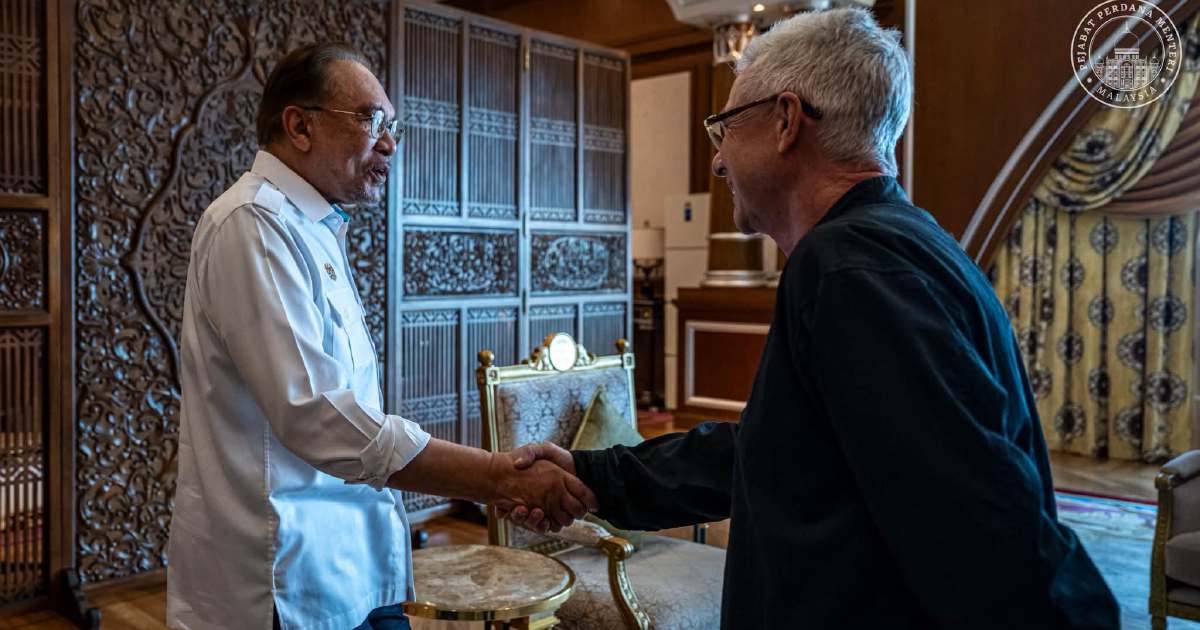
Prime Minister Datuk Seri Anwar Ibrahim held talks with Michael Roche, executive director of the Singapore Grand Prix, to exchange insights on managing major motorsport events. The meeting took place as Malaysia prepares to host the Formula 1 Gulf Air Bahrain Grand Prix at the Sepang International Circuit in October, underscoring the government's commitment to learning from regional expertise in staging world-class racing events.
The gathering represents a significant opportunity for knowledge transfer between two of Southeast Asia's most prominent Formula 1 venues. Singapore's Grand Prix, which has been a fixture on the F1 calendar since 2008, has become renowned for its nocturnal street circuit racing and operational excellence. The city-state's experience in hosting the sport's most glamorous event has made it a valuable reference point for other regional organisers seeking to enhance their own events.
Malaysia's motorsport heritage runs deep, with Sepang International Circuit having hosted Grand Prix races since 1999. However, the October fixture represents a departure from the traditional Malaysian Grand Prix format, bringing fresh dynamics to the country's role in global motorsport. The event carries the Gulf Air branding, reflecting the growing involvement of international carriers in sponsoring premium sporting events across Asia.
The strategic dialogue between Anwar and Roche highlights the professional approach being taken to ensure the Bahrain Grand Prix meets international standards while maximising its economic and promotional benefits for Malaysia. International sporting events of F1's calibre generate substantial tourism revenue, hospitality income, and global media exposure that can extend far beyond the race weekend itself. Countries competing for F1 dates increasingly recognise that success depends not merely on track quality but on comprehensive event management encompassing logistics, security, spectator experience, and post-event sustainability.
Singapore's Grand Prix operates under unique constraints—it races through city streets rather than at a purpose-built facility—yet has developed sophisticated systems for managing traffic flow, crowd control, and urban integration. These lessons hold particular relevance for Malaysia, where Sepang's standalone circuit location presents different but equally complex organisational challenges. The humid tropical climate, high crowd expectations, and need to balance international standards with local preferences all feature prominently in such exchanges.
The October timing of Malaysia's hosting creates interesting dynamics within the F1 calendar. The monsoon season considerations, local public holidays, and regional sports schedules all factor into event planning. Singapore's experience with nocturnal racing, which requires extensive lighting infrastructure and offers cooler working conditions for drivers and teams, differs fundamentally from daytime racing protocols. Both approaches carry distinct operational implications that merit careful study.
Beyond the immediate operational concerns, such high-level meetings signal Malaysia's strategic positioning within global motorsport. The Prime Minister's personal involvement underscores that F1 events are recognised as matters of national significance, not merely sporting attractions. This elevation reflects international trends where governments view premium sporting events as investments in nation-branding and economic development. The Gulf Air partnership adds another layer, connecting Malaysia to aviation sector interests and broader Middle Eastern business relationships.
The meeting also occurs within a broader context of Malaysia's efforts to enhance its international event hosting credentials. Following the Covid-19 pandemic's disruption to global sports calendars, countries have been competing more intensely for premium events. The Formula 1 season attracts billionaire investors, multinational corporations, celebrities, and global media, making it an opportunity for Malaysia to project an image of stability, modern infrastructure, and professional management.
For Malaysian motorsport enthusiasts and the automotive industry, the October Grand Prix represents a moment of national pride and commercial opportunity. Local suppliers, hospitality businesses, technology providers, and service sectors all benefit from the influx of international teams, media personnel, and spectators. The conversations between Anwar and Roche, therefore, have practical ramifications extending well beyond government circles into the broader economy.
The exchange of best practices also speaks to the collaborative spirit increasingly evident among Southeast Asian sporting event organisers. Rather than treating major events as zero-sum competitions, regional leaders increasingly recognise mutual advantages in sharing knowledge and supporting one another's events. This cooperative approach strengthens the region's overall competitiveness globally and reinforces Southeast Asia's credentials as a world-class destination for premier sporting occasions.
Looking ahead, the success of October's Gulf Air Bahrain Grand Prix will likely influence Malaysia's prospects for future F1 hosting opportunities. Formula 1 organisers closely monitor event execution, local support, infrastructure performance, and overall operational quality when deciding on venue renewals and contract extensions. Strong execution this October could position Sepang favourably for additional races or alternative F1-related events in subsequent years.

