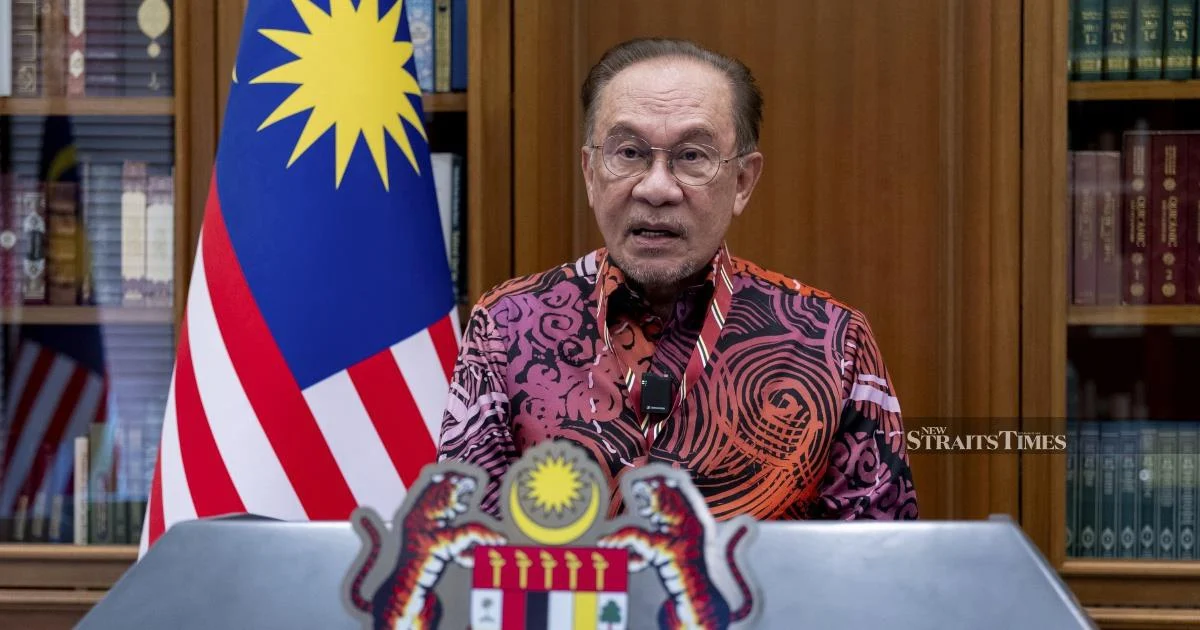
Prime Minister Datuk Seri Anwar Ibrahim has conveyed formal congratulations to the Chinese government on the occasion of the 105th anniversary of its ruling party, underscoring Malaysia's commitment to maintaining strong bilateral relations with Beijing during a significant commemorative milestone for the Chinese leadership.
The gesture reflects the contemporary diplomatic approach of the Malaysian government, which seeks to balance strategic partnerships across multiple regions while strengthening ties with major Asian powers. Such ceremonial acknowledgements between national leaders have become routine elements of international relations, serving as touchstones for deeper economic and political cooperation between countries.
China's ruling party, which assumed control of the Chinese mainland in 1949, has been central to the nation's transformation into a global economic powerhouse over the past several decades. The anniversary celebrations typically coincide with reflections on the party's governance philosophy and its vision for future development, both domestically and within regional frameworks.
For Malaysia, maintaining diplomatic courtesy with Beijing carries practical significance given the substantial economic interdependencies between the two nations. Chinese investment flows into Malaysian infrastructure, technology, and manufacturing sectors remain considerable, while Malaysian exports including palm oil, liquefied natural gas, and agricultural products depend partly on Chinese market access. The consistency of these trade relationships underscores why Malaysian leaders regularly engage in formal diplomatic protocols with Chinese counterparts.
Anwar's administration has positioned itself as pursuing a pragmatic foreign policy that avoids excessive alignment with any single power bloc while cultivating relationships beneficial to Malaysian economic interests. This approach has meant maintaining cordial relations with established geopolitical actors including China, the United States, and Japan, whilst simultaneously strengthening ties within ASEAN and the broader Indo-Pacific region.
The timing of such congratulatory messages often carries subtle diplomatic weight. By acknowledging significant anniversaries and national celebrations, governments signal their respect for bilateral relationships and willingness to engage constructively on matters of mutual importance. For Malaysia, this reflects recognition that stable, predictable relations with major regional actors serve national interests across trade, security, and technological domains.
China's communist party has overseen enormous economic structural changes, transforming the nation from an agrarian society into the world's second-largest economy. The party's centennial and subsequent milestones therefore carry symbolic importance not merely for Chinese domestic politics but for understanding the nation's regional and global aspirations. Malaysia's formal acknowledgement of these occasions demonstrates awareness of China's significance in shaping the geopolitical and economic landscape that affects Southeast Asian states.
Within ASEAN's broader context, Malaysia's careful calibration of major power relations reflects a broader regional pattern. Most Southeast Asian nations pursue similar balancing acts, avoiding exclusive partnerships while maximizing economic gains from engagement with multiple powers. This approach gained particular prominence following shifts in US-China competition, which prompted careful reassessment of security and economic positioning throughout the region.
The congratulatory message also potentially serves domestic political purposes within Malaysia, signalling to business communities and investors that the government maintains stable, productive relationships with major trading partners and source economies for foreign direct investment. Consistency in diplomatic messaging reassures both Chinese investors and Malaysian stakeholders about the predictability of bilateral relations regardless of domestic political transitions.
Looking forward, Malaysia's continued engagement with China will likely remain central to regional economic development initiatives, infrastructure projects, and technology partnerships. The Belt and Road Initiative and related Chinese investment frameworks have significantly shaped development trajectories in Southeast Asia, making regular diplomatic courtesies not merely ceremonial gestures but practical expressions of working relationships that affect millions of Malaysian citizens through employment, investment, and trade opportunities.
The broader pattern of Southeast Asian governments extending similar congratulations to Chinese authorities reflects the region's complex position as major powers seek expanded influence. For Malaysia specifically, balancing these relationships whilst maintaining ASEAN solidarity and pursuing independent national interests requires consistent diplomatic engagement across multiple channels and at various levels of government.
As Malaysia continues navigating evolving regional dynamics, maintaining formal diplomatic protocols with all major partners including China demonstrates the pragmatic approach that characterizes contemporary Malaysian foreign policy. Such gestures, whilst appearing ceremonial on the surface, carry substantive implications for the networks of cooperation and understanding that underpin bilateral relationships affecting trade, investment, security cooperation, and broader strategic alignment within the Indo-Pacific region.

