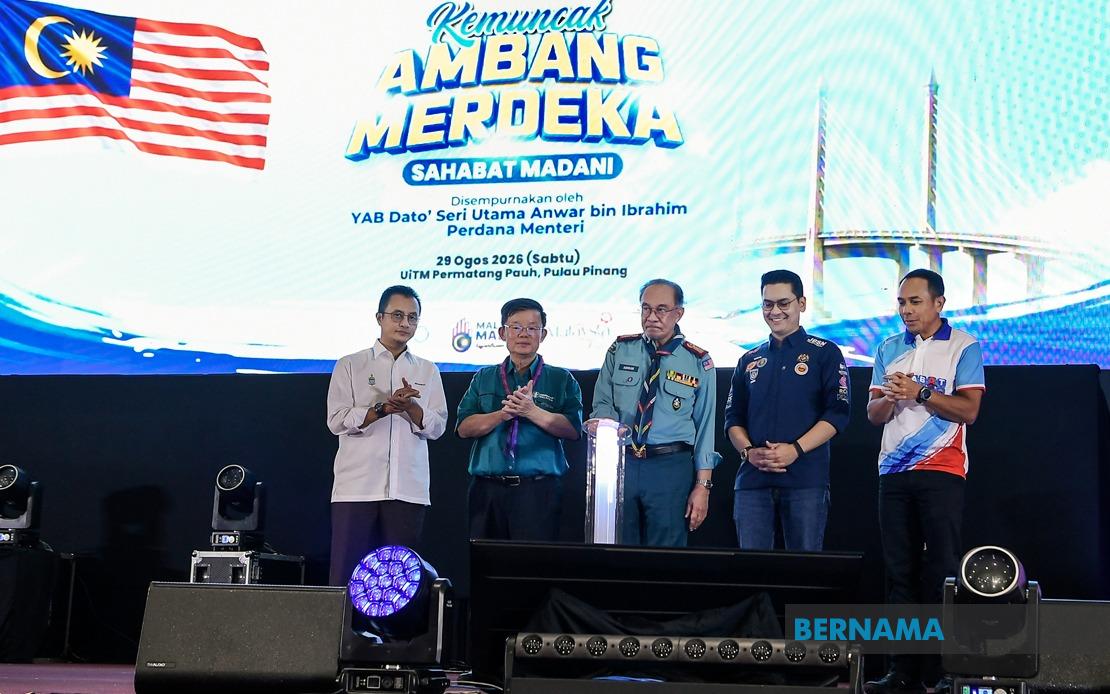
Prime Minister Datuk Seri Anwar Ibrahim has officially launched Sahabat MADANI, a nationwide volunteer initiative designed to foster collective action across Malaysian communities, with the programme already registering 11,060 volunteers since its inception. The movement was unveiled at the Ambang Merdeka Sahabat MADANI 2026 programme held at Universiti Teknologi MARA (UiTM) Permatang Pauh in Bukit Mertajam, signalling the government's commitment to institutionalising grassroots civic engagement as a cornerstone of national development.
The Implementation Coordination Unit of the Prime Minister's Department (ICU JPM) framed Sahabat MADANI as more than a conventional volunteering scheme, positioning it instead as a transformative social movement grounded in principles of mutual respect and intercommunal harmony. By explicitly encouraging participation from people across different ethnic, religious and socioeconomic backgrounds, the programme reflects broader aspirations embedded in the Malaysia MADANI vision of shared prosperity. This design philosophy suggests recognition that sustainable development requires buy-in from diverse constituencies working toward common objectives, rather than top-down delivery mechanisms.
The volunteer network's operational focus addresses concrete community challenges that resonate across Malaysian society. Priority areas include targeted support for marginalised populations, intervention in youth educational disengagement, entrepreneurial skill-building for young adults, and rapid humanitarian response during emergencies. These domains were selected to address persistent structural issues—school dropout rates, youth unemployment and underemployment, and wealth concentration—that impact socioeconomic mobility across the country. The emphasis on direct community benefit signals a departure from abstract initiatives toward measurable outcomes that residents can experience tangibly.
According to the ICU JPM statement, the reform agenda materialises through Sahabat MADANI by establishing collaborative networks linking government agencies, citizen volunteers and local communities. This tripartite architecture seeks to improve service delivery coordination and responsiveness to localised needs. The stated commitment to transparency and evidence-based results orientation addresses public expectations for accountability, particularly significant given Malaysia's ongoing efforts to rebuild institutional trust following periods of governance challenges. The framework implicitly acknowledges that government capacity alone is insufficient for comprehensive social coverage, requiring supplementation through organised voluntary effort.
The timing of Sahabat MADANI's launch coinciding with Malaysia's National Day observance carries symbolic weight. The ICU JPM drew explicit parallels between the independence spirit symbolised by the Jalur Gemilang and contemporary civic commitment to serving marginalised populations and upholding ethical standards. This framing integrates volunteerism into nationalist narrative, positioning community service as expression of patriotic duty rather than philanthropic preference. For audiences across Malaysia, this association links personal participation in social good with broader national identity and shared independence heritage.
The volunteer movement also articulates explicit objectives around social cohesion and conflict prevention. By coordinating cross-communal service activities, Sahabat MADANI creates structured environments where Malaysians from different backgrounds collaborate toward shared purposes, potentially reducing reliance on ethnically or religiously siloed social networks. This approach acknowledges that harmony maintenance requires proactive investment in integrative activities, not merely avoidance of divisive discourse. The programme's emphasis on volunteer participation in poverty alleviation and combating corruption similarly suggests that ethical governance depends on active citizen engagement rather than regulatory mechanisms alone.
Young people constitute a strategic focal point within Sahabat MADANI's theory of change. The ICU JPM explicitly called on youth to reject divisive messaging and channel technical skills toward national progress objectives. This messaging acknowledges demographic realities—Malaysia's relatively young population—and concerns about youth disengagement from civic life or susceptibility to polarising narratives. By offering structured channels for meaningful contribution, Sahabat MADANI attempts to convert potential sources of instability into drivers of social cohesion and development. The programme thus represents a form of youth investment with both immediate social benefits and longer-term stabilisation objectives.
The rapid registration of over 11,000 volunteers within the initial phase suggests considerable appetite for organised civic participation among Malaysian society segments. This uptake indicates that framing around inclusive national purpose resonates with potential volunteers who may have felt alienated from previous governance structures or lacked convenient mechanisms for contribution. The numbers also hint at latent social capital within communities—existing networks and relationships that formal volunteer coordination can activate and direct toward systematic ends. Understanding this mobilisation capacity holds implications for Malaysian policymakers considering how to operationalise public participation in subsequent reform initiatives.
Implementing Sahabat MADANI at scale will require sustained attention to volunteer retention, capacity development, and coordination infrastructure. The transition from initial registration enthusiasm to sustained engagement presents a persistent challenge for volunteer movements globally. Malaysian authorities will need to invest in training, provide meaningful roles, establish feedback mechanisms, and ensure that volunteer contributions receive genuine institutional recognition rather than tokenistic acknowledgement. The programme's emphasis on transparency and results orientation suggests awareness of these requirements, though actual execution will determine whether Sahabat MADANI becomes durable infrastructure for citizen participation or experiences the gradual attrition typical of many volunteer initiatives.
For Southeast Asian observers, Sahabat MADANI represents an instructive case study in how governments can mobilise civic engagement around inclusive development objectives. Malaysia's existing institutional capacity, multicultural context, and administrative resources position it differently from regional neighbours with more limited state apparatus, yet the programme's underlying logic—that sustainable development requires integrated action across government, volunteers and communities—generalises across diverse contexts. The model's success or limitations may inform how other nations approach challenges of social fragmentation, youth engagement, and inclusive growth, making Sahabat MADANI's trajectory worth monitoring across the region.

