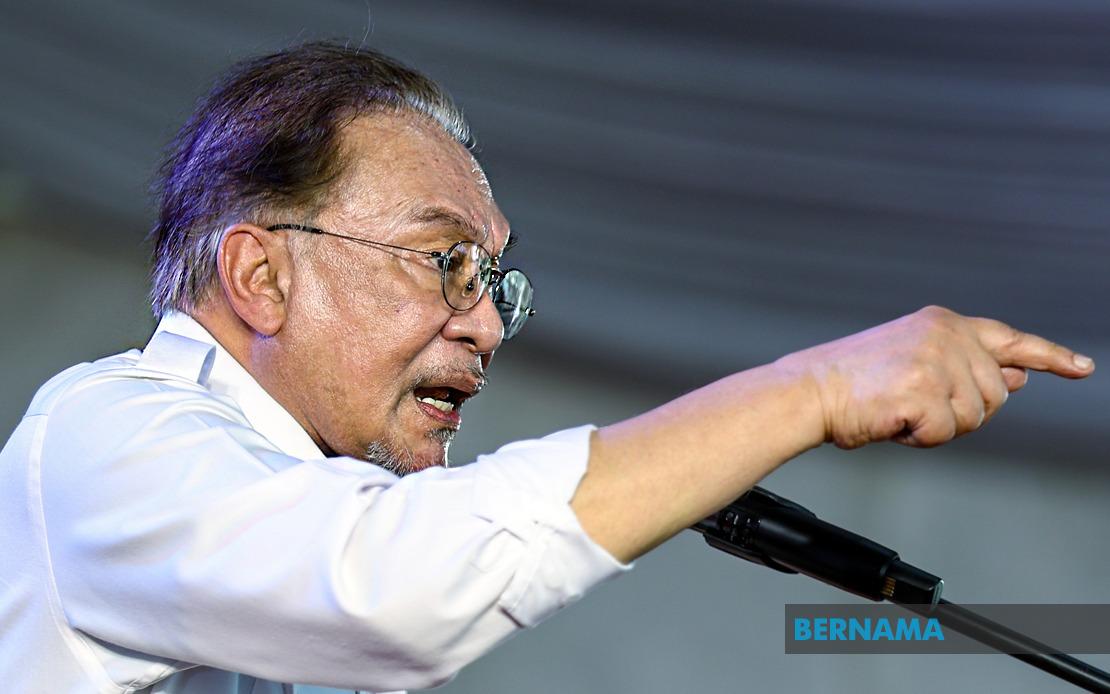
Pakatan Harapan's leadership is demonstrating visible determination to capture ground support in Johor as the state legislative election enters its critical second week. Datuk Seri Anwar Ibrahim, the coalition's chairman, embarked on an aggressive campaign itinerary spanning eight constituencies across the northern region, signaling that the opposition alliance views this contest as pivotal to its broader political revival.
The scale of Anwar's engagement reflects how seriously PH approaches the electoral battleground in Malaysia's second-largest state by population. Starting before 9 am with a community breakfast programme in Layang-Layang at Warung Pak Din in Kampung Sahri, the coalition leader maintained momentum through successive voter interaction sessions scheduled throughout the day and evening. This marathon approach demonstrates an attempt to saturate local communities with direct political engagement, a tactic that aims to translate party machinery activity into tangible electoral support.
Geographically, the tour concentrated on constituencies within the Buloh Kasap legislative assembly area: Layang-Layang, Senggarang, Semerah, Bukit Naning, Pemanis, Gambir, Serom, and Palong Timur. For Malaysian readers familiar with Johor's political geography, these constituencies represent mixed socioeconomic and ethnic compositions—combining rural constituencies, small-town urban areas, and organized settlements like Felda land schemes. The deliberate choice to target these seats suggests PH perceives particular vulnerability or opportunity in northern Johor, potentially reflecting demographic shifts or dissatisfaction with incumbent representation.
The campaign schedule incorporated diverse engagement formats designed to reach different voter demographics. Morning breakfast sessions, afternoon community feasts, and evening trade-center meet-and-greets allowed interaction with working-class voters across various times and locations. The 'Jelajah Harapan' programs specifically targeted Felda residents, indicating that PH strategists identify agricultural settlement communities as contested ground—a significant consideration given the traditionally rural voter base's historical alignment with Barisan Nasional.
Pakatan Harapan's candidate deployment reflects its confidence in this contest. The coalition is contesting all 56 state seats with a composition of 20 PKR candidates, 19 from Amanah, and 17 from DAP. This full-spectrum candidature contrasts with earlier political cycles and demonstrates PH's organizational consolidation following the 2022 federal election realignment. The distribution among component parties suggests carefully negotiated seat-sharing agreements, essential for maintaining coalition cohesion in Johor where BN's electoral dominance historically discouraged substantial opposition presence.
The broader electoral context involves 172 total candidates competing across the 56 seats, indicating genuine multi-cornered contests beyond the traditional PH-BN binary. This fragmentation could theoretically benefit opposition candidates by splitting government-aligned votes, though it simultaneously complicates voter consolidation for alternative coalitions. The July 11 polling date follows early voting on July 7, a standard procedure that allows security personnel, essential workers, and other designated groups to participate before general election day.
Anwar's personal involvement underscores PH's determination to secure meaningful gains in Johor. As Prime Minister and party chairman simultaneously, his direct campaign presence carries symbolic weight beyond typical political rallying. For Malaysian observers, such hands-on leadership signals that the coalition views Johor results as a referendum on its federal governance performance. Poor results could invite internal recriminations and destabilization, while strong performance would validate PH's claim to represent viable alternative administration.
The campaign's intensive scheduling also reflects Malaysian electoral dynamics where ground-level engagement remains critical despite digital media proliferation. Voters in northern Johor, particularly in smaller constituencies, still respond substantially to direct personal interaction with political leaders. The breakfast and feast formats, drawing on communal dining traditions, create informal settings where leaders appear accessible rather than distant, a psychological advantage in competitive electoral environments.
For Southeast Asian observers, the Johor campaign illustrates how Malaysian state elections function as crucial testing grounds for national political positioning. Unlike parliamentary elections which directly determine federal government formation, state polls offer coalitions opportunities to test messaging, assess organizational capacity, and gauge voter sentiment without existential governing consequences. A strong PH showing would strengthen Anwar's negotiating position within the federal coalition and potentially boost confidence ahead of the next general election cycle.
The intensity of campaign activity in July's second week also suggests that both major contenders view the election timeline as compressed. With polling just days away, saturation campaigning represents an attempt to reach swing voters and mobilize supporters before ballots are cast. The schedule's fourteen-hour duration—from early morning through late evening—indicates a willingness to exhaust available campaign time, reflecting the political stakes involved for both government and opposition coalitions in this strategically important state contest.

