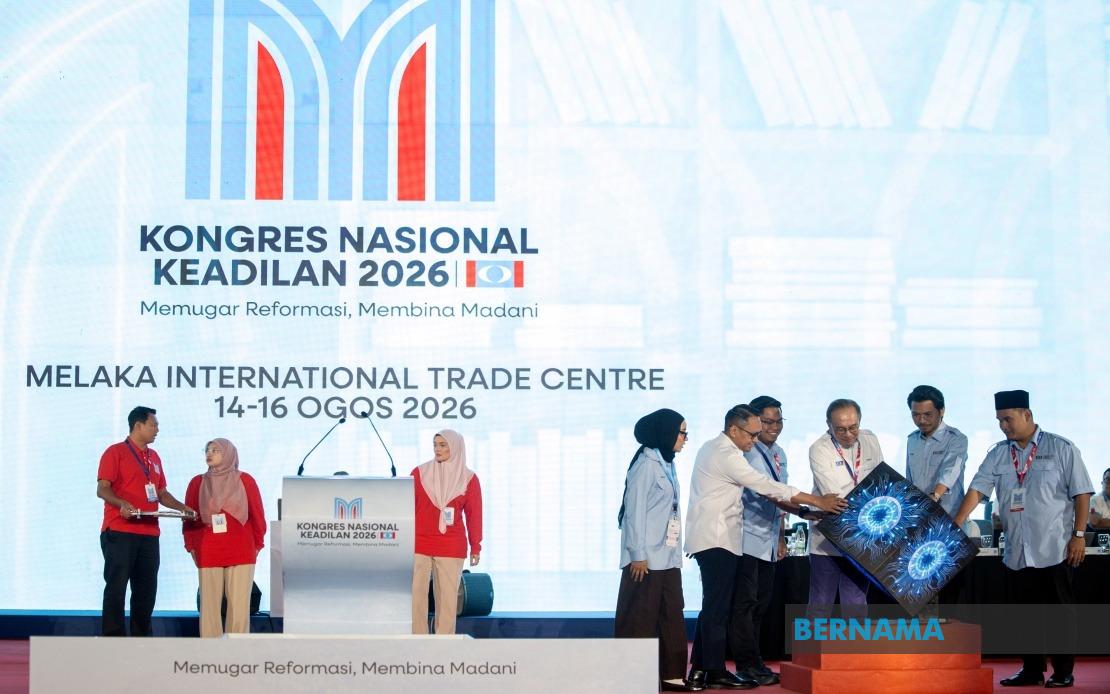
Prime Minister Datuk Seri Anwar Ibrahim launched a significant ideological publication in Melaka on August 16, marking a pivotal moment in Parti Keadilan Rakyat's efforts to consolidate its vision among the younger generation of party members and cadres. The 113-page document, authored by Angkatan Muda Keadilan chief Muhammad Kamil Ahmad Munim and executive committee member Ashraf Ahmad Hadi, represents the party's attempt to provide structured intellectual guidance for youth activists navigating contemporary political and social challenges.
The timing of this publication carries particular significance within Malaysia's current political landscape. Anwar framed the release as a response to urgent national needs, emphasizing that the initiative arrives at a critical juncture when the country requires more than superficial policy announcements or temporary political gestures. By positioning the document as a tool for "civilisational renewal" rather than routine party propaganda, he sought to elevate the discourse surrounding youth mobilisation and generational responsibility within the PKR framework.
Central to Anwar's messaging is the distinction between hollow technocratic solutions and genuine nation-building rooted in moral and spiritual foundations. He cautioned young PKR members against interpreting their current influence as licence for complacency or self-congratulation over minor accomplishments. Instead, he reframed their position as custodians of a transformative agenda, inheritors of the party's historical struggle against injustice, and carriers of the "Reformasi" movement's deepest ideals into an uncertain future.
The publication serves multiple functions within the party structure. Beyond its immediate utility as reference material for cadre development, the document functions as a bridge between PKR's historical narratives and contemporary political objectives. It encourages members to internalize the philosophical underpinnings of the party's struggle, moving beyond mere electoral calculations toward principled governance based on established ideological commitments. This approach reflects broader concerns within Malaysian political parties about maintaining institutional memory and ideological coherence across generational transitions.
Anwar's emphasis on the publication as a cadre-building resource underscores PKR's strategic focus on cultivating disciplined, intellectually grounded party members capable of articulating the movement's values to broader constituencies. In an era when political messaging is increasingly fragmented across digital platforms and social media, having a comprehensive, authored document allows the party to present a unified intellectual framework that members can reference, debate, and propagate. This formalization of party ideology also serves defensive purposes, providing a canonical text that can counter misrepresentations or diluted interpretations of PKR principles.
The emphasis on rebuilding a nation "scarred by past injustices and leakages" directly references Malaysia's recent political history, including the 1MDB scandal and related governance failures that preceded the current administration. By connecting youth activism to nation-healing, Anwar positioned younger party members as instrumental to Malaysia's democratic recovery and institutional rehabilitation. This framing transforms what might otherwise be routine party recruitment into a moral and historical mission, demanding exceptional commitment and ethical integrity from participants.
The requirement for "extraordinary creativity, intellectual courage and spiritual resilience" represents Anwar's attempt to establish demanding standards for party membership and activism. Rather than merely requesting votes or organizational participation, the Prime Minister articulated an expectation that younger generations would grapple seriously with complex national problems, challenge conventional thinking, and sustain commitment through inevitable setbacks and disappointments. This rhetorical strategy acknowledges the sophistication of contemporary youth while demanding corresponding seriousness of purpose.
For Southeast Asian observers, this publication demonstrates how established political parties attempt to maintain relevance and ideological coherence amid rapid social and technological change. Malaysia, like several regional counterparts, faces challenges in retaining youth engagement with traditional party structures when alternative political expressions and activism models proliferate online. By producing an intellectually substantive document and framing it as essential reading for serious party members, PKR signals that it takes ideological formation seriously, potentially differentiating itself from competitors perceived as purely transactional or personality-driven.
The document's focus on "Reformasi" and the party's foundational ideals reflects PKR's continuing need to maintain legitimacy rooted in its historical opposition to authoritarian governance. Even as the party now occupies power, maintaining this oppositional narrative provides ideological coherence and moral authority, particularly among younger members who may lack direct experience of pre-1998 Malaysian politics. The publication thus serves a pedagogical function, educating new party members about why PKR exists and what distinguishes it from alternative political vehicles.
The practical implications extend to party discipline and messaging consistency. With a shared ideological text, party leaders can evaluate member conduct against established principles, potentially using the publication to defend against accusations of opportunism or inconsistency. Moreover, the document provides a resource for training spokespeople and developing policy positions rooted in explicit party philosophy rather than ad hoc responses to immediate political pressures.
Anwar's characterization of youth engagement as "a test of piety and moral integrity" introduces religious and ethical dimensions that resonate within Malaysia's Muslim-majority context. By framing political responsibility in explicitly moral terms, he appeals to values beyond narrow partisan interest, positioning PKR membership as alignment with transcendent principles. This rhetorical move attempts to elevate party activism beyond transactional politics, though critics might view it as sacralizing particular partisan positions.
The broader significance lies in how established parties globally adapt to ensure ideological transmission and institutional continuity. Malaysia's experience, particularly PKR's trajectory from opposition movement to governing party, illustrates tensions between maintaining oppositional credibility and exercising power responsibly. Publications like this attempt to navigate that paradox by reframing governance as continuous struggle against injustice and inefficiency, thereby preserving the moral narrative that originally energized the movement.
Looking forward, the publication's effectiveness will depend on whether party members engage with it substantively rather than regarding it as obligatory ritual. Its success in shaping cadre behaviour and long-term party coherence will indicate whether Malaysian political parties can sustain ideological institutions robust enough to outlast individual leaders and electoral cycles.

