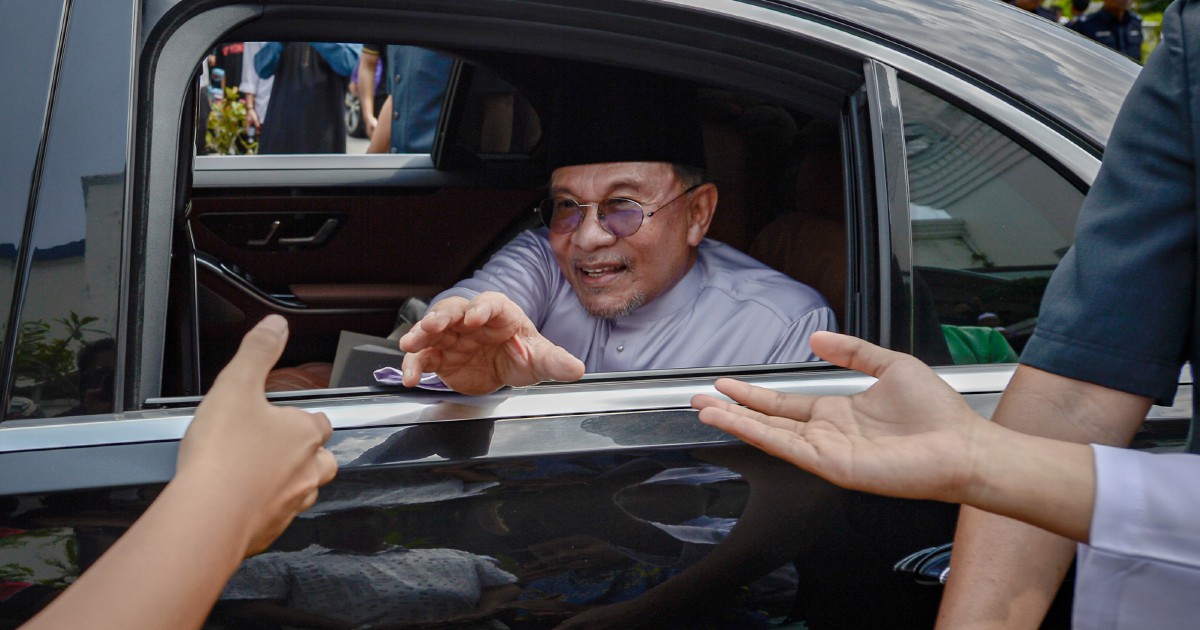
Prime Minister Datuk Seri Anwar Ibrahim is taking his political campaign directly to voters in Negri Sembilan, mobilizing Pakatan Harapan's machinery in a critical push to maintain and deepen the coalition's electoral standing in the state. The high-profile campaigning effort underscores the strategic importance of Negri Sembilan in the broader political landscape, where Pakatan Harapan sees a significant opportunity to translate parliamentary-level support into tangible gains at the state legislature level.
The decision to deploy the Prime Minister as the coalition's frontline campaigner reflects Pakatan Harapan's confidence in Anwar's personal appeal with voters and his capacity to energize the party base during crucial junctures in the electoral calendar. The visibility of top-tier leadership in state-level campaigns signals to both supporters and observers that the coalition views this contest as consequential, not merely a regional sideshow. Anwar's on-the-ground presence serves multiple functions simultaneously: reinforcing party discipline and candidate confidence, countering opposition narratives in real time, and generating media momentum that extends beyond the immediate campaign venue.
Negri Sembilan has historically been a competitive electoral battleground where coalition and opposition forces maintain significant bases of support across different constituencies. The state's ethnic, religious, and socioeconomic diversity mirrors broader Malaysian demographics, making it a microcosm of national political trends. For Pakatan Harapan, demonstrating electoral resilience in Negri Sembilan carries implications beyond state governance, potentially indicating whether the coalition can sustain its parliamentary coalition after the 2022 general election and maintain coherence amid internal tensions.
The timing of Anwar's campaign visits typically aligns with critical phases of the electoral cycle—either when momentum appears to shift or when internal party surveys indicate specific constituencies require senior-level intervention. The intensity of a Prime Minister's campaign schedule reflects calculations about where political capital can be most effectively deployed. By concentrating efforts in Negri Sembilan now, Pakatan Harapan signals that it views the state as both winnable and essential to its broader strategic objectives.
For Malaysian voters monitoring these developments, the campaign dynamics in Negri Sembilan offer important indicators about the health and direction of the ruling coalition. The state election functions as a barometer for public sentiment on national governance, economic performance, and factional balance within Pakatan Harapan itself. Voters in the state effectively participate in a quasi-referendum on whether they wish to continue supporting the coalition framework that currently governs the country.
From a Southeast Asian perspective, Malaysia's coalition-building and electoral competition demonstrate how diverse, multiethnic democracies negotiate power-sharing arrangements and electoral competition. The campaign strategies deployed in Negri Sembilan—emphasizing inclusion, development delivery, and coalition stability—reflect lessons learned from coalition governance at both state and federal levels. Other regional democracies grappling with coalition fragmentation and electoral volatility observe closely how Malaysian parties navigate these challenges.
The opposition, meanwhile, uses state elections like Negri Sembilan's as platforms to test alternative governance narratives and candidate viability. The competition between Pakatan Harapan and opposition forces shapes the political discourse available to voters and establishes templates for future electoral contests. State-level campaigns often feature more localized issues—infrastructure development, municipal services, and community welfare programs—than national elections, allowing voters to evaluate parties and candidates on immediate, tangible performance metrics.
Anwar's campaigning efforts must also navigate the complexities of Pakatan Harapan's internal coalition dynamics. The alliance comprises parties with distinct ideological traditions, regional power bases, and leadership hierarchies. Managing these internal differences while presenting a unified front to voters requires constant negotiation and demonstration of coalition purpose. Campaigns provide visible opportunities for coalition partners to appear united behind common objectives, even as structural tensions persist beneath the surface.
The State of Negri Sembilan itself has undergone significant demographic and economic evolution. Rapid urbanization, expanding middle-class populations, and youth migration patterns alter the composition of the electorate and shift political priorities. Younger voters may prioritize employment opportunities, affordable housing, and climate considerations differently than older cohorts, compelling campaigns to address diverse generational concerns. Urban constituencies increasingly vote based on governance quality and delivery rather than traditional party loyalty.
Packatan Harapan's momentum in Negri Sembilan will ultimately be tested through the electoral outcome and the margin of victory or defeat in particular constituencies. The campaign activities Anwar undertakes now contribute to a broader narrative arc that shapes voter perceptions heading into polling day. His direct engagement with constituents, participation in town halls and community forums, and visible advocacy for specific development projects all feed into voters' calculus about which party and coalition merits their support.
The stakes extend beyond simple seat arithmetic in the state assembly. Strong performance in Negri Sembilan provides Pakatan Harapan with political capital for federal-level negotiations, strengthens negotiating positions with coalition partners, and demonstrates to international observers that the coalition retains democratic legitimacy and voter support. Conversely, significant losses would trigger internal reassessments about coalition strategy, candidate selection, and the balance of power between coalition components.

