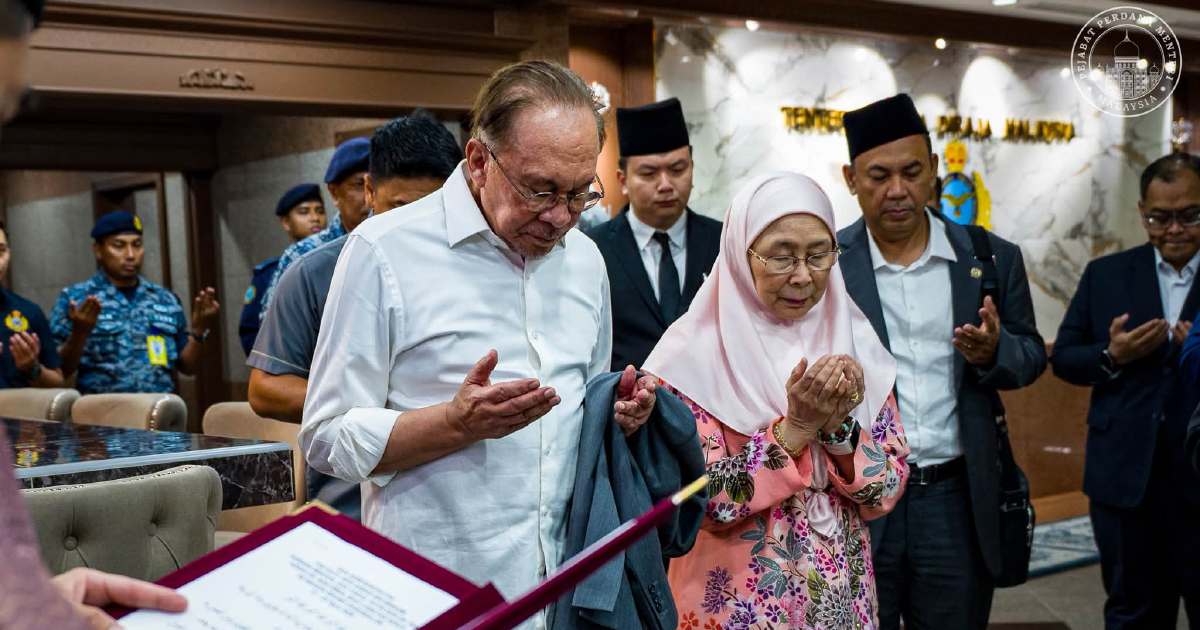
Prime Minister Datuk Seri Anwar Ibrahim touched down in Bandar Seri Begawan today to begin a two-day official visit centred on the 27th Annual Leaders' Consultation (ALC-27), the cornerstone diplomatic gathering between Malaysia and Brunei that convenes regularly to address bilateral and regional matters of mutual concern.
The Annual Leaders' Consultation represents one of the most significant high-level engagements between the two neighbouring nations, providing a structured platform for the prime ministers to discuss strategic priorities, economic collaboration, and regional security challenges. This quadrennial series of talks has become increasingly important as Malaysia and Brunei navigate the complexities of Southeast Asian geopolitics and economic integration within ASEAN.
The timing of Anwar Ibrahim's visit underscores Malaysia's commitment to strengthening diplomatic bonds with its small but strategically important neighbour in Borneo. Brunei, despite its modest population, holds considerable influence within regional forums and maintains crucial maritime interests in the South China Sea. The bilateral relationship between Kuala Lumpur and Bandar Seri Begawan has historically been characterised by cooperation across multiple sectors, from defence and security to trade and cultural exchange.
For Malaysian readers, this engagement carries broader implications for the country's regional diplomacy strategy. The visit demonstrates Malaysia's balanced approach to maintaining strong ties with all ASEAN members while pursuing its own economic and security interests. The consultation framework allows both nations to address transboundary issues, including maritime boundaries, environmental protection, and coordinated responses to regional challenges that affect the stability of their shared Borneo island.
The consultation agenda typically encompasses trade and investment opportunities, with both nations seeking to expand commercial partnerships. Malaysia remains an important trading partner for Brunei, while Brunei's investment in Malaysian infrastructure and business sectors contributes meaningfully to economic ties. The forum provides an opportunity to identify new sectors for collaboration, from renewable energy to digital infrastructure, areas where both nations have demonstrated growing interest.
Defence and security cooperation forms another pillar of the bilateral relationship that likely features prominently in these discussions. Both Malaysia and Brunei are concerned with maritime security, combating transnational crime, and addressing terrorism threats in the region. The consultation allows defence officials and intelligence agencies to coordinate strategies and share threat assessments, contributing to broader regional stability efforts.
Cultural and people-to-people exchanges also receive attention during these formal talks. Educational scholarships, cultural delegations, and youth exchange programmes strengthen the human dimension of the bilateral relationship, fostering understanding and goodwill that transcends government-to-government diplomacy. Many Malaysians work and study in Brunei, and vice versa, creating networks that reinforce official diplomatic efforts.
The visit also reflects the importance both nations place on ASEAN solidarity and coordinated positions on regional issues. Malaysia and Brunei frequently align on matters concerning ASEAN's engagement with larger powers and the maintenance of regional autonomy. The consultation likely provides an opportunity to coordinate their approaches to maritime security, the South China Sea dispute, and responses to external pressure from major powers.
For Malaysian business interests, the visit signals continued commitment to expanding economic ties in what remains a relatively untapped market. Brunei's wealth from hydrocarbon reserves and its strategic location make it an attractive destination for Malaysian investors and entrepreneurs. The formal platform of the leaders' consultation often paves the way for subsequent business delegations and investment missions that translate diplomatic goodwill into commercial opportunities.
The working visit also provides a diplomatic space to address any outstanding bilateral issues that may require prime ministerial attention. Whether concerning border management, environmental cooperation in shared waterways, or coordination on ASEAN matters, the consultation offers a formal setting where disputes can be resolved and common ground identified. The regular nature of these consultations ensures that small irritants do not accumulate into larger problems.
Brunei's position as chair or participant in various ASEAN committees means that Malaysia's engagement with its neighbour contributes to Malaysia's influence within regional organisations. By maintaining strong ties with Brunei, Malaysia strengthens its diplomatic hand in ASEAN forums and demonstrates reliability as a partner nation.
The two-day duration of the visit allows for comprehensive discussions beyond the formal consultation sessions. Bilateral meetings between various government ministries, from trade to education to health, often occur during such visits, creating multiple channels for cooperation and problem-solving. These parallel discussions often yield concrete outcomes such as memoranda of understanding, capacity-building initiatives, or expanded partnership frameworks.
As Malaysia continues to navigate its role as a medium power in Southeast Asia, maintaining robust relationships with immediate neighbours like Brunei remains strategically essential. The 27th Annual Leaders' Consultation exemplifies how regular, structured diplomacy at the highest level builds trust, facilitates cooperation, and contributes to the stability that underpins prosperity in the region.

