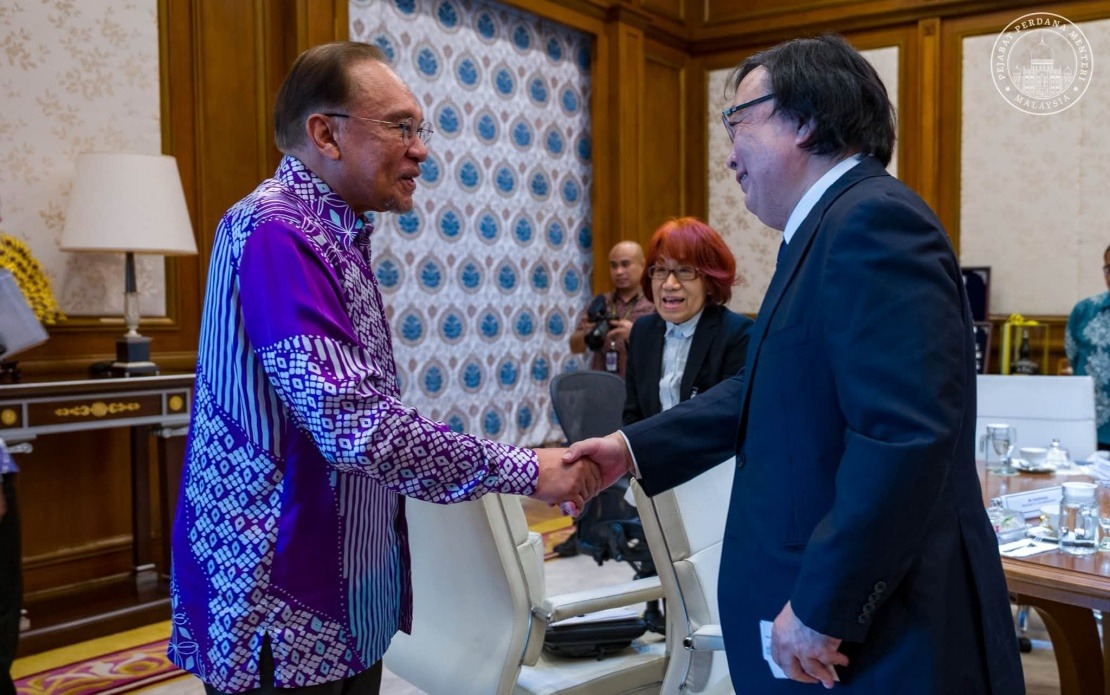
Prime Minister Datuk Seri Anwar Ibrahim held discussions with Yasushi Kudo, president of The Genron NPO, a leading independent think tank headquartered in Japan, to explore ways of enhancing the Asia Leaders Roundtable as a venue for tackling pressing regional and international issues. The July 23 meeting underscored Malaysia's commitment to working through multi-stakeholder platforms that bring together policymakers and strategic thinkers to address shared challenges across Asia and beyond.
The Asia Leaders Roundtable has emerged as an important mechanism for building consensus among regional powers on matters ranging from economic cooperation to security and climate action. By engaging with The Genron NPO, Malaysia signals its intention to remain an active participant in these high-level conversations, ensuring that Southeast Asian perspectives and interests are represented at forums where strategic direction is shaped. The timing of the meeting reflects broader efforts to elevate Malaysia's voice in regional architecture discussions at a time when geopolitical tensions and economic uncertainty are reshaping the Asian landscape.
Anwar took the occasion to express gratitude for Japan's reception during his official visit in June, highlighting the warmth and hospitality extended by the Japanese government. Such courtesies matter in diplomatic relations, serving as foundations upon which deeper collaboration is built. The Prime Minister's acknowledgment of Japan's treatment during his visit demonstrates Malaysia's appreciation for the personal attention and respect accorded to Malaysian leadership, which strengthens the people-to-people and government-to-government dimensions of bilateral relations.
Malaysia regards its Comprehensive Strategic Partnership with Japan as among its most consequential international relationships, encompassing defence, trade, investment, and cultural exchange. Japan remains a crucial economic partner, with significant Japanese manufacturing presence in Malaysia and substantial bilateral trade flows. Beyond commerce, the two nations coordinate on regional security matters and share interests in maintaining freedom of navigation and rules-based order in Southeast Asian waters. The partnership extends to technology transfer, human resource development, and infrastructure projects that support Malaysia's long-term growth ambitions.
Kudo's invitation to Anwar to participate in the Tokyo Conference 2027 signals The Genron NPO's recognition of Malaysia's regional importance and Anwar's standing as a thought leader capable of contributing to global discourse. The Prime Minister's previous video message at the 2026 conference indicated Malaysia's willingness to engage substantively with Japanese intellectual and policy circles, suggesting that Malaysian perspectives on regional development, governance challenges, and international cooperation are valued by this influential think tank.
The Genron NPO, as an independent research institution, plays a significant role in shaping Japanese foreign policy thinking and contributing to broader Asian strategic discourse. Its engagement with Malaysian leadership suggests efforts to deepen networks among Asian policymakers and intellectuals who can influence their respective governments' approaches to regional issues. For Malaysia, such platforms offer opportunities to network with Japanese decision-makers and to present the nation's viewpoint on matters affecting Asia's future.
Anwar's commitment to strengthening Malaysia-Japan ties occurs within the broader context of Southeast Asia's balancing act among major powers. As tensions between China and the United States shape regional dynamics, Malaysia benefits from cultivating diverse partnerships, particularly with developed democracies like Japan that share interests in stability and prosperity. Japan's technological sophistication, capital availability, and commitment to rules-based international order align with Malaysia's interests in sustainable development and regional peace.
The meeting also reflects Malaysia's strategic pivot toward deepening engagement with East Asia. While ASEAN remains Malaysia's primary regional grouping, participation in forums like the Asia Leaders Roundtable allows the nation to engage bilaterally and multilaterally with non-ASEAN Asian partners on specific issues of mutual concern. This approach broadens Malaysia's strategic options and reduces dependence on any single partnership while maintaining ASEAN centrality in regional architecture.
The discussion on the Asia Leaders Roundtable carries particular significance given contemporary global uncertainties. Rising geopolitical tensions, climate change, pandemic preparedness, and economic volatility demand sustained dialogue among regional leaders capable of building consensus and coordinating responses. By participating actively in such forums, Malaysia positions itself as a constructive player in Asia's future, contributing solutions rather than simply reacting to externally-imposed challenges. The Genron NPO's role as a convener of such discussions enhances its value as a partner for Malaysian policymakers seeking to engage in serious strategic conversation.
Moving forward, the meeting's emphasis on continued strengthening of Malaysia-Japan cooperation and broader regional dialogue suggests the two nations will maintain regular high-level engagement. The exchange demonstrates that diplomatic relations operate across multiple channels—formal governmental links, think tank networks, and business associations all reinforce comprehensive partnerships. For Malaysia, ensuring robust connections with Japan through various institutional mechanisms helps secure a reliable regional partner committed to principles of peace, stability and prosperity that Malaysian policymakers champion in their vision for Asia's future.

